



By Dr. B.S. Ajaikumar
As the CJP protest comes to an end and students return to their drudgery we have to ask, why do hundreds of thousands of bright Indian students pack their bags for overseas Universities. Not because India lacks talent. But because India has failed, for over seven decades, to build enough world-class institutions to hold that talent at home.
A country with this much intellectual horsepower should be building Oxfords and MITs. Instead, we’ve built a forest of “deemed universities” that function as real estate businesses wearing a graduation gown.
Look at Canada. This is a country of 40 million people successfully branded itself globally as a hub of educational excellence, pulling in international students by thousands. We are 1.4 billion people, well- versed in mathematics, logic and pedagogy. If Canada can do it on a fraction of our population, what exactly is stopping us? Intent for sure, because we have the talent in abundance.
This issue is not just in education. It’s in sport too. India is the only country among the world’s most populous nations that has never qualified for a FIFA World Cup, not once, in ten attempts. Meanwhile, Iceland (population 3,50,000), Cape Verde and Curaçao have all walked onto that stage. Our Olympic saga is a sob story: across 26 Games and more than a century of participation, our all-time medal tally is all of 40.
Why? Because one sport rolls in money, airtime, sponsorships and worshipped as religion, while all else survives on leftovers. A thriving, well-run cricket economy is something to be proud of. Why is it, however, the only sport India is good at?
Education, healthcare, sport: the pattern is identical. Massive potential, chronic underinvestment in systems and institutions optimised for control rather than excellence. We don’t lack people who could build this. We lack a system that lets them.
We elected these representatives. If they’re non-performing, that responsibility sits with us more than it does with them. Our fragmented, dynasty-driven opposition has shown no greater appetite for building institutions than the incumbents.
So this isn’t an argument for switching teams. It’s an argument for changing the rules of the game itself. What might that look like in practice?
Outcome-based accountability at every level of elected office, from Panchayat to Parliament, measured publicly against goals that were promised, not just votes that were won.
Autonomous, insulated bodies for education and sport, modelled on how monetary policy is kept at arm’s length from electoral cycles, so excellence isn’t held hostage to a five-year term. Public-private centres of excellence that bring India’s genuine teaching and coaching talent together, instead of scattering it across under-funded, over-regulated institutions.
A citizen culture that demands data, not slogans. Goals set versus goals achieved, in education, healthcare and sport, reported the way a company reports earnings.
The world is shifting. The US is turning inward on immigration. Parts of Europe are stretched thin economically and demographically. There has rarely been a more open moment for a country to step up as a genuine global hub for higher education and India has the population, the youth and the talent to do it.
What’s missing is the will to govern for outcomes instead of optics.
All one can hope for is this: if those in power cannot deliver the institutions this country deserves, they should make way for those who can.
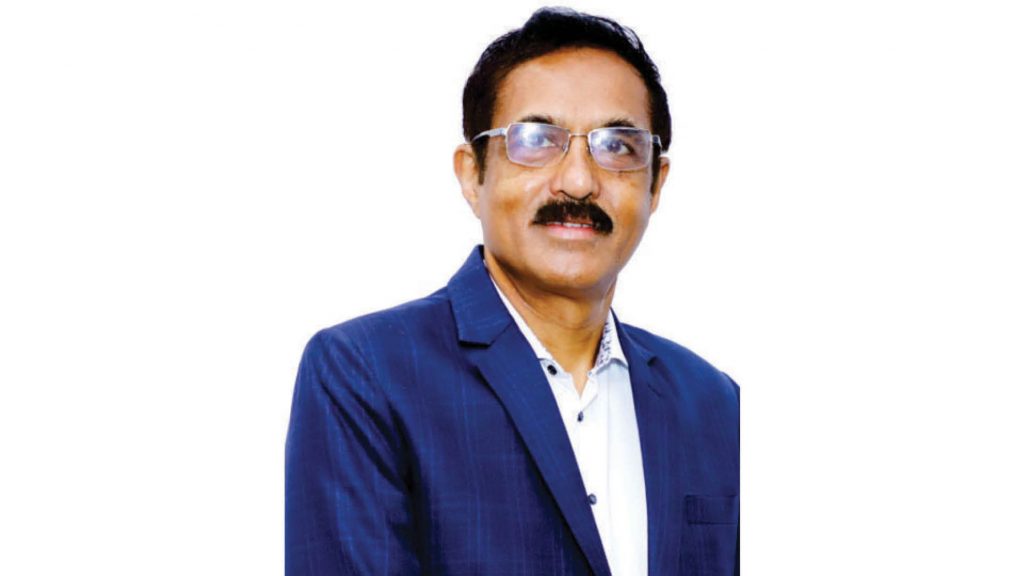
Dr. B.S. Ajaikumar is the Chairman of Bharat Hospital and Institute of Oncology, Mysuru, Founder and Executive Chairman of HCG Cancer Centres. He is the author of the book ‘Excellence Has No Borders: How A Doctorpreneur Created A World-Class Cancer Hospital Chain.’

Recent Comments