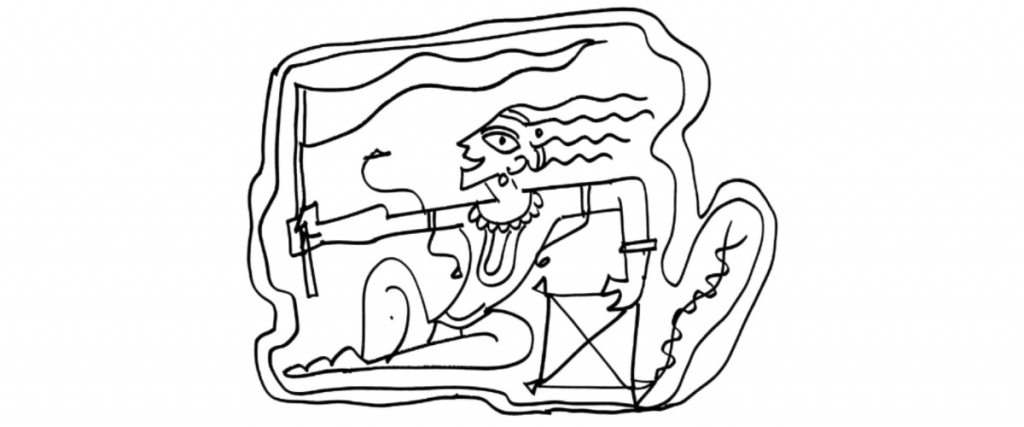


By Dr. Devdutt Pattanaik – Author, Speaker, Illustrator, Mythologist About a thousand years ago, when Rajasekhar wrote his discourse on poetry, the Kavya Mimansa, Aryavarta stretched from the Himalayas down to the Vindhya mountains, bounded on the east and west by the seas of Bengal and Gujarat. He knew little of the southern regions and…

Ballads of Breeze & Breath
October 1, 2026By Dr. Devdutt Pattanaik – Author, Speaker, Illustrator, Mythologist In Hindu thought, Vayu, Marut, Vata and Prana represent different ways in which breeze as well as breath were imagined. Vayu is the oldest and most cosmic of the wind gods. In the Rig Veda, he is a swift-moving deity who rides across the skies, often…
The areca nut in the betel leaf
September 24, 2026By Dr. Devdutt Pattanaik – Author, Speaker, Illustrator, Mythologist On the outer walls of the Chennakeshava temple in Belur, built by the Hoysala kings in the 12th century, stands a woman holding betel leaves. But the tambula or betel appears nowhere in the Vedic Samhitas, the Ramayana or the Mahabharata. It was not part of…
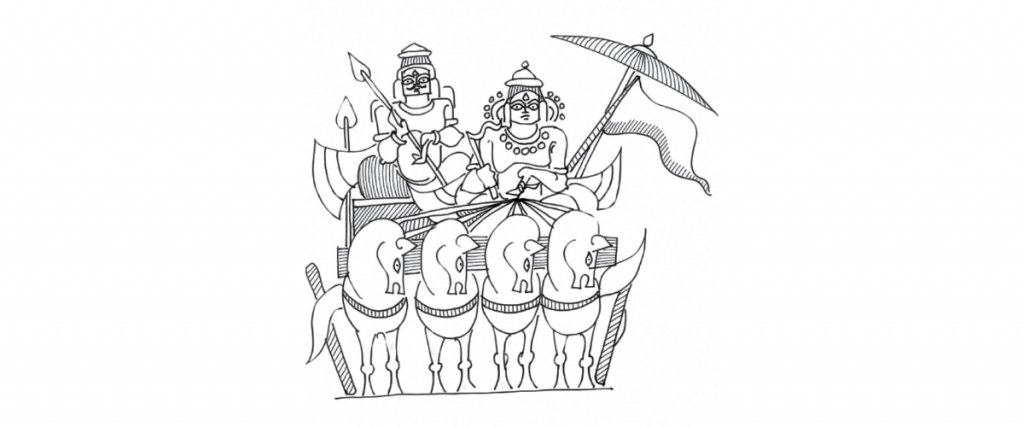
Why does Arjuna overshadow Bhima in Epics?
September 17, 2026By Dr. Devdutt Pattanaik – Author, Speaker, Illustrator, Mythologist On television, Arjuna is presented as the true hero of the Mahabharata: masculine, entitled, radiant, unmatched with the bow, chosen to receive the Bhagavad Gita from Krishna himself. He eclipses his elder brother Bhima so completely that few remember it is Bhima, not Arjuna, who kills…
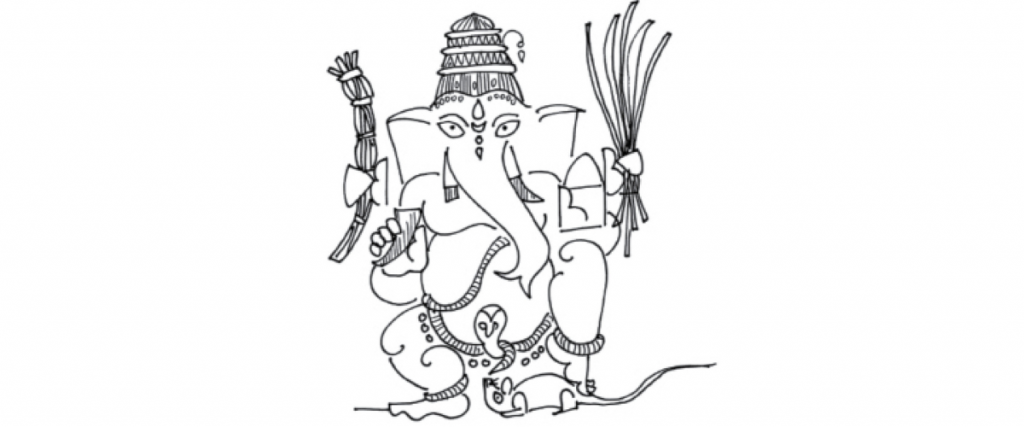
How Ganesha became the God of all things
September 10, 2026By Dr. Devdutt Pattanaik – Author, Speaker, Illustrator, Mythologist To understand why Ganesha is worshipped as the remover of obstacles and invoked before every Hindu ceremony, we must understand — and appreciate — the role elephants have played in Indian history and imagination. Elephants are not merely large animals in India; they have shaped the…
Who invented Zero?
September 3, 2026By Dr. Devdutt Pattanaik – Author, Speaker, Illustrator, Mythologist Ask any Indian schoolchild who invented zero and the answer will usually be: India did. This is one of the most common beliefs taught in schools and repeated in public discussions. The pride behind this idea is understandable. Zero is one of the greatest ideas in…
How was Atharva Veda different?
August 27, 2026By Dr. Devdutt Pattanaik – Author, Speaker, Illustrator, Mythologist The Rig Veda praises the gods. The priest composes beautiful hymns, asks for cattle, sons, victory, rain. The relationship is simple: human below, god above, prayer going upward. The Atharva Veda works differently. The priest does not pray. He acts. The Rig Vedic world is fundamentally…
The Rise of Nava-grahas
August 20, 2026Dr. Devdutt Pattanaik – Author, Speaker, Illustrator, Mythologist In Vedic times, graha meant malevolent spirits who hurt mothers and babies. It had nothing to do with planets. The 3,000-year-old Vedic Jyotisha had nothing to do with predicting the future. It was a practical science of time-keeping — fixing solstices, calibrating the lunar calendar, scheduling sacrifices….
The Chandala in the Vedas
August 13, 2026By Dr. Devdutt Pattanaik – Author, Speaker, Illustrator, Mythologist The term Chandala, referring to the “lowest of the low” in Brahmin lore, appears a few times in the Vedic literature itself. It is essentially absent from the Rigveda Samhita and emerges only in the later strata of the corpus — the later Samhitas, Brahmanas and…
Accounting Rivals and Saints
August 6, 2026By Dr. Devdutt Pattanaik – Author, Speaker, Illustrator, Mythologist Originally Brahmins were simply transmitters of the Veda. Later, as keepers of dharma-shastra, they offered administrative services to kings. From the 10th century AD, they faced enormous competition from a rival caste group offering scribal, accounting and advisory services — the Kayasthas. Brahmins had a ritually…


Recent Comments