


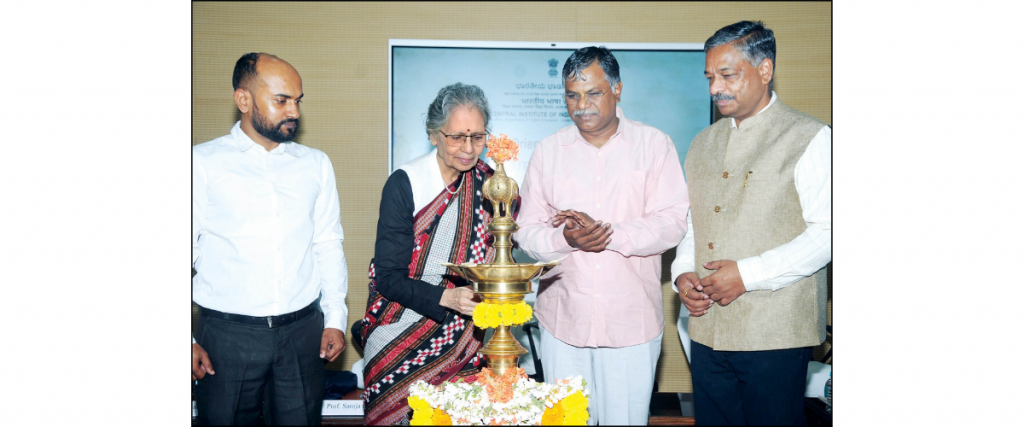
Two-week Orientation Programme at CIIL begins
Mysuru: Director of Central Institute of Indian Languages (CIIL) Mysuru, Prof. Basavaraja Kodagunti, said Kannada, Telugu, Tamil, Malayalam, Pali, Prakrit and other Indian languages have their own traditions and histories of grammatical analysis. Hence the Indian grammatical traditions cannot be confined to Sanskrit alone.
Prof. Kodagunti presided over the inaugural session of two-week Orientation Programme on ‘Indian Grammatical Tradition’, being held at CIIL, Mysuru from Monday. The programme brings together scholars, teachers and researchers from across the country, to deepen their understanding of India’s rich grammatical heritage and explore its relevance to contemporary language studies.
CIIL had received around 900 applications from across the country and neighbouring countries, with applicants representing different regions, languages and disciplines, which shows their keen interest about the topic, he added.
Pointing at the interaction among different linguistic traditions as an important feature of India’s intellectual history, Prof. Kodagunti announced about the CIIL’s initiative to prepare around 75 introductory books in linguistics, incorporating greater representation of Indian languages and perspectives.
Around 15 volumes are expected to focus on Indian grammatical traditions, while other books will incorporate Indian perspectives in areas including phonology, morphology, syntax and semantics.
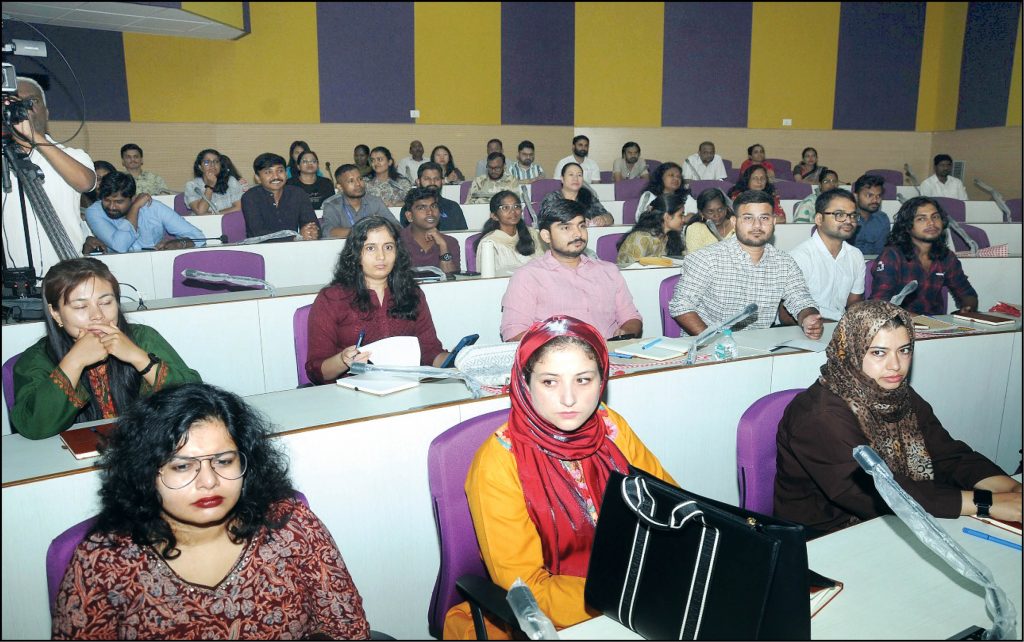
He called upon the younger generation, particularly teachers and researchers, to carry these studies forward and integrate them into their academic work.
In his welcome address, Dr. Sujoy Sarkar, Lecturer-cum-Junior Research Officer (L-JRO), CIIL and Programme Coordinator, highlighted the importance of creating greater opportunities for systematic engagement with Indian grammatical traditions. The strong response to the programme, reflected in the large number of applications received, underscored the growing academic interest in the subject.
Prof. Prasad Joshi, Vice- Chancellor, Deccan College Post-Graduate and Research Institute, described the Indian grammatical scholarship as an important contribution to the scientific study of language.
Referring to Panini and Patanjali, he explained that the Indian tradition developed systematic methods for analysing language through rules and their application. He noted that Panini’s Ashtadhyayi demonstrates how a carefully organised set of rules can account for a vast range of linguistic expressions.
Prof. Saroja Bhate, former Professor of Sanskrit and Prakrit Languages, University of Pune, in her special address, observed that Indian grammatical scholarship has contributed not only to the study of language but also to wider intellectual traditions. She noted that the work of Panini and Patanjali had influenced the development of systematic approaches to knowledge and referred to the significance of Indian grammatical studies in the history of linguistics.
The inaugural session concluded with the vote of thanks proposed by Dr. Pankaj Dwivedi, Assistant Director (Administration), CIIL.
The programme, being held from Aug. 31 to Sept. 14 at the Conference Hall of CIIL, witnessed the participation of scholars and language experts representing different linguistic and academic backgrounds.

Recent Comments