


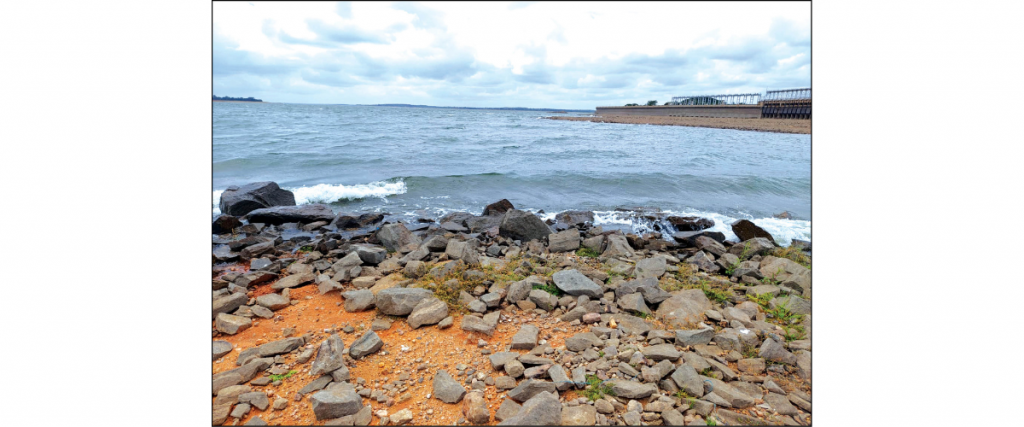
Mysuru: The water level at the Krishna Raja Sagar (KRS) Dam is steadily declining as the quantity of water being released to Tamil Nadu (TN) continues to exceed the inflow into the reservoir.
With the reservoir needing only 14 feet to reach full capacity, the continuous release of large volumes of water has caused the level to fall day by day. Heavy rains in Kodagu had initially boosted inflow into KRS. Had the water not been released to Tamil Nadu, the reservoir would have reached full capacity by now.
On Aug. 24, the water level at KRS stood at 108 feet, with an inflow of 1,435 cusecs. Following increased rainfall in Kodagu after Aug. 24, the inflow rose further.
As per the recommendations of Cauvery Water Regulation Committee (CWRC), directions of Cauvery Water Management Authority (CWMA) and the Supreme Court’s orders, water was being released from the Kabini reservoir to Tamil Nadu.
This helped raise the KRS level to 110 feet. However, with continued releases to Tamil Nadu, the water level at Kabini began to fall, prompting the Government to start releasing water from KRS on Aug. 28. Since then, 6,000 to 7,000 cusecs have been released daily.
Had such quantities not been released, KRS would have reached full capacity by now. Instead, the water level has fallen to 109 feet.
This morning, the reservoir level stood at 108.76 feet, with an inflow of 3,028 cusecs, while the outflow to Tamil Nadu was 9,253 cusecs, more than three times the inflow. The continued release of water at such high volumes has caused the reservoir level to decline further.
Kabini, too, has witnessed a sharp fall in its water level. Against its full reservoir level of 2,284 feet, the level has dropped to 2,269.73 feet. Today, the inflow into Kabini was 3,526 cusecs, while the outflow to TN was 3,000 cusecs.
Meanwhile, 8,850 cusecs are being released from the Hemavathi reservoir in Hassan district and 1,700 cusecs from the Harangi reservoir in Kodagu.
The four major reservoirs in the Cauvery Basin — Harangi, Hemavathi, KRS and Kabini — currently hold a combined 80.02 tmcft of water. Excluding dead storage, around 70 percent of the water is available for use.



Recent Comments