


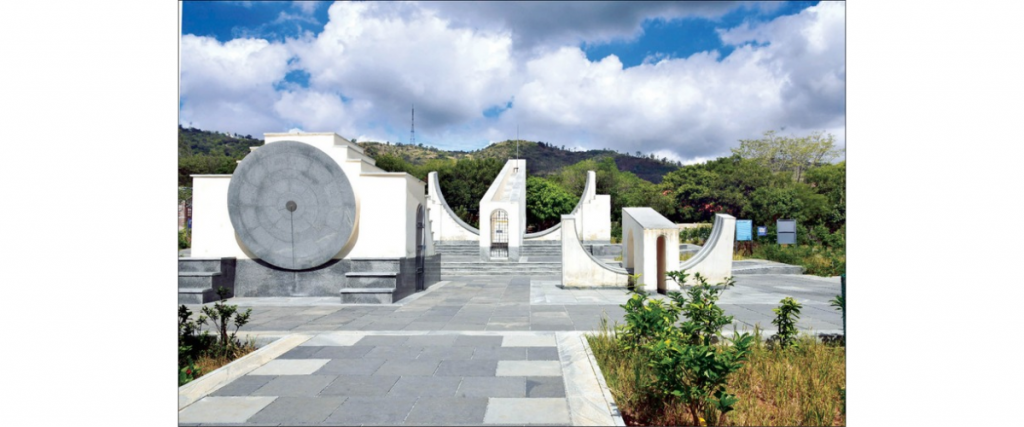
A unique astronomical observatory at Bhartiyogadhama
Mysuru: After Mysuru got India’s first LED dome planetarium at the foot of Chamundi Hill, the Cultural Capital of Karnataka is all set to achieve another milestone with South India’s first Indian-style astronomical observatory modelled on historic Jantar Mantar observatories in Jaipur, Ujjain and Delhi, coming up at Bhartiyogadhama in Uttanahalli.
The planetarium was inaugurated by PM Narendra Modi on Nov. 13.
The observatory ‘Vedhashale’ is also being developed at the foot of Chamundi Hill in three phases — ‘Purvapada’, ‘Madhyapada’ and ‘Paschimapada.’ It will impart practical knowledge of astronomy to students, enthusiasts and researchers, besides helping in accurate Panchanga calculations.
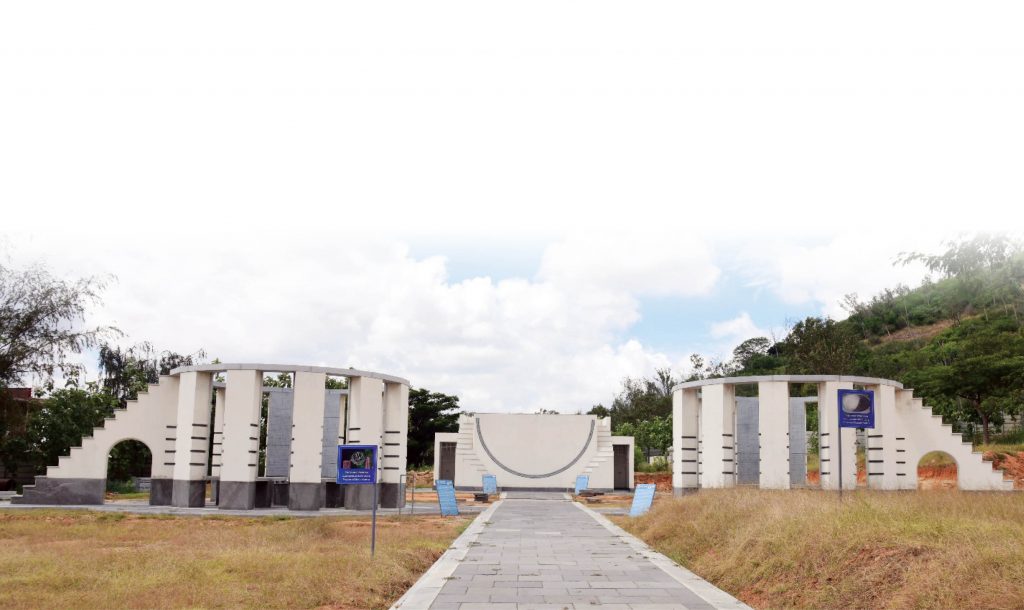
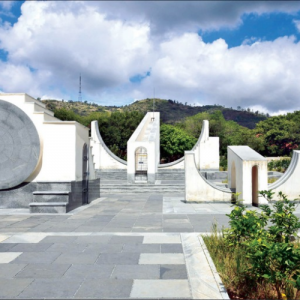
‘Dakshinottara Bhitti Yantra,’ an astronomical instrument at ‘Vedhashale’ observatory at Bhartiyogadhama in Uttanahalli, Mysuru.
The ‘Madhyapada’ section was inaugurated on Dec. 7, 2025, while some of the instruments in the ‘Paschimapada’ section were opened to the public on July 26, 2026.
A few more instruments and facilities, along with a museum, are under construction. According to Bhartiyogadhama officials, the facility will be opened to the public soon.
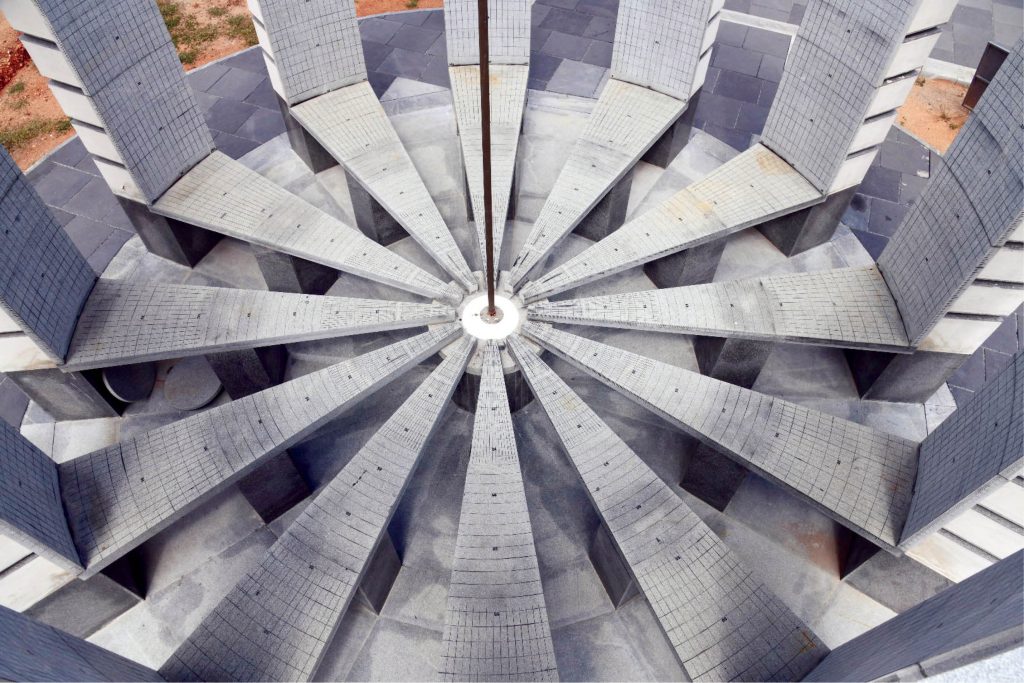
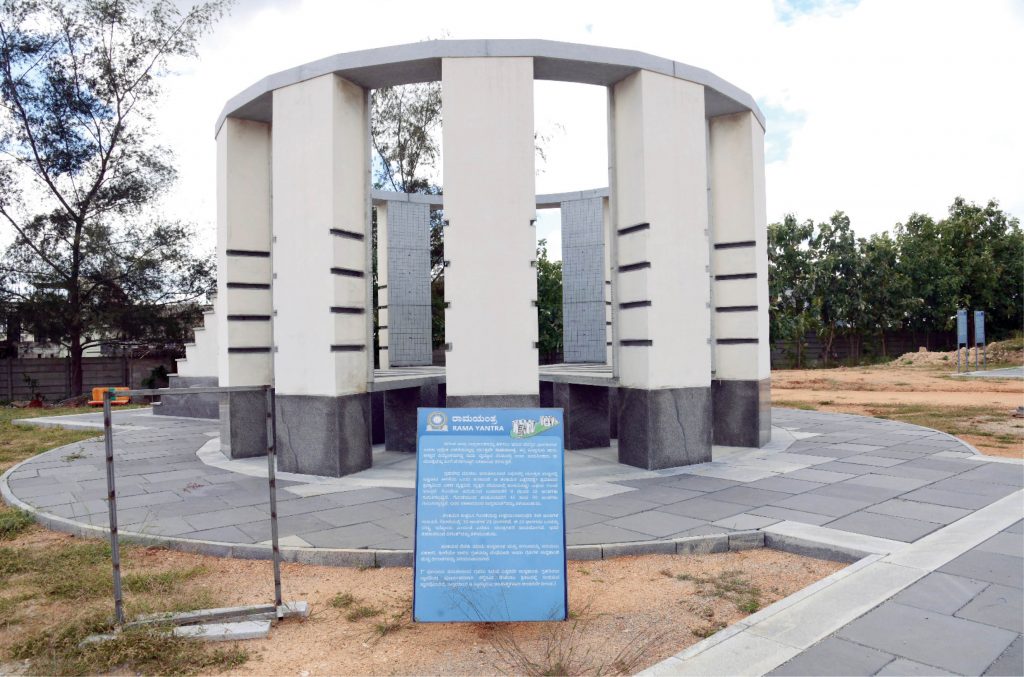
Works on ‘Rama Yantra’ under progress at Jantar Mantar observatory at Uttanahalli in city.
Work on the ‘Purvapada’ section, including the ‘Ram Yantra’ and the exhibition building, is progressing rapidly. The observatory is expected to be fully operational in a few months.
The observatory houses traditional astronomical instruments such as the ‘Ram Yantra’, ‘Dakshinottara Bhitti Yantra’ and ‘Vrittishtamsha Yantra’. These instruments, based on ancient designs, were used to study planetary movements, eclipses and solstices and measure time through the observation of sunlight.
No dependence on modern gadgets
According to Dr. K.L. Shankaranarayana Jois, Founder of Bhartiyogadhama, the observatory is designed to study the positions of the Sun, Moon and Planets through direct observation, without depending on modern technology or telescopes.
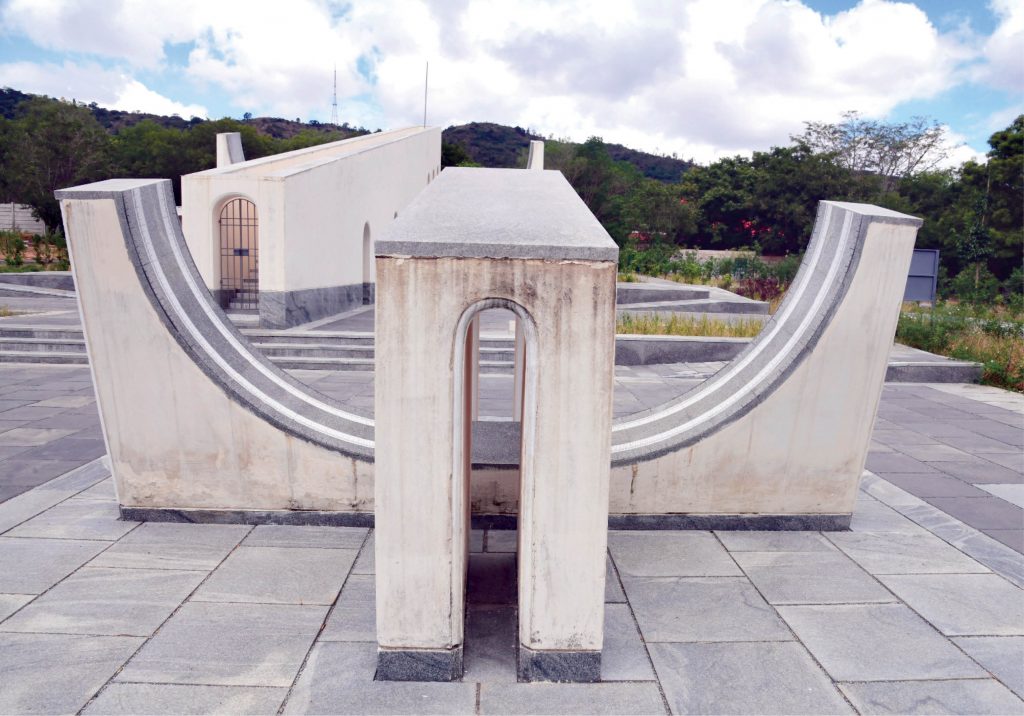
It uses the principles of ancient mathematics, geometry and precision architecture to calculate lunar days (tithis), constellations (nakshatras), eclipses and solstices. The idea is also to examine astrological calculations through scientific observation. “The movement of Planets can be measured accurately by correlating the direction and length of the Sun’s shadow with mathematical formulas,” Dr. Shankaranarayana Jois said. Once the second phase is inaugurated, the facility will be open to the public for observation and educational activities.
Focus on observation and verification
In ancient Indian scientific tradition, the word ‘Vedha’ refers to observation through analysis. A ‘Vedhashale’ was a specialised centre where the movements and positions of celestial bodies were studied using precisely designed instruments.
Ancient astronomers used these instruments to calculate planetary positions, predict eclipses and record other astronomical events.
Dr. Jois said, Panchangas today are prepared using information from sources such as the Nautical Almanac of London and astronomical data from NASA and the Jet Propulsion Laboratory Development Ephemeris (JPL DE).
One of the main objectives of the observatory, he said, is to independently verify these calculations through direct observation.
The aim is to derive and cross-check Panchanga calculations using mathematical principles contained in ancient Indian works such as the ‘Surya Siddhanta’, ‘Aryabhatiyam’ and ‘Siddhanta Shiromani’, along with observations made using traditional stone-and-mortar instruments, rather than relying entirely on data from foreign sources.
Reviving mathematical heritage
Dr. Jois said, mathematical foundations of India’s ancient knowledge systems, particularly astrology, were gradually being overlooked. The ‘Vedhashale’ seeks to revive this tradition and encourage a deeper understanding of the mathematical principles behind it.
About Rs. 1.5 crore has been spent on the project so far. The total expenditure is expected to reach Rs. 15 crore to Rs. 20 crore when the observatory is completed.
The main objective of this ‘Vedhashale’ is to promote the systematic and scientific study of astrology based on the principles of ancient mathematics and geometry. We are developing it as a unique, well-organised facility of its kind in the country. Efforts are also being made to obtain financial assistance from the Central Government, which will be put to effective use if sanctioned.
— Dr. K.L. Shankaranarayana Jois, Founder, Bhartiyogadhama
Recent Comments