


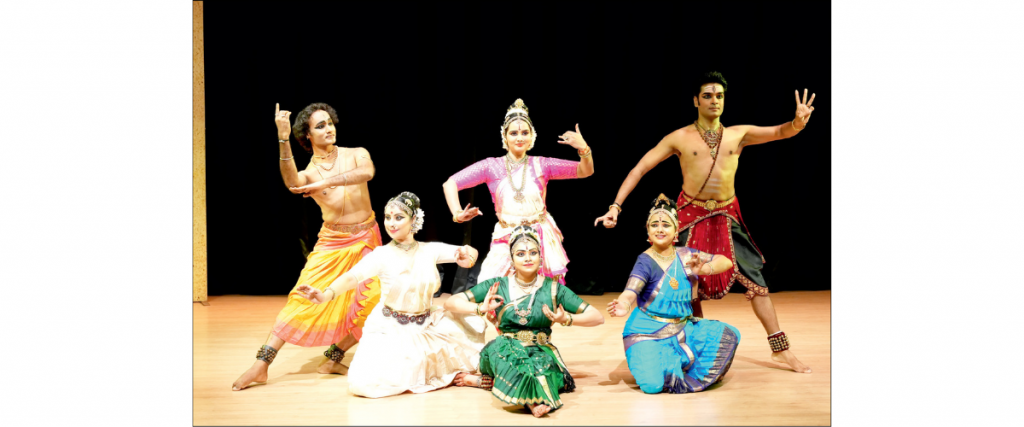
Adi Ashtakam…
Adi Shankaracharya, revered as one of India’s greatest spiritual preceptors, was an extraordinary intellectual prodigy and a profound philosopher. Through his commentaries on the major Hindu scriptures, he articulated and propagated the philosophy of Advaita Vedanta across India in the 8th century. He is also traditionally credited with composing numerous Ashtakas — devotional compositions consisting of eight stanzas, rich in poetic beauty, rhythm and spiritual profundity.
Shankaracharya composed more than thirty such Ashtakas in praise of various deities. Written in chaste Sanskrit, they portray the beauty, attributes and spiritual significance of the chosen deity with remarkable poetic imagery. Although these compositions have long been cherished within Sanskrit literary and religious traditions, their evocative imagery lends itself beautifully to the language of Indian classical dance.
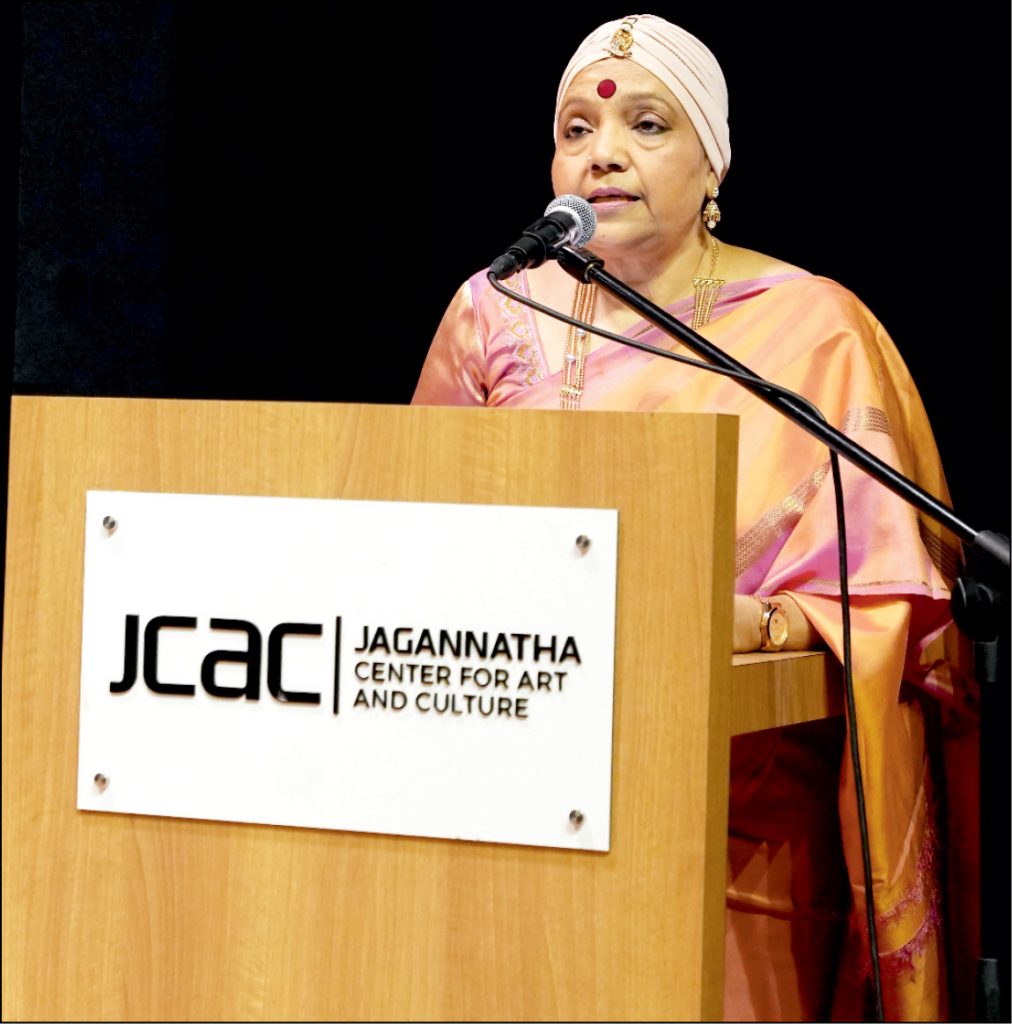
It was this spiritual and aesthetic dimension of the Ashtakas that captivated Dr. R.K. Usha, a well-known dancer from Bengaluru. Inspired by their profound meanings, she conceived a dance presentation that would bring these Sanskrit verses alive through movement, expression and music. Along with six accomplished young dancers, she presented the production ‘Adi Ashtakam’ on Aug. 12 under the aegis of Jagannatha Centre for Art and Culture (JCAC).
For the recital, Dr. Usha selected passages from six Ashtakas — dedicated to Sharada, Panduranga, Yamuna, Ganga, Kalabhairava and Guru. Rather than presenting each composition in its entirety, she carefully chose verses that could evoke the spiritual essence, visual imagery and distinctive personality of each divine form.
The young ensemble comprised Vaidehi Kulkarni, Gururaju, Rekha Satish, Ayana Mukherji, Sonu Satishkumar and Mithun Shyam, dancers drawn from different parts of India.
Mithun was the sole Bharatanatyam exponent, while the others were accomplished Kuchipudi dancers. The musical support was provided by Vidushi Deepthi Srinath on vocals, Sharath Suryanarayana on nattuvanga, Mithun Shakthi on mridanga, Raghunandan on flute and Shubha Santosh on veena. Dr. Usha’s lucid and cultured explanations preceding each Ashtaka greatly enhanced the audience’s understanding and appreciation of the presentation.
The recital opened with Sharada Bhujanga Ashtakam, invoking the Divine Mother Saraswati. The verses celebrate her grace, compassion, beauty and serenity, as well as her many manifestations. The imagery of the Mother associated with the deer and horse, lion and eagle, swan and elephant, and her sacred presence in Sringeri on the banks of the Tunga, created a rich visual landscape. Vaidehi Kulkarni portrayed this progression from devotion to divine illumination with delicacy and grace.
This was followed by Panduranga Ashtakam, presented by Gururaju. Panduranga, the Supreme Being, is visualised standing upon the bricks offered by his devotee Pundareeka on the banks of the Bhimarathi. The verses identify him with Parabrahma, the source of creation and the embodiment of eternal bliss, surrounded by devoted sages. Gururaju succeeded in capturing both the majesty and devotional tenderness of Panduranga.
The serene waters of the Yamuna came alive next. Revered for her intimate association with the divine love of Sri Krishna, Radha and the Gopikas, Yamuna is portrayed by Shankaracharya as a river of serenity and beauty.
As the daughter of Kalinda, she is also imagined in a deep blue hue reminiscent of Krishna himself. The Yamunashtakam evokes the gentle, romantic spirit of this sacred river. Rekha Satish’s soft, flowing and swaying movements beautifully reflected Yamuna’s tranquil nature.
From the serenity of Yamuna came the grandeur of Ganga. The sacred river is celebrated as the divine garland adorning Lord Shiva and as the purest of waters, capable of washing away the sins of humankind. The Gangashtakam evokes her heavenly origin, her descent to earth, her fragrant waters and her adornment with flowers, while ultimately portraying her as a pathway to liberation and divine bliss. Ayana Mukherji, dressed in white, seemed to flow across the stage like the sacred Ganga herself.
The mood then transformed dramatically with Kalabhairava Ashtakam. Kalabhairava, the fierce yet benevolent guardian of Kashi, embodies the cosmic power of Lord Shiva. The Ashtakam glorifies him as the eternal master of Kala, or Time, the destroyer of ego and the bestower of liberation. The imagery of the trident, the garland of skulls and the ceaseless rhythm of creation and dissolution demanded strength, precision and intensity. Mithun Shyam’s rigorous movements were particularly suited to this powerful portrayal.
The recital concluded with Guru Ashtakam, perhaps the most contemplative of the six presentations. At its heart lies the profound concept of sampoorna sharanagati — complete surrender to the Guru. References to Shabari and to King Janaka accepting the much younger Ashtavakra as his Guru reinforce the timeless truth that wisdom transcends age, status and worldly accomplishments. The recurring question, “Tatah kim? Tatah kim?” — “What then?” — asks what meaning worldly achievements possess without the grace and guidance of the Guru.
Sonu Satishkumar brought maturity and depth to this concluding presentation. Her performance left the audience with the central message of the evening: that knowledge, devotion and artistic expression ultimately lead towards surrender and spiritual awakening.
‘Adi Ashtakam’ was therefore far more than a recital of Sanskrit verses. It was an imaginative meeting of poetry, philosophy, music and classical dance. By transforming the profound imagery of Shankaracharya’s Ashtakas into movement and expression, Dr. Usha made these ancient devotional compositions accessible as a living, visual experience.
The evening concluded as a deeply spiritual and aesthetically enriching presentation — one that lingered in the mind long after the curtains fell.
—Dr. Rama V. Bennur
Recent Comments