


Incident-free Jumboo Savari
Mysuru: With preparations for the Mysuru Dasara gaining momentum, the Mahouts and Kavadis accompanying the elephant contingent have turned to their traditional forest deities, seeking blessings for a smooth and trouble-free Jumboo Savari.
The prayers come at a time when the Forest Department is carefully preparing for the selection of the next ‘Ambari’ elephant following the retirement of celebrated tusker Abhimanyu, who carried the Golden Howdah six times. As part of the preparations, elephants in the Dasara contingent are being trained to carry wooden howdahs and sandbags.
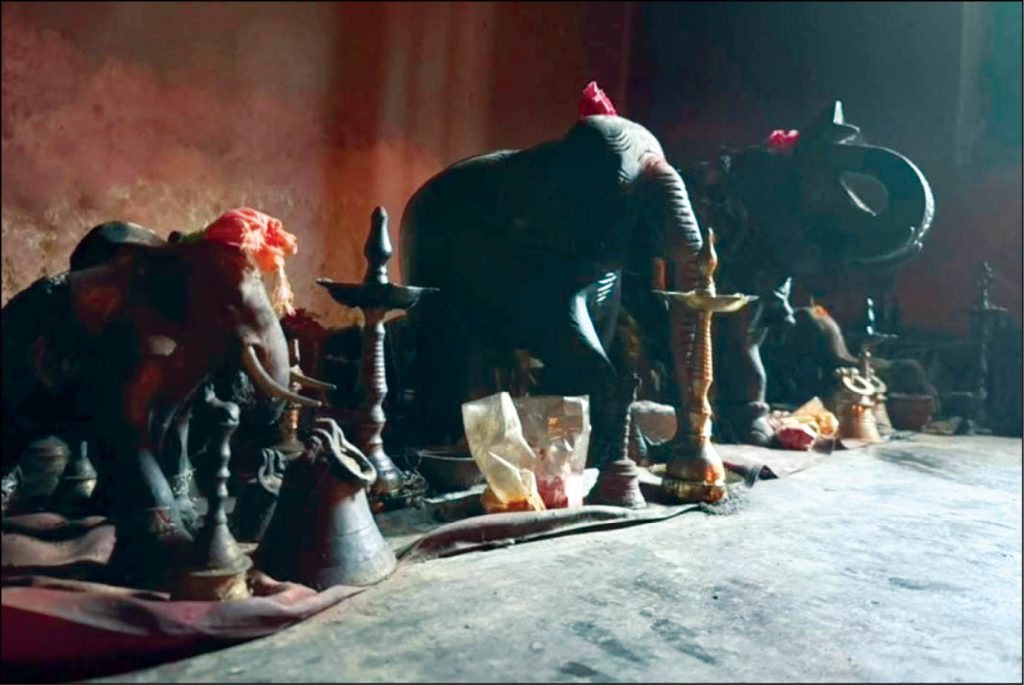
Figurines of Dasara jumbos Arjuna, Drona and Rajendra at Ammale Ajjaiah and Ajjamma Shrine.
First interruption
Tusker Mahendra took part in the first wooden howdah rehearsal on Sept. 25. However, heavy rain forced the exercise to be called off midway, with the howdah being removed within the Mysore Palace premises. The elephants were later taken on a walk without any load.
The interruption on the first day of training left the handlers concerned. The following day, coinciding with the full moon, representatives of the Mahouts and Kavadis accompanying each of the 12 elephants selected for this year’s Dasara contingent visited three traditional shrines inside the Nagarahole Tiger Reserve.
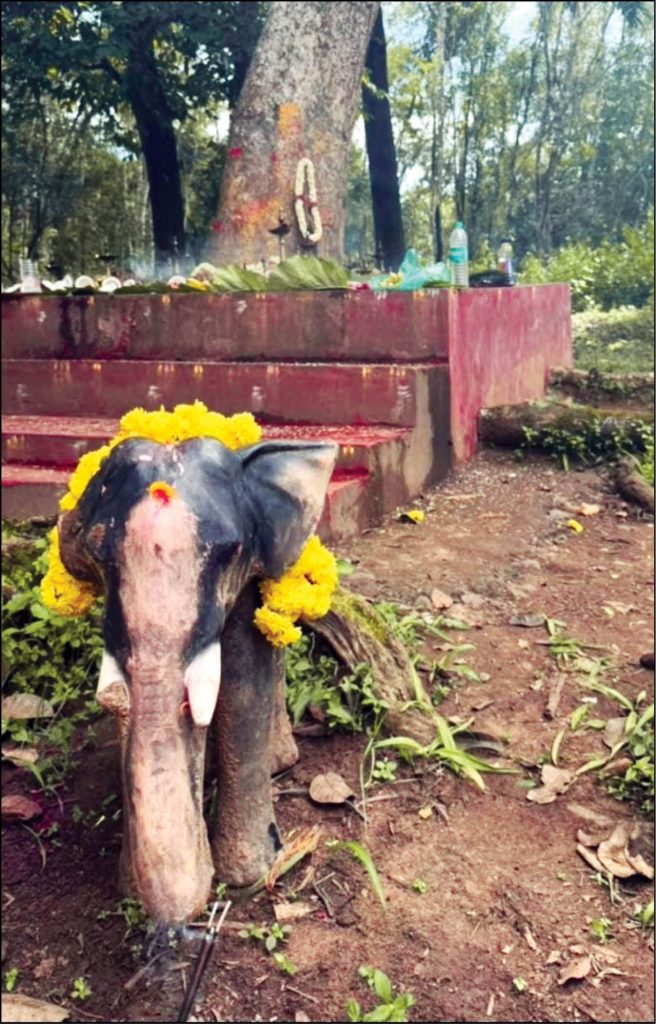
A replica of an elephant at Ganaguru Ajjaiah and Ajjamma Temple.
Prayers at three shrines
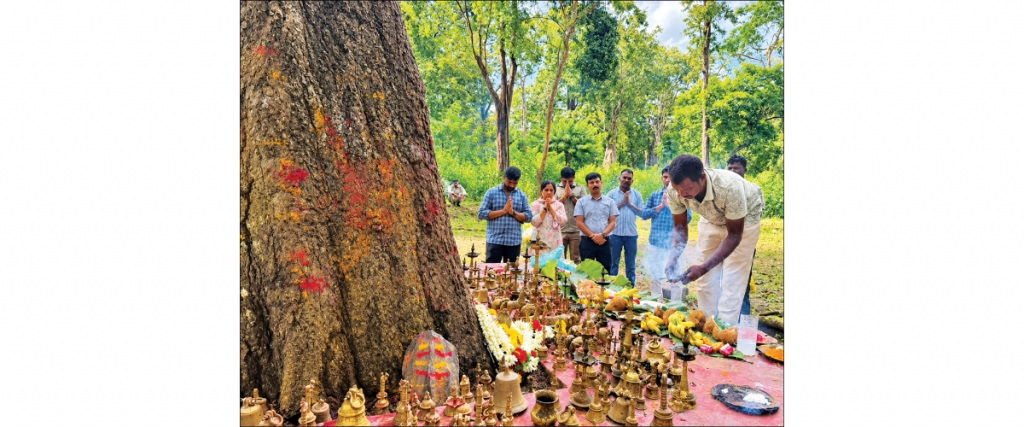
Accompanied by Forest Department officials, the team offered prayers at the Ganaguru Ajjaiah and Ajjamma Temple, the Ammale Ajjaiah and Ajjamma shrine and the Mastamma Temple near Balle Elephant Camp.
The handlers prayed for strength and discipline for whichever elephant is entrusted with carrying the ‘Ambari’ and sought blessings for the Jumboo Savari to pass off without obstacles. The practice is part of an old tradition followed by Mahouts, Kavadis and tribal communities associated with the elephant camps inside the Nagarahole and Bandipur Tiger Reserve.
Inherited forest traditions
Before major events, especially the Dasara procession, they traditionally visit forest shrines and seek the blessings of their guardian deities.
The rituals are also performed when elephants display unusual behaviour or when handlers sense that something is not quite right, reflecting the close bond between the elephant handlers, their animals and the forest traditions they have inherited.
During the visit on Saturday, Sept. 26, the team offered flowers, fruits and coconuts and lit incense sticks and camphor at the shrines.
For the Mahouts and Kavadis, the prayers were more than a ritual. They were a customary appeal to the forest deities for the strength and well-being of the elephants as they prepare for the most important responsibility of their year.

Recent Comments