


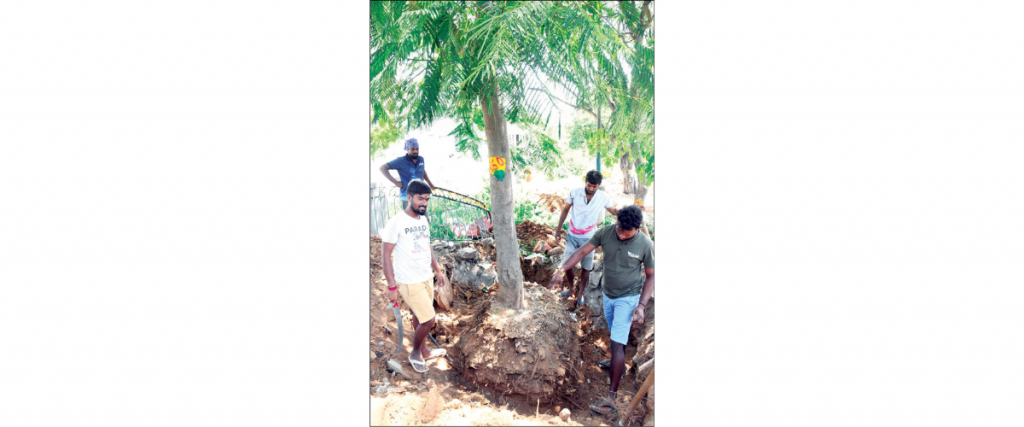
NHAI begins tree translocation for Kempegowda Circle flyover
Mysuru: The National Highways Authority of India (NHAI) has begun translocation of trees as part of the ongoing flyover project at Kempegowda Circle (Manipal Hospital Junction).
The NHAI is executing the Rs. 63.67-crore flyover and underpass (grade separator) project at the junction of the Mysuru-Bengaluru Highway (NH-275) and the Outer Ring Road.
The project is aimed at easing chronic traffic congestion at one of the city’s busiest junctions, particularly during peak hours, weekends and holidays.
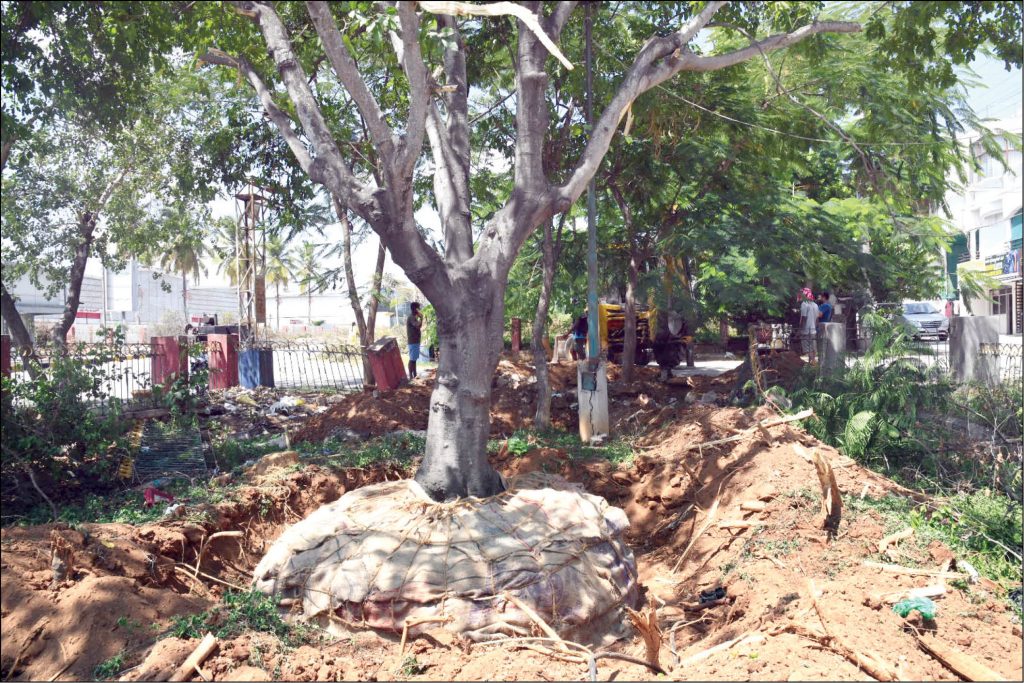
Tree root part is covered with moist gunny bags and tied to prevent soil from falling off.
Following a recent public hearing on the trees affected by the project, authorities initially identified 350 trees for felling. After considering public suggestions and consultations with the Forest Department, the plan has been revised to fell 60-65 trees, transplant 278 and retain 10 in their existing locations.
Excavation, translocation
According to Deputy Conservator of Forests (Territorial) K. Paramesh, the NHAI floated tenders to select a specialised agency with experience in scientific tree transplantation.
The transplantation process involves excavating around the tree base using specialised machinery, carefully cutting the lower roots, uprooting the tree with earth-moving equipment and transporting it by crane to the designated site.
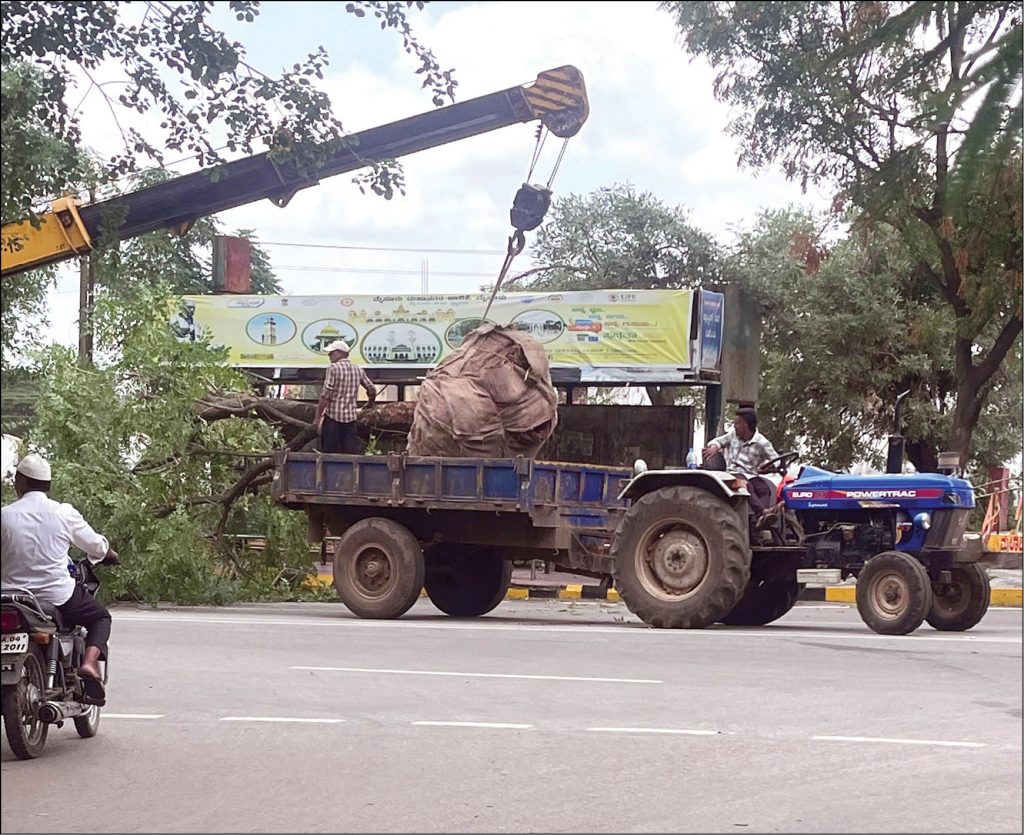
Process of relocation to the identified site.
A roughly two-and-a-half-foot square area around the trunk is excavated to a depth of about three feet. Experts assess the likely root depth based on the age and girth of each tree before the lower roots are cut for extraction.
The Mysuru City Corporation (MCC) has identified transplantation sites, including a municipal park in Shivarathreeshwara Nagar and an area beneath high-tension power lines in Vijayanagar First Stage.
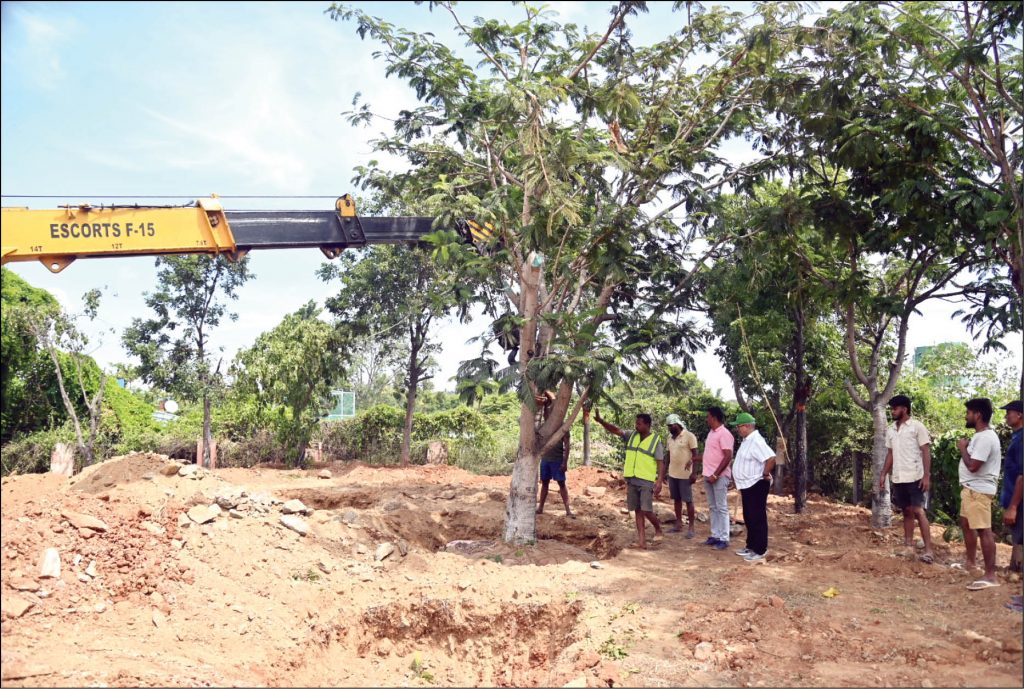
Planting of the tree with a crane at the translocation site.
At the new locations, pits are prepared with potassium humate, insecticides and fungicides before the trees are replanted.
What about survival prospects?
Environmental activists, however, have raised concerns over the long-term survival of the transplanted trees. Activist Mansoor said the process was being carried out without adequate soil testing, species assessment and adherence to transplantation norms.
He pointed out that the MCC had earlier struggled to maintain even smaller saplings planted in the area, raising questions over how fully grown transplanted trees would be cared for.
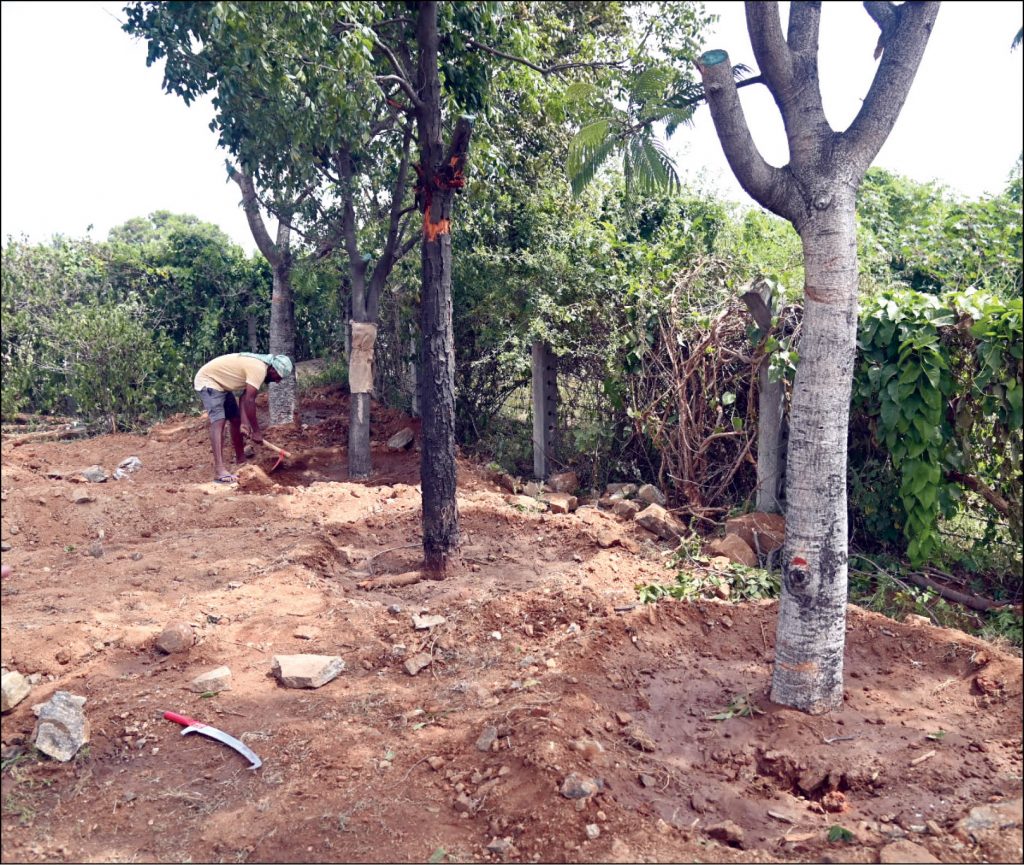
Levelling of the earth and water is poured at frequent intervals for regeneration.
While low-growing species are proposed for areas beneath high-tension lines, activists have urged authorities to strictly follow scientific protocols to avoid future pruning, power-related hazards and other complications.
Water availability is another concern. The MCC is currently supplying water to the transplanted trees through tankers, but activists fear that poor rainfall could lead to shortages and affect their survival in the long run.

Recent Comments