


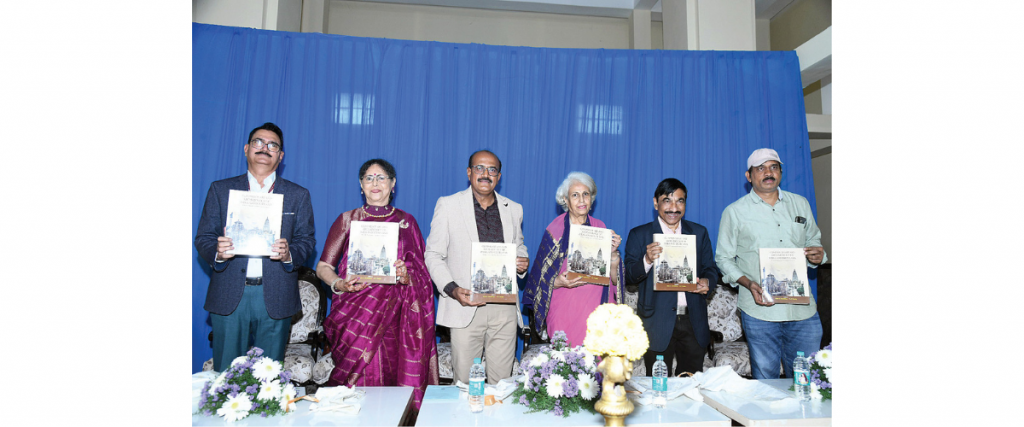
Mysuru: Eminent Archaeologist and former Regional Director (North) of the Archaeological Survey of India (ASI), Padma Shri Dr. K.K. Muhammed, has called for greater public awareness of India’s heritage, culture and history, stressing that ancient monuments are priceless national assets that must be preserved.
Delivering the keynote address at an event organised for the release of ‘Glimpses of Art and Archaeology of India and South Asia – Sri K.K. Muhammed Felicitation Volume’ at Chandrashale Thotti in Mysore Palace last evening, Dr. Muhammed urged both the Government and citizens to share responsibility for conserving the country’s heritage.
Dr. Karingamannu Kuzhiyil (K.K.) Muhammed was a member of the ASI team that first discovered the remains of the Sri Ram Temple at Ayodhya during excavations in 1976. As part of the excavation at the Babri Masjid site, he identified temple remains on the western side of the mosque, believed to date back to the Gurjara Pratihara dynasty of the 10th and 11th centuries.
He unearthed the temple foundation with 12 pillars arranged in the Ashtamangala pattern. Dr. Muhammed is also credited with the discovery of the Ibadat Khana at Fatehpur Sikri, besides identifying several Buddhist stupas and monuments. He also led the restoration of the Bateshwar Temple complex and 46 monuments in Delhi.
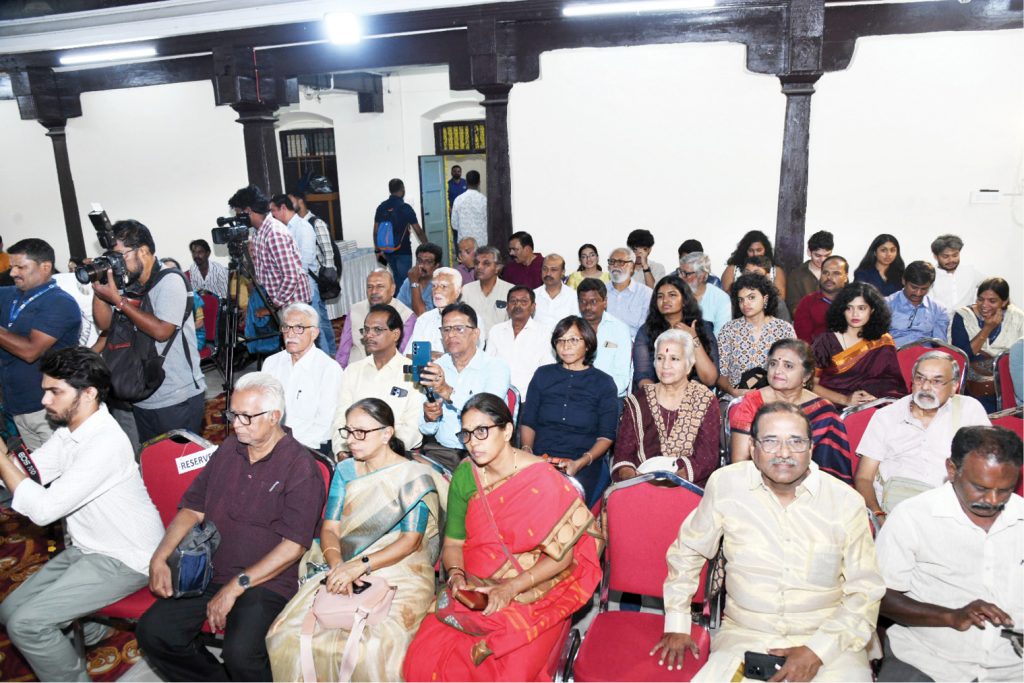
A section of the audience.
Contribution to nation’s economic growth
The felicitation volume has been edited by Dr. Githa U. Badikillaya and Dr. O.P. Pandey. “A monument is never a burden. With proper planning, efficient management and effective marketing, heritage sites can significantly contribute to the nation’s economic growth,” Dr. Muhammad said.
Dr. Muhammed said, awareness of art, archaeology and tradition should be linked to tourism, describing cultural heritage as a major economic resource. Citing France, Spain and Italy, he said these countries have successfully preserved their monuments while developing them into global tourism attractions. “India too must adopt such models,” he said.
He cautioned that merely celebrating India’s glorious past was not enough. “We must translate words into action. Heritage should not only be praised, but its significance must be communicated effectively to the public. This responsibility lies not just with the Government but with every citizen,” Dr. Muhammed added.
He said, cultural tourism remains one of the strongest pillars of the economy, with India’s traditions, architecture and cultural practices attracting visitors from around the world. Conserving monuments, he said, would boost tourism, generate employment and enhance the country’s cultural standing.
Pramoda Devi Wadiyar, a member of the erstwhile Mysore Royal Family, who released the felicitation volume, stressed the need to instil pride in India’s traditions and heritage among the younger generation.
She commended Destination Heritage, led by Dr. Githa U. Badikillaya, for organising lectures, dialogues and workshops over the past decade to promote traditional crafts, folk culture and heritage art forms.
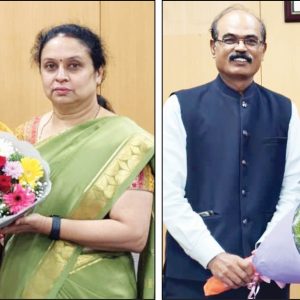
A. Devaraju, Commissioner, Department of Archaeology, Museums & Heritage, Mysuru, Dr. K. Munirathnam Reddy, Director (Epigraphy), Archaeological Survey of India (ASI), Mysuru, Dr. Sujan Nayan, Superintendent Archaeologist, Bengaluru Circle and Dr. Githa U. Badikillaya, Editor, Felicitation Volume.
Recent Comments