


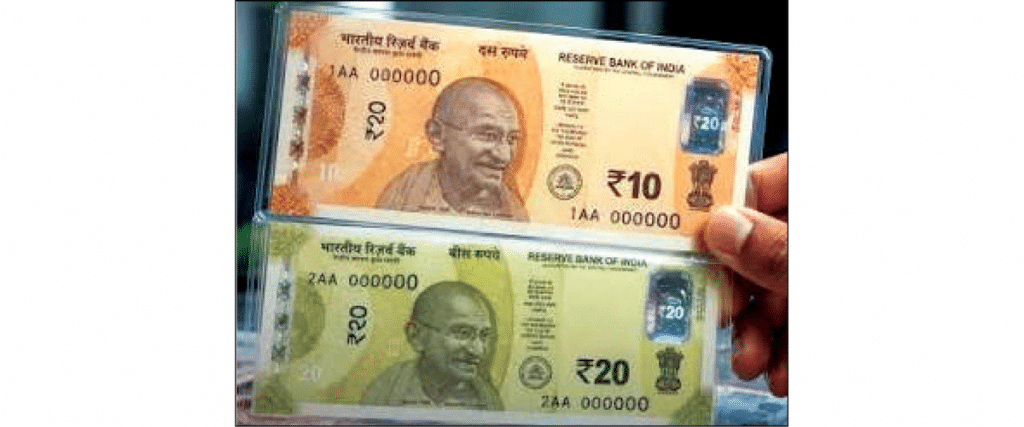
Develops model design for currency notes of Rs. 10 and Rs. 20 denominations
By Bapu Lingaraj Urs
Mysuru: For the first time in India, polymer (plastic) currency notes are set to undergo field trials, with the Reserve Bank of India’s note printing unit in Mysuru playing a key role. Significantly, the model design for the notes has also been developed at the Mysuru RBI facility.
Polymer notes are already in use in more than 50 countries across the world. Australia pioneered their use in 1988, followed by countries including Canada, Britain, Singapore and New Zealand. India is now taking steps to test the use of polymer notes.
Acting on the recommendation of the RBI’s Central Board, the Centre has approved field trials of polymer notes in Rs. 10 and Rs. 20 denominations. The proposal is for 1 billion pieces each of the two denominations, with regular issuance to be considered after the successful completion of the trials.
R&D in Mysuru
The responsibility of preparing the model design was handed to the Mysuru RBI facility. Sources said the Research and Development (R&D) wing in Mysuru finalised the design, which was then sent to Mumbai. After comparing it with polymer notes used in other countries, RBI officials approved the design and recommended the proposal for further consideration.
The polymer notes will be issued alongside existing paper notes. The Government has clarified that there is no proposal at present to replace paper currency with polymer notes.
India had earlier experimented with polymer notes. In 2012-13, the RBI had planned a field trial of one billion Rs. 10 polymer notes in five cities, Mysuru, Kochi, Jaipur, Bhubaneswar and Shimla, selected for their varied geographical and climatic conditions. However, the proposal did not progress to regular circulation.
The present initiative has revived the plan after more than a decade. The RBI’s currency-printing arm, Bharatiya Reserve Bank Note Mudran Private Limited (BRBNMPL), has invited global bids for polymer substrate sheets embedded with security features for the proposed notes.
Pilot circulation
The proposed field trials are aimed at assessing the durability and performance of polymer notes under Indian conditions. Polymer notes are considered more durable than conventional paper notes and are resistant to moisture, dirt and wear and tear.
The trials will help the RBI assess their durability, usability and other advantages and drawbacks before a decision is taken on regular issuance.
To produce the polymer notes, BRBNMPL has floated a global tender for the required polymer substrate and security features. The initial requirement is to be met through imports.
Polymer notes are already used in several countries, with Australia being the first to introduce them in 1988. India, too, is now taking its first steps towards adopting the technology, with Mysuru’s RBI note printing facility playing an important role in the process.
What are polymer notes?
Polymer notes are made from special synthetic polymer sheets, essentially a type of plastic. Compared to paper currency, they are more durable and last much longer. They do not tear or get damaged easily when exposed to water or rain.
More importantly, polymer notes offer enhanced security against counterfeiting. They can incorporate advanced security features such as holograms and micro-text, making them more difficult to counterfeit than conventional paper notes. Paper notes have a relatively shorter lifespan. Polymer notes, being more durable, can reduce the frequency of replacement and printing, potentially bringing down costs in the long run.
Cost-cutting factor
The introduction of polymer notes could help reduce the cost of currency printing over the long term. According to RBI figures, the cost of printing currency stood at Rs. 6,372 crore in 2025 and Rs. 4,875 crore in 2026.
In 2017, following demonetisation and the introduction of new currency notes, printing costs had risen to a record Rs. 7,965 crore.



Recent Comments