


By Dr. Devdutt Pattanaik – Author, Speaker, Illustrator, Mythologist
In India, salt is not just a mineral. It is a magical substance that not only enhances the taste of food but also protects the body from ‘nazar’ or evil eye.
Indians speak of two types of salt: one from the mountains and the other from the sea. Mountain salt comes from the Himalayas, which is an ancient seabed uplifted millions of years ago. The most famous pink salt comes from Khewra of Pakistan. This is the “sendha namak” used in fasting rituals and considered most pure as it comes from the Himalayas and is uncontaminated by sea.
India today is trying to boost its own self-sufficiency for rock salt at the salt mines of Mandi district of Himachal Pradesh. Sea salt is made by evaporating sea water in the salt pans of Gujarat’s Rann of Kutch, coastal Andhra, Tamil Nadu and Konkan. This has been worked for centuries by communities who know the rhythm of the tide and sun.
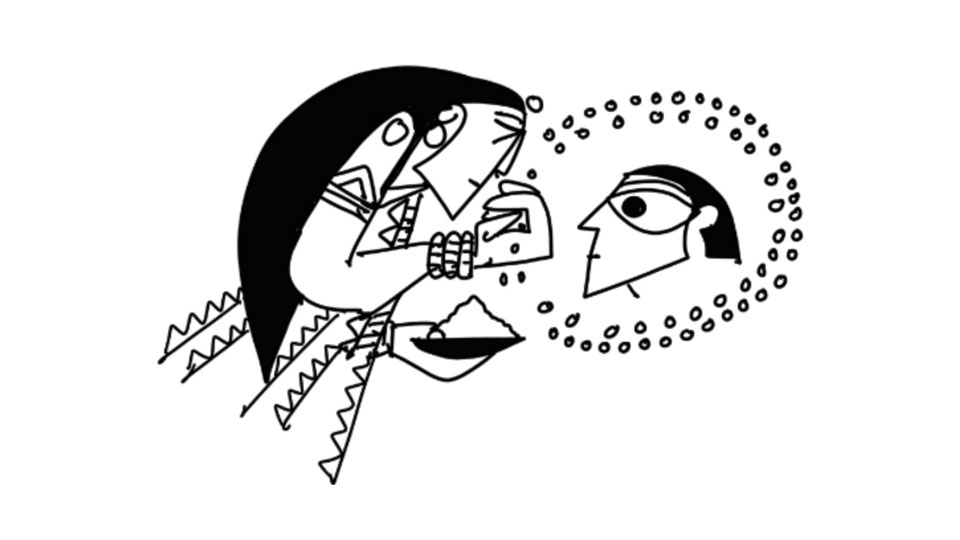
As in many parts of the world, salt in India is used as a weapon against envy, malice and invisible forces. A handful of salt circled around a person’s head was thrown into the fire or the wind to remove all negative energy. Salt scattered at thresholds to keep harm from entering. Salt dissolved in water to cleanse homes before a festival. These gestures appear instinctively Indian, but they belong to a much older, global language.
The Greeks toss salt into flames to break the evil eye, Italians over the shoulder to repel envy, Japanese Shinto shrines scatter salt to purify, Middle Eastern doorways are protected by salt piles and Latin Americans bathe in saltwater to dissolve mal de ojo.
Bali’s unique salt is Palung salt harvested on black volcanic sand beaches, dried on trays made of coconut wood. This is used to flavour food and to ward off malevolent spirits in local rituals. This is not cultural borrowing but a shared human intuition.
Salt is so central to human trust that it became a metaphor for loyalty itself. In India, we still say namak halal (faithful to the salt) and namak haram (betrayer of the salt). These phrases came through Persian, Arabic and Turkish cultural currents where sharing salt symbolised an unbreakable bond between protector and protected, host and guest, ruler and soldier.
Salt was once traded across the world by caravans and nomads. The word “salary” comes from the Latin word salarium, which means “salt money,” and originally referred to the allowance given to Roman soldiers to buy salt. Salt was a valuable commodity in ancient times and the salarium became a fixed payment for service, leading to the word’s modern meaning of regular compensation for work.
Shakespeare’s play King Lear was inspired by a folk tale based on salt. In this story, a king banishes his youngest daughter after she truthfully tells him she loves him like meat loves salt. Years later, the king realises the value of her words when he eats food she has prepared with no salt and finds it flavourless, leading to his reconciliation with her.
When an Indian hand circles salt to remove the evil eye, it is not an isolated superstition. It is a ritual language that once travelled on caravans, on ships, on the breath of stories told around hearths from West Asia to South Asia and beyond.




Recent Comments