


The Lighter Side
By Dr. R. Balasubramaniam
There is something deeply unfair about the universe and I have spent considerable time — mostly between two and four in the morning — thinking about it.
The young, bless their well-rested hearts, cannot wake up. The old, curse their hyperactive nervous systems, cannot sleep. Somewhere in this arrangement there is a divine joke and I suspect the joke is entirely on me.
Let me explain the situation as I understand it.
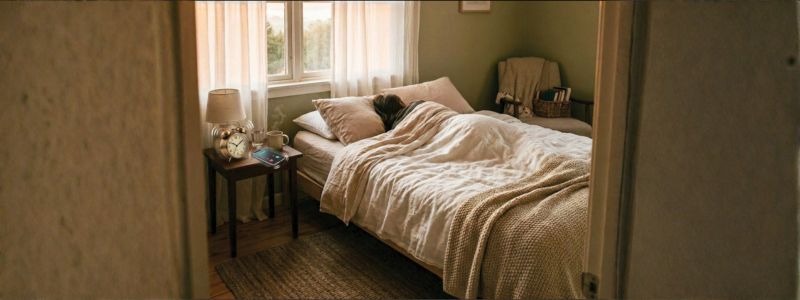
My younger friends and colleagues live in a state of perpetual warfare with their alarm clocks. The battlefield is the bedroom at six in the morning, the combatants are a sleepy human being and a smartphone set to the most aggressively cheerful ringtone known to civilisation and the outcome is never really in doubt. The smartphone announces its intentions. The human being reaches out with the slow, purposeful grace of a sloth who has given the matter serious philosophical consideration and locates the snooze button. Peace descends. Nine minutes later, hostilities resume. This cycle repeats itself until someone in the household — usually a parent or the smell of coffee — intervenes decisively.
The snooze button, I have come to believe, is the single greatest invention of the modern age. Greater than the wheel. Greater than penicillin. The wheel merely moved civilisation forward. The snooze button allows civilisation to sleep for nine more minutes before deciding whether it wants to move forward at all.
I, on the other hand, have no such luxury.
I go to bed at what I consider a perfectly reasonable hour, having read everything that science, medicine, philosophy and a worrying number of Instagram reels have to say about the importance of sleep. I know about circadian rhythms. I know about cortisol and melatonin and sleep pressure and the glymphatic system, which apparently cleans the brain during deep sleep, which is excellent news for everyone whose brain is actually getting some.
I know that seven to nine hours of sleep is recommended for adults, that sleep deprivation is linked to seventeen different categories of catastrophe and that one should avoid screens, caffeine, heavy meals and existential worry in the two hours before bedtime.
I follow all of this with the conscientiousness of a student preparing for a very important examination. And then I lie in the dark and remain entirely, luminously, magnificently awake.
My brain, freed from the obligations of the day, decides that this is precisely the moment to revisit every conversation I have had since 1987, reconsider several decisions I made in the previous decade and compile a comprehensive list of things I forgot to do. It does this with tremendous efficiency and absolutely no prompting. I have not asked for this service. I do not find it useful. My brain provides it anyway, at no additional charge.
By three in the morning, I have mentally reorganised several government departments, composed at least one strongly worded letter I will never send and arrived at the firm conclusion that the universe is run by a committee.
Then, somewhere around the time that any sensible person would be thinking about tea, I fall into the deep, generous, entirely inconvenient sleep that I have been waiting for all night. And my alarm, which I have set with great optimism the previous evening, goes off.
I should say that I do not trust my alarm. This is a separate problem. I set it, I confirm it, I check it twice and then I spend a portion of the night wondering if I have set it correctly, whether it will actually ring and whether the phone might have silently decided to update itself and restart at a crucial moment. The young do not worry about their alarms. They are already asleep when the alarm is set and asleep when it rings and sometimes asleep while it is ringing. I, meanwhile, am a one-man alarm-monitoring committee, awake and vigilant, which rather defeats the purpose of the alarm in the first place.
The scientists and their journals will tell me this is all about sleep hygiene and I do not disagree. But I have begun to suspect that we have turned sleep into another competitive sport, another item on the wellness checklist, another thing to optimise and quantify and discuss at length in seminars and podcasts and social media threads and that in doing so we have missed something rather important.
Our own civilisation knew it. Ayurveda knew it. The Gita speaks of it in language that is simultaneously simple and unarguable. The principle is this — moderation in all things. Not just in food, though that too. Not just in exercise or leisure or the time we spend staring at glowing rectangles, though certainly those as well. Moderation in worry. Moderation in stimulation. Moderation in the relentless, exhausting project of being productive every waking hour and then expecting the body to simply switch off on command like a well-behaved appliance.
The body is not an appliance. It is a living system that reflects, with remarkable accuracy, exactly how we have treated it during the sixteen hours before we asked it to sleep.
Feed it moderately. Move it joyfully. Rest it from screens and noise and the endless consumption of other people’s opinions. Worry a little less about whether you are worrying the right amount. The body, given half a chance and a little genuine quietness, generally knows what to do.
Even mine. On a good night.
[Dr. R. Balasubramaniam is the Founder of Swami Vivekananda Youth Movement (SVYM). ‘The Lighter Side’ is a series of satirical articles meant to bring a smile by highlighting the funny side of everyday life.]


Recent Comments