


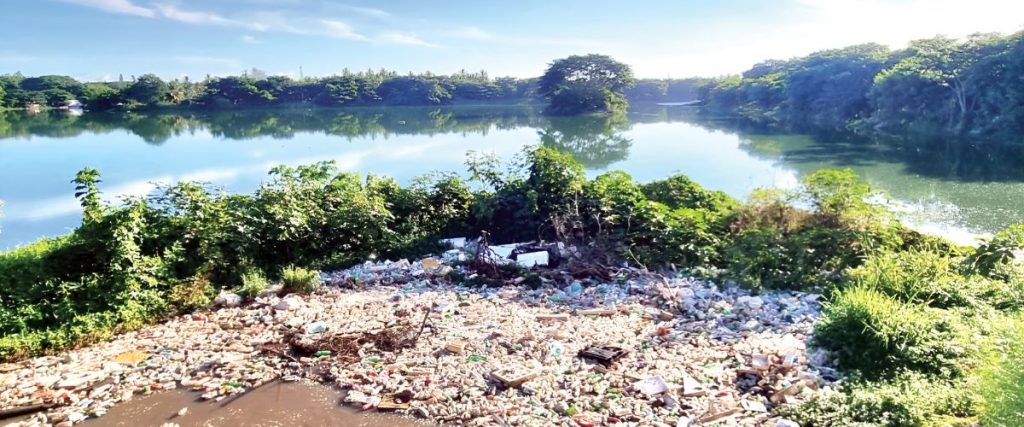
Hebbal Lake’s restoration success story loses its way
By Bhamy V. Shenoy
A visit to Hebbal Lake, located next to the Infosys campus, has always been a pleasant experience. However, my visit on June 22 came as a shock and left me deeply saddened. The foul smell was evident the moment I entered through the lake gate.
I later learnt that the lake currently holds only about 30 percent of its normal water level, a disturbing development for a water body that was restored at a cost of around Rs. 150 crore by the Infosys Foundation.
As part of the restoration, a modern Sewage Treatment Plant (STP) was also installed to treat sewage flowing into the lake from surrounding areas.
Sewage enters lake
During my visit, I noticed two stormwater drains carrying sewage directly into the lake. One of the attached photographs shows a large accumulation of plastic bottles near one such drain.
More alarming was the sight of plastic bottles near the outlet where treated water from the STP enters the lake, raising questions about the effectiveness of the treatment process.
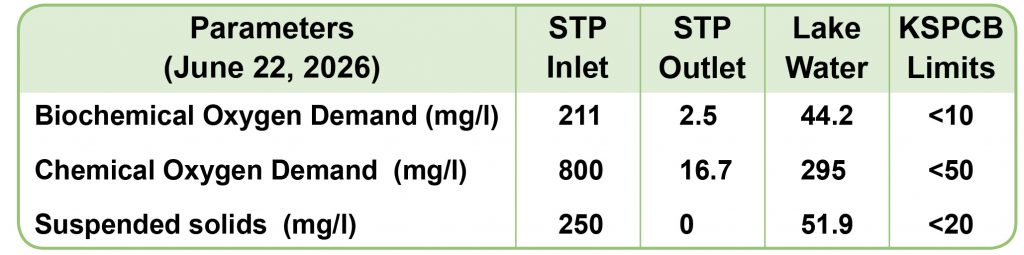
However, the STP appears to be functioning reasonably well based on the water quality readings displayed on the electronic board at the lake entrance.
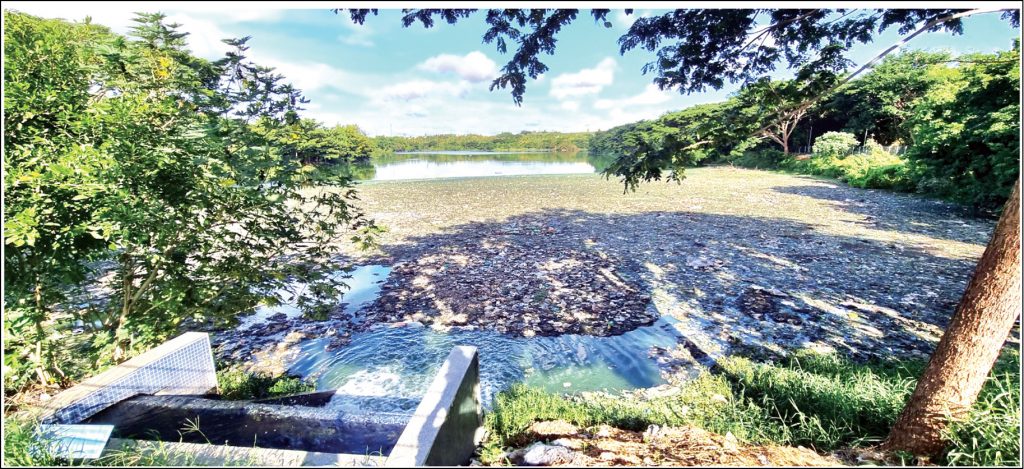
Sewage and plastic waste collected in front of the STP outlet.
Onus on the MCC
After restoring the lake and developing its surroundings, the Infosys Foundation handed over its management to the Mysuru City Corporation (MCC).
The greenery around the lake remains beautiful and well-maintained, as seen in the photographs. Yet it is evident that, like many other lakes in the city, Hebbal Lake continues to receive sewage through stormwater drains, something MCC has failed to prevent. When we spoke to a few regular walkers, many acknowledged the problem but said they were too busy to take up the issue.
One postgraduate staff member from the Karnataka State Open University (KSOU), whom we met during our visit, said he used his walking time to browse on his mobile phone.
When asked whether he could spare some time for a civic cause, he politely explained that walking was the only time he had for such activities.
While this may be only one example, it perhaps reflects a broader public reluctance to get involved in community issues.
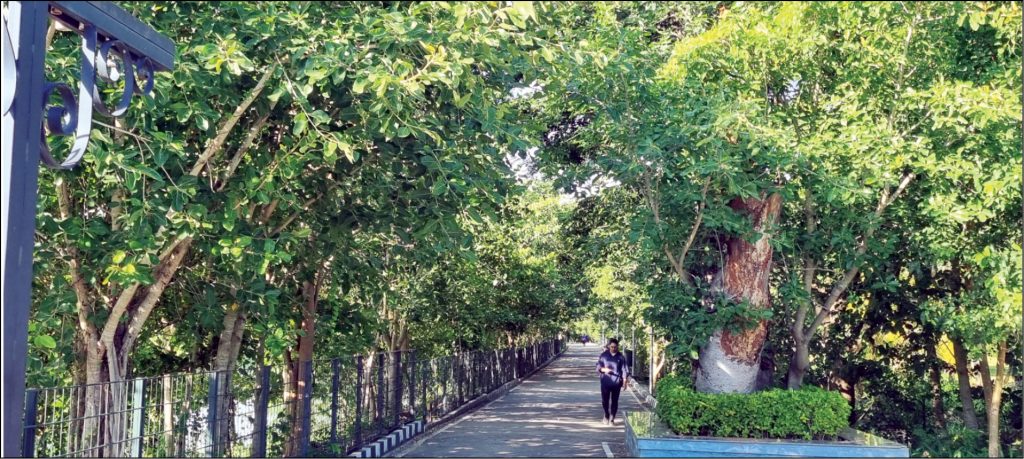
The lush greenery around the Hebbal Lake premises.
BOD and COD levels
The water quality data displayed at the lake indicated that key parameters such as Biochemical Oxygen Demand (BOD), Chemical Oxygen Demand (COD) and suspended solids were above safe limits.
These indicators suggest that the lake’s health is deteriorating. If the situation continues, both fish and bird populations could be adversely affected. While birds may avoid the lake, fish have little chance of survival in such conditions.
While MCC must bear responsibility for failing to maintain the lake adequately, citizens also share part of the blame. Why have regular walkers and visitors, who are confronted with foul odours and visible plastic waste, not raised their concerns with the authorities?
One can only hope that greater public attention to the issue will prompt MCC to take immediate corrective action and restore Hebbal Lake to the condition it deserves.

-Dr. Bhamy V. Shenoy is the Founder-President of Mysore Grahakara Parishat (MGP) that focuses on consumer rights advocacy, civic engagement and environmental protection.


Recent Comments