


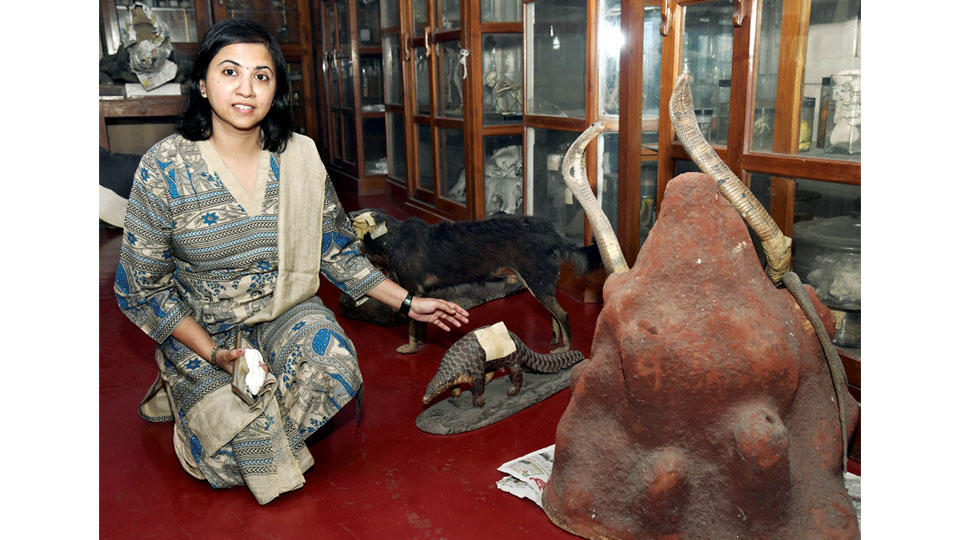
Archaeozoologist Dr. C.V. Sharada shares insights on how animal remains help reconstruct the past
For archaeozoologist and environmental archaeologist Dr. C.V. Sharada, archaeology is not merely about uncovering the past. It offers a lens to understand the present and shape the future. By studying human-animal relationships, she brings out deeper insights into sustainability, climate change and the ways societies have evolved across time and space.
An Assistant Professor at the Archaeological Sciences Centre, Department of Earth Sciences, IIT Gandhinagar since 2019, Dr. Sharada works at the intersection of archaeology, environmental studies and the natural sciences. She leads the Interspecies Research Network working group and is also affiliated with the Kiran C. Patel Centre for Sustainable Development, reflecting her interdisciplinary approach.
Born in Rourkela and raised in Mysuru, she completed her schooling in Mysuru and went on to pursue a BA at JSS College. She later earned her Master’s and Ph.D in Archaeology from Deccan College, Pune.
Her academic journey took her to Europe under the Erasmus Mundus Scholarship, where she carried out research in Italy and France, including at the National Museum of Natural History in Paris. She subsequently earned a second Ph.D from the University of Ferrara, Italy.
Beyond academia, Dr. Sharada enjoys travelling, reading and photography and has a keen interest in animals, pursuits that shape her research.
She was in Mysuru recently to deliver talks on ‘Archaeozoology: Ancient Animals and Modern Science’ at the Department of Zoology in Manasagangothri and on ‘New Horizons on Old Worlds – Exciting Scenarios from Archaeological Science,’ at Indian Institute of Educational Theatre (IIET) in Hardwicke School Campus.
Star of Mysore caught up with her during the visit. “Even a single bone can tell a much larger story about how people lived and adapted,” she says. Excerpts:
By Shadan Muneer
Star of Mysore (SOM): What inspired you to pursue archaeology and how did you develop an interest in niche fields like archaeozoology and environmental archaeology?
Dr. Sharada: I was drawn to history and geography in school and visits to museums during family trips abroad left a lasting impression. That curiosity stayed with me. Moving into archaeozoology felt natural. I have always been fascinated by animals and grew up observing them, so working with animal remains during my studies felt like the right fit. Over time, this expanded into environmental archaeology, where I began exploring how humans, animals and their surroundings are interconnected, an approach that continues to shape my work.
SOM: For the unversed, how would you explain archaeozoology and environmental archaeology?
Dr. Sharada: Archaeozoology is the study of animal remains to understand how humans and animals interacted in the past. We examine bones, teeth, shells, footprints, rock art, cave paintings and even ancient texts to understand the roles animals played. These are our resources, companions or symbols.
Environmental archaeology takes a broader view, combining evidence from animals, plants, soil and landscapes to reconstruct past environments. It helps us understand how people lived, used resources and adapted to their surroundings.
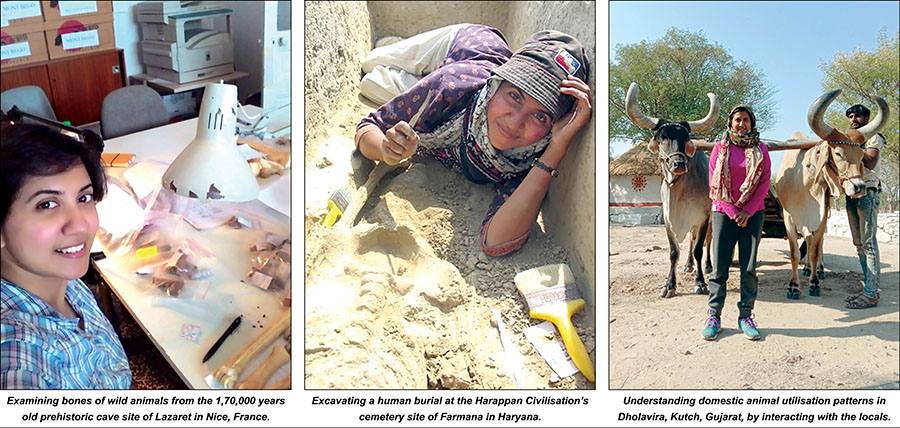
SOM: Your academic journey spans India and Europe. How has this international exposure shaped your research and perspective?
Dr. Sharada: Studying and working across India and Europe has shaped my approach significantly. India gave me a strong foundation, while Europe exposed me to more lab-based and scientific methods, which I have incorporated into my work.
It also made me more critical and self-reflective. I now look at a research question, or even a set of bones, from multiple perspectives. This has helped me blend Indian and European approaches, making my work more interdisciplinary with a broader outlook.
SOM: Why is studying human-animal relationships important today? What insights have animals revealed about ancient societies?
Dr. Sharada: These relationships remain highly relevant, especially in the context of climate change and sustainability. Studying the past helps us understand how humans used resources and coexisted with other species.
Animals often reveal insights that human remains alone cannot. They act as indicators of past environments and behaviour, offering clues to how societies responded to challenges. Sometimes, even a single bone or shell can tell a much larger story about how people lived and adapted. This perspective also informs the work of the Interspecies Research Network, which I lead.
SOM: What challenges do you face while working with ancient animal remains?
Dr. Sharada: A key challenge is balancing preservation with scientific study. Even taking small samples from fragile bones or teeth can be sensitive, as these remains are valuable evidence. There is often understandable hesitation, even when the damage is minimal.
Access to advanced scientific facilities can also be a limitation, though this is gradually improving.
SOM: Could you share insights from your research at the Indus Civilisation site of Dholavira in Gujarat?
Dr. Sharada: Dholavira, a UNESCO World Heritage Site, stands out for its harsh, arid setting. Our research looks at how people sustained life in such conditions, particularly through water and animal management.
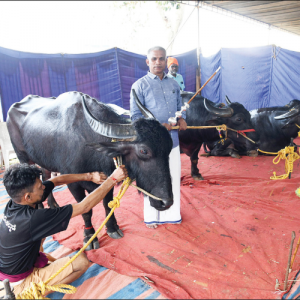
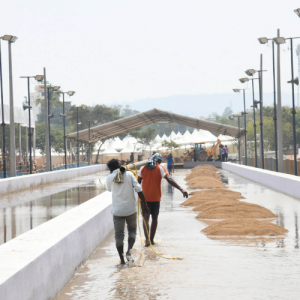
Despite the dry environment, inhabitants reared water-dependent animals like buffalo alongside cattle, supported by a sophisticated reservoir system. We are also examining whether the city was self-sufficient or relied on nearby settlements. Overall, Dholavira highlights the adaptability of its people in managing limited resources.
SOM: What are some of your most interesting fieldwork discoveries and experiences?
Dr. Sharada: I have worked on sites ranging from nearly 5,00,000-year-old locations in Europe to 4,000-5,000-year-old Harappan sites in India. Notable finds include rare Harappan seals with animal motifs and remains of extinct species such as early bison and bears.
Among the most memorable experiences are seeing mammoth and sabre-toothed cat bones in research collections, visiting sites in Gujarat with preserved dinosaur eggs and working with rare materials like elephant ivory, as well as fossils and skeletons of ancient species.
SOM: Archaeology often involves travel, fieldwork and long research hours. What keeps you motivated?
Dr. Sharada: It is simple. I get to do what I love. Archaeology does not feel like a job; it feels like a calling.
Curiosity drives me. I am constantly learning while also challenging misconceptions about the field. Travel plays a big role. It sharpens observation and exposes me to different landscapes and cultures. At times, it feels like living in two worlds, the present and the past, which makes the work both humbling and meaningful.
SOM: After your recent sessions in Mysuru, what key takeaways do you hope audiences gained?
Dr. Sharada: I was encouraged by the engaged audience. I hope they came away with a shift in perspective that archaeology is not just about excavating objects, but about understanding past lifestyles and how they inform the future. It also helps counter misinformation by showing that the field is careful and evidence-based. Most importantly, heritage belongs to everyone. Making archaeology accessible allows more people to connect with it and learn from the past.
SOM: Mysuru is home to the Regional Museum of Natural History. How important are such institutions in shaping public understanding of archaeology?
Dr. Sharada: Museums play a vital role. Not just in preserving objects, but in bringing the past to life. Through interactive displays, storytelling, replicas and hands-on experiences, even something like animal bones can tell powerful stories.
Cities like Mysuru have an added advantage, with audiences open to such engagement. Most importantly, museums are accessible to all, making them key spaces for public learning and connection.
SOM: What advice would you give students who want to explore archaeology as a passion and what opportunities exist today?
Dr. Sharada: Archaeology today offers multiple pathways. It is highly interdisciplinary and you do not have to pursue it full-time to engage with it. Students from science, engineering and other fields can contribute through projects and fieldwork.
Opportunities range from heritage management and museum work to public history and digital archaeology, including 3D modelling and data analysis. Documentaries are also helping make the field more accessible.
SOM: Teaching at IIT Gandhinagar is unique for an archaeologist. How has your experience been with students?
Dr. Sharada: It has been both rewarding and a matter of pride. The institution offers strong support, visibility and access to resources.
Its biggest strength is its interdisciplinary environment, which allows archaeology to connect with science and technology. Students from diverse backgrounds bring fresh perspectives and actively contribute to research and innovation. It is a dynamic space that continues to shape how I teach and practise archaeology.
Recent Comments