


NHAI plans avian protection measures along Mysuru-Kushalnagar Highway
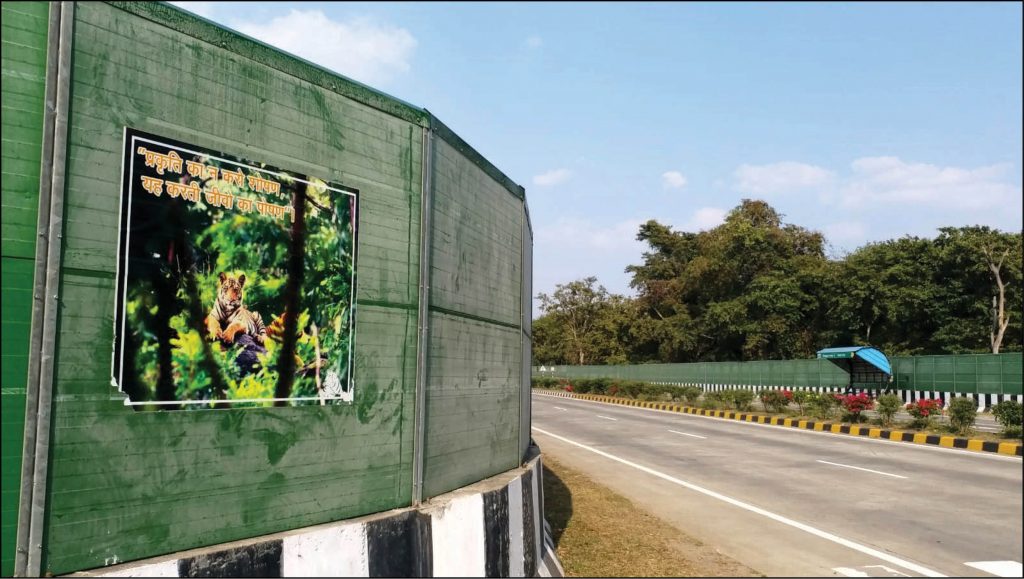
Caption: India’s first soundproof Highway for wildlife at Pench Tiger Reserve, Madhya Pradesh. The sound barrier wall along the Ranganathittu Bird Sanctuary near Srirangapatna in Mandya will be constructed using a similar technology.
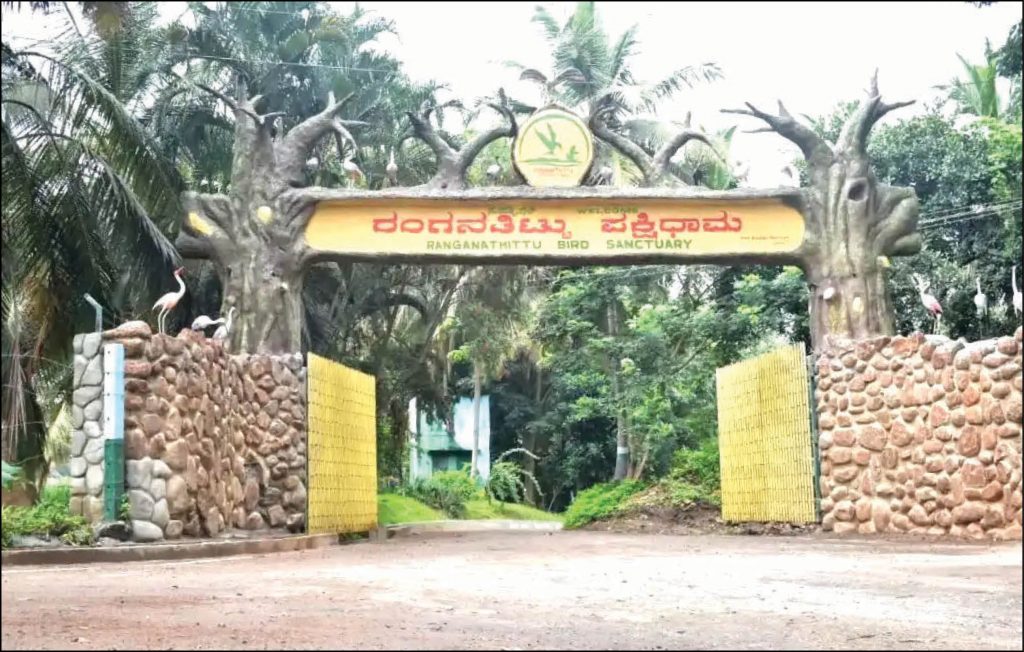
Caption 1: Entrance of Ranganathittu Bird Sanctuary.
Mysuru, June 3 (AG&BCT)- In a significant move to balance infrastructure development with wildlife conservation, the National Highways Authority of India (NHAI) has drawn up a comprehensive mitigation plan to reduce the impact of the Mysuru-Kushalnagar Access-Controlled Highway on Ranganathittu Bird Sanctuary, an Eco-Sensitive Zone (ESZ) on the banks of the River Cauvery in Mandya district.
As part of the measures, a 3-km-long sound barrier wall will be constructed to protect birds from vehicular noise and headlight glare. The specialised mitigation system will eventually cover a 4.9-km stretch adjoining the sanctuary.
The Rs. 4,130-crore Highway project, spanning 92.3-km, is currently under construction. A key 1.16-km portion of the alignment passes to the north of the core area of the Ranganathittu Bird Sanctuary.
Acoustic barrier technology
The sound barrier will be erected on the left side of the Highway in the Kushalnagar-to-Srirangapatna direction. It will employ non-transparent acoustic barrier technology designed to absorb and minimise noise rather than reflect it.
The barrier will have a curved profile, with its height varying between 2 metres and 5 metres depending on the terrain. Being opaque, it will also prevent visual disturbances from traffic movement and headlights, helping maintain a conducive environment for nesting and migratory birds. Officials said that the barrier is designed to keep noise levels within permissible limits so as not to affect the natural behaviour and movement of birds in the sanctuary.
The proposed mitigation measures received statutory clearances from the Eco-Sensitive Zone Monitoring Committee and the State Wildlife Board before securing final approval from the Standing Committee of the National Board for Wildlife (NBWL) in January 2026.
Five-layer green buffer
A 10-metre-wide green belt will be developed immediately behind the sound barrier on the sanctuary side to serve as a secondary buffer.
The layout will comprise the main carriageway, a 3-metre gap, the acoustic barrier wall and the green belt. The plantation will consist of three to five rows of native tree species and bamboo aimed at filtering headlight glare and enhancing habitat protection.
The NHAI has deposited more than Rs. 2.4 crore with the Mandya Forest Division for the plantation work. After the Highway is completed, scheduled for April 2027, the Forest Department will plant between 20,000 and 23,000 saplings raised in its nurseries.
Recognising the ecological sensitivity of the sanctuary, the Forest Department has imposed a construction ban during the peak bird breeding season from November to April.
Under the guidelines, no civil construction activity will be permitted within the ESZ during these six months. As a result, major construction works in the area will be confined to the May-October window.
Animal passages, no-horn zone
- Acoustic barriers to cover 4.9-km of the corridor.
- Chain-link fencing & dedicated wildlife crossings.
- Minor underpasses for reptiles & small mammals, including snakes, monitor lizards and crocodiles.
- A wildlife overpass is under consideration to facilitate elephant movement.
- Additional land acquired by NHAI for overpass handed over to Forest Department.
- Highway to remain at ground level through the Eco-Sensitive Zone
- Flyovers and elevated ramps ruled out.
- Low-intensity, one-sided, non-glare lighting to be installed.
- The stretch will be notified as a ‘No Horn’ and ‘No High-Beam’ Zone.
- Warning signboards to be placed up to 25-km ahead of the sanctuary on both sides of Highway.
- NHAI will provide a dedicated patrol vehicle.
- A round-the-clock monitoring team will prevent unauthorised parking and reduce human-wildlife conflict.
Recent Comments