


INTERNATIONAL Women’s Day Special…
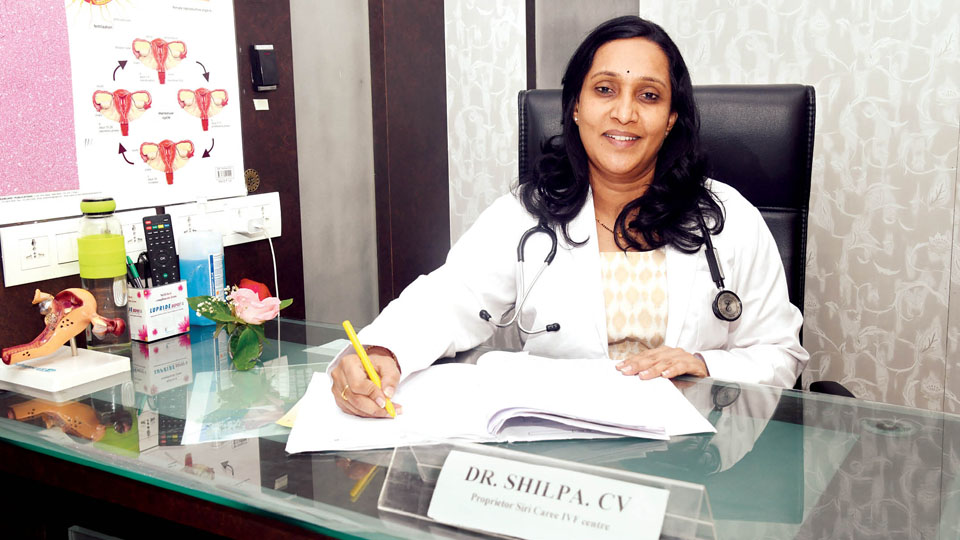
Reproductive medicine specialist Dr. C.V. Shilpa of SiriCaree IVF Centre, Mysuru, speaks on science, stigma and the shared responsibility of parenthood…
At a time when the focus is increasingly on women’s empowerment and career growth, delayed parenthood and changing lifestyles have led to a rise in infertility. Yet, the issue remains underreported, stigmatised and widely misunderstood.
Star of Mysore spoke to Dr. C.V. Shilpa, Managing Director and Chief Assisted Reproductive Technology (ART) Specialist at SiriCaree IVF Centre, Mysuru. Based in Nazarbad, she has been helping couples realise their dream of parenthood, while also improving access to fertility care for those in villages beyond East Mysuru.
She is also the Principal of International Institute for Assisted Reproductive Technology Research Centre (IIARTRC), Mysuru and an Executive Committee Member (2026-2028) of KISAR (Karnataka Chapter of ISAR — Indian Society of Assisted Reproduction). Excerpts:
By B.N. Ramya
Star of Mysore (SOM): Why did you choose the medical field and why specialise in reproductive medicine?
Dr. C.V. Shilpa: I wanted to be a doctor from childhood. Though there were none in my family, seeing women doctors work with dignity and confidence left a lasting impression on me.
As an Obstetrician and Gynaecologist, I encountered many couples struggling with infertility. Seeing their joy when they finally conceive and have a healthy baby is unforgettable. That sense of fulfilment drew me to this field.
SOM: Many fertility clinics are run by women. Do they have any advantage over men?
Dr. Shilpa: Women doctors often better understand the social and emotional pressures infertility brings, including stigma and exclusion. They can empathise and patients are usually more comfortable discussing sensitive issues with them.
SOM: Your clinic is located in Nazarbad, close to several villages. Do you see more patients from rural areas?
Dr. Shilpa: Yes, a significant number of our patients come from rural areas. Our centre is affiliated with Gopala Gowda Shanthaveri Memorial Hospital, a 42-year-old institution known for its patient-friendly, service-oriented approach. Over the years, it has built strong trust among people.
Many families who have been coming here for years now bring the next generation as well, for treatment across various specialities. We do not approach this as a business. Our focus is on providing quality care and achieving positive outcomes. That trust is why many patients from rural areas choose to come to us.
Genetically, both partners contribute equally to pregnancy. There is a common misconception that if a man is sexually active, he must be fertile. But virility is not the same as fertility. A man may be sexually active but still have zero sperm count. Every case requires proper scientific evaluation.
SOM: What are the common causes of infertility?
Dr. Shilpa: About 30 to 40 percent of infertility cases are due to male factors, while another 30 to 40 percent are due to female factors. Around 15 to 20 percent result from a combination of both partners.
In nearly 10 percent of cases, the cause remains unexplained. Evidence-based studies also suggest that environmental factors such as insecticides and microplastics may affect hormonal balance and contribute to it.
SOM: Is infertility more prevalent among rural or urban populations?
Dr. Shilpa: It is more common in urban populations, largely due to lifestyle factors. Sedentary routines, higher stress levels and competitive environments can affect fertility.
In contrast, rural populations tend to lead more active lives with lower stress. Diet also plays a role, with higher consumption of processed and junk food in urban areas adding to the risk.
SOM: When should a couple approach an IVF centre?
Dr. Shilpa: If the woman is below 35 years, the couple can try naturally for one year. If pregnancy does not occur within that period, they should consult an IVF specialist. If the woman is above 35 years, they should seek medical advice if conception does not occur within six months. In men, fertility can also decline with age and ideally, evaluation should be done before the age of 45 years.
SOM: What is the success rate of IVF treatment?
Dr. Shilpa: In a well-equipped clinical and laboratory setting with advanced technology, the success rate is around 50 to 60 per cent, particularly when the woman is under 50 years of age and there are no significant male infertility factors.
SOM: When is the ‘last chance’? When should a couple stop IVF treatment?
Dr. Shilpa: In my view, there is no fixed ‘last chance.’ I have seen couples undergo 12 to 14 IVF cycles before achieving success. However, decisions should depend on factors such as egg quality, sperm quality, embryo quality and the condition of the uterus, as well as the woman’s overall health and her ability to undergo repeated cycles.
SOM: Despite scientific progress, women are still blamed for infertility.
Dr. Shilpa: Scientifically, an embryo is formed with 50 percent genetic contribution from sperm and 50 percent from the egg. So, both partners contribute equally.
There is also a common misconception that if a man is sexually active, he must be fertile. But virility is not the same as fertility. A man may be sexually active but still have zero sperm count in semen analysis.
SOM: What is ‘social freezing’ of eggs?
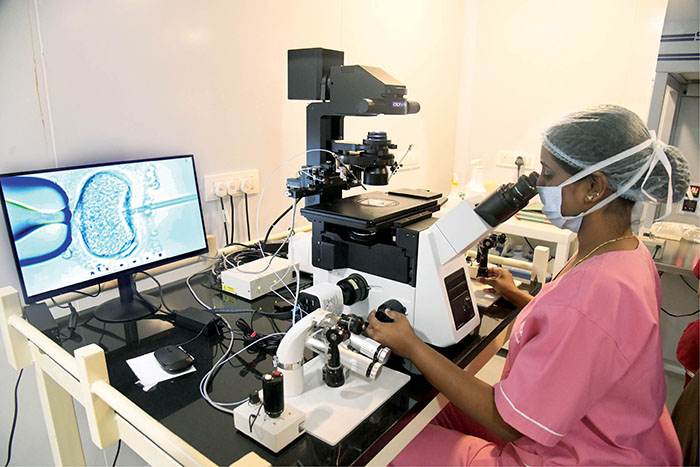
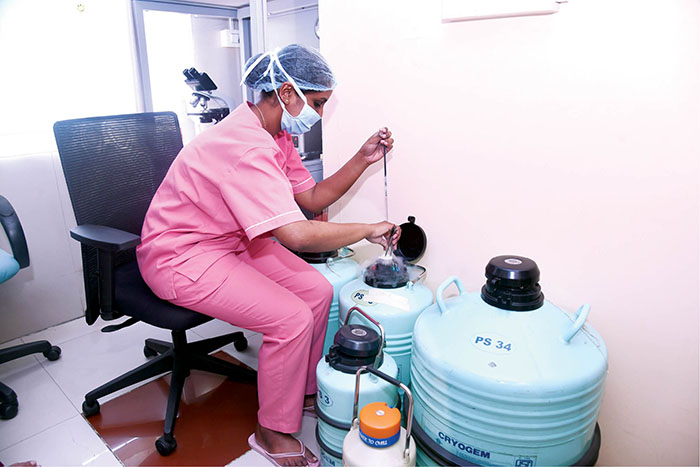
Dr. Shilpa: It allows women to preserve their eggs at a younger age, often while prioritising education or career. While pregnancy can be delayed, the biological clock cannot. Egg quality and quantity decline significantly after 35. By freezing eggs earlier, women can use them later to conceive, with better chances of success.
SOM: Do many single individuals approach your centre?
Dr. Shilpa: Yes, the trend is increasing. Many women today are financially independent and choose motherhood without marriage. Single women are allowed to undergo ART procedures. However, single men cannot become fathers through donor eggs and surrogacy, as the law does not permit it.
SOM: If an IVF cycle fails, how do you determine whether the cause is biological or a laboratory error?
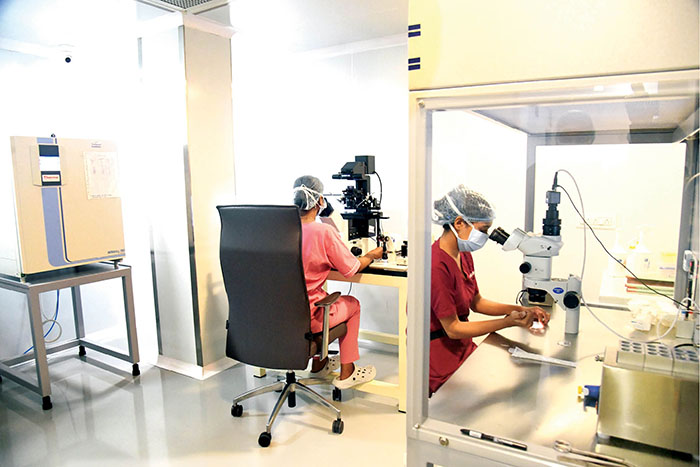
Dr. Shilpa: We start with a detailed audit of medical records and embryology reports, assessing the woman’s health and the quality of the egg, sperm and embryo. If these are normal, we evaluate the uterus and endometrial lining.
If no issue is found, we review lab conditions, including incubator settings, air quality and embryologist performance. We also compare outcomes with other cases from the same day. A single failure usually points to a patient-related issue, while multiple failures may indicate a lab-related problem.
Every successful IVF case is rewarding. A 49-year-old woman who had lost her only daughter came to us for treatment. It was challenging, as she was also hypertensive. Despite the risks, we proceeded. She delivered a preterm baby and with strong NICU support, the baby survived and is doing well.
SOM: What has been the biggest challenge you have faced?
Dr. Shilpa: In the early years, the biggest challenge was convincing patients who needed IVF and there were many misconceptions. We addressed this through transparency, explaining and demonstrating every step.
Another challenge, when we started our centre, was the shortage of trained embryologists in India. To address this, we set up the International Institute for Assisted Reproductive Technology Research Centre (IIARTRC). So far, we have trained over 500 embryologists from 26 States, along with reproductive medicine clinicians.
SOM: A teacher or a clinician, which role is more satisfying for you?
Dr. Shilpa: Being a clinician, definitely. Helping patients and seeing their happiness is deeply satisfying. Teaching comes next, as it allows me to train others who can spread that same joy.
SOM: What has been the most rewarding phase of your career?
Dr. Shilpa: There have been many, as every successful IVF case is rewarding. One that stands out is a 49-year-old woman who had lost her only daughter. It was a challenging case, as she was also hypertensive.
Despite the risks, we proceeded. She delivered a preterm baby and with strong NICU support, the baby survived and is doing well. It felt like we had given her a new beginning.
SOM: How do you unwind after a hectic day? Any hobbies?
Dr. Shilpa: I unwind with dance, evening walks and occasional hikes. I also spend time teaching my daughter and playing with my dogs, Trixy and Trouble. I’m passionate about trekking and make it a point to visit the Himalayas at least once a year.
Maintaining a work-life balance is essential. At work, I rely on a strong team with shared responsibilities and I also train two post-MS graduates each year through fellowship programmes. At home, I have strong support from my mother-in-law and husband. With dependable support on both fronts, I’m able to manage both roles effectively.
SOM: Your Women’s Day message to women and men?
Dr. Shilpa: Women have the strength to create life, but fertility is a shared journey. Women should prioritise their health and seek timely care, while men must offer equal support and involvement.
Together, we need to remove the stigma around infertility and build a more supportive, informed society.



Recent Comments