


158 of 280 rain gauges not working in Mysuru; 56 of 104 in Kodagu; 109 of 243 in Mandya
Kushalnagar: The South West Monsoon has arrived early in Karnataka, bringing heavy to very heavy rainfall across most regions. Yet, the State Government appears woefully unprepared, with over 3,533 of the 6,533 (54 percent) Telemetric Rain Gauges (TRGs) lying defunct across Karnataka.
These TRGs — installed in every Gram Panchayat — are crucial for the Karnataka State Natural Disaster Monitoring Centre (KSNDMC) and other agencies to issue early rainfall and flood warnings, coordinate disaster response and safeguard lives and property. However, the critical data they are designed to provide is largely unavailable in several rain-prone districts.
In Mysuru, Kodagu and Mandya — regions that routinely experience intense rainfall, especially Kodagu, where floods and landslides are common — a majority of TRGs are non-functional. Kodagu, highly susceptible to weather-induced disasters, suffers from a severe shortage of operational weather monitoring systems, leaving it dangerously exposed.
Of the 280 TRGs in Mysuru district, 158 are not functioning — 56 percent deficient. In Kodagu, 56 of 104 TRGs are not operational, meaning 54 percent are defunct. Mandya fares no better, with 109 of 243 TRGs not working, leaving 45 percent out of order.
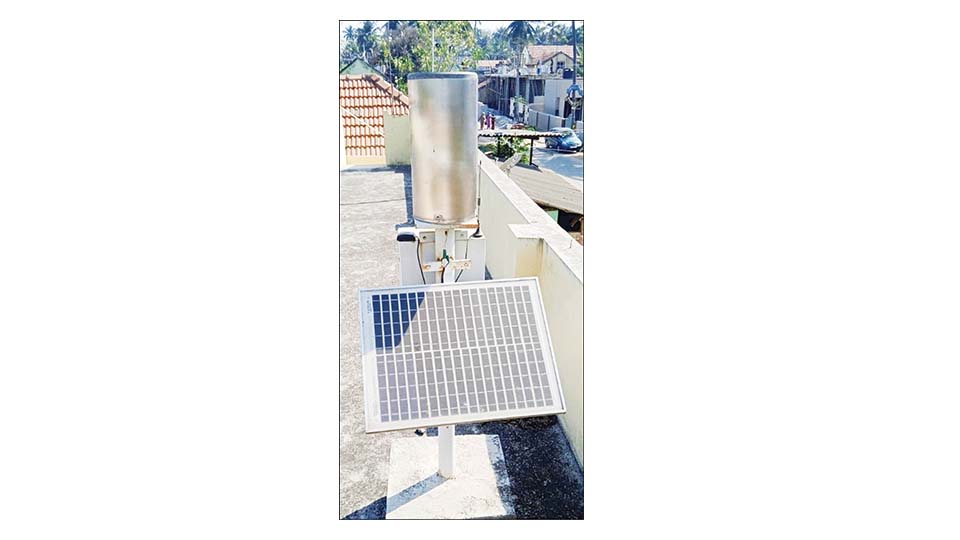
A Telemetric Rain Gauge includes solar-powered sensors housed in a weatherproof unit. It records rainfall, humidity, wind speed, thunder and lightning and transmits real-time data to KSNDMC headquarters in Bengaluru.
But in all three districts, a majority of these units have been out of service for over two years, without maintenance or any action to restore them.
Automated predictions
With ground-level data unavailable, KSNDMC is forced to rely on automated predictions based on past rainfall patterns and inputs from the India Meteorological Department (IMD). Experts warn that such generalised models, lacking real-time data, can be dangerously inaccurate and lead to misleading alerts.
“The TRGs are the backbone of our real-time weather response,” said Mysuru-based private weather blogger N. Ravi Keerthi, who recently raised the issue with Revenue Minister Krishna Byregowda. “If they’re not sending correct data to KSNDMC, timely and accurate alerts can’t be issued to district, taluk, and Gram Panchayat officials. That directly cripples disaster preparedness and puts lives at risk,” he told Star of Mysore.
R.M. Ananya Vasudev, Kodagu’s District Disaster Management Officer, underscored the importance of these instruments: “They are essential for preparing daily, fortnightly and weekly rainfall forecasts. This data is used for climate research and shared with departments like revenue and agriculture. It’s fundamental to water resource planning and disaster management.”
Despite the early onset of monsoon, the Government’s inaction on restoring this basic infrastructure threatens to compromise the entire disaster management chain, right when it is needed the most.



Recent Comments