


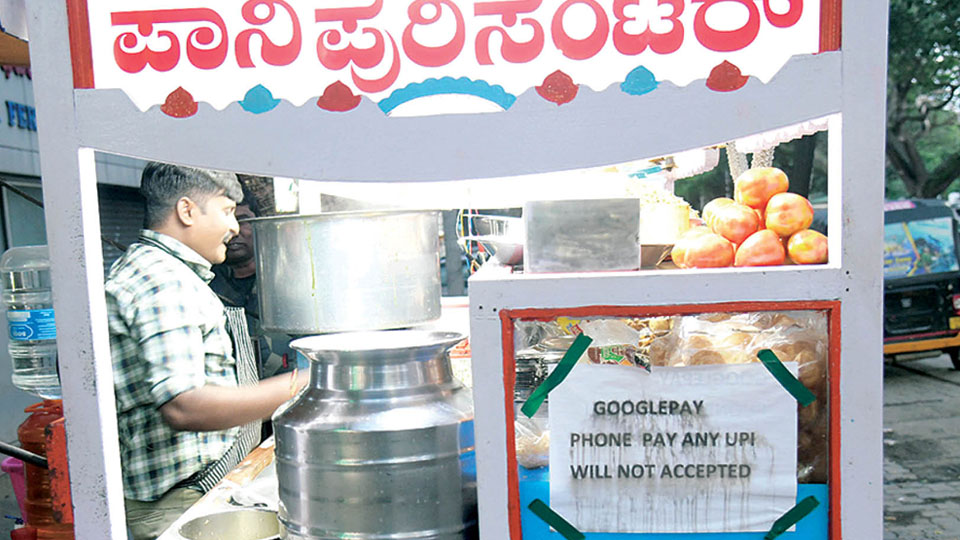
Notices issued based on digital transactions, says Commercial Taxes Joint Commissioner
Mysore/Mysuru: The Karnataka Department of Commercial Taxes has issued notices in 1,314 instances across the Mysuru Division — which includes Mysuru, Chamarajanagar, Mandya and Kodagu districts — regarding Goods and Services Tax (GST) registration compliance.
These include bakeries, confectionery stores, hotels, canteens, pan shops, provision stores, milk booths, meat outlets, petrol bunks, bars and restaurants, hospitals, automobile showrooms, electrical and hardware shops, jewellery stores, repair and service centres and wine stores.
Speaking to Star of Mysore, P.D. Shobha, In-Charge Joint Commissioner (Administration Division), Commercial Taxes Department, stated that registering eligible traders under GST is an ongoing process.
For those yet to register, the Department regularly conducts surveys and field inspections, especially when new commercial establishments open.
In a new development, unregistered traders are being identified through Unified Payments Interface (UPI)-based digital platforms and digital wallets. Traders whose annual turnover exceeds Rs. 20 lakh in services or Rs. 40 lakh in goods — based on transaction data collected from these digital payment systems — have been flagged and served notices.
Compliance-related information
The Department has begun the first phase by issuing intimation letters to these traders, notifying them of their GST eligibility and requesting compliance-related information.
“If the traders fail to respond or register, the Department will initiate suo motu proceedings,” said Shobha. In such cases, individuals will be deemed liable for tax and will be formally notified. If compliance is not ensured within 15 days, the Department will issue a demand order detailing the tax liability, interest and applicable penalties.
Once intimation letters are received, traders are required to contact the Department. Many have already done so, claiming they deal exclusively in GST-exempt goods such as fruits and vegetables. In these cases, field inspections are carried out to verify their claims. If validated, the case is dropped, she explained.
GST-exempt items
The Department clarified that items such as milk, fruits, vegetables, meat and chicken fall outside the GST ambit. Traders dealing solely in such goods are not liable for GST registration. However, processed or value-added products like sweets (e.g., doodh peda) made from milk are taxable.
For instance, if a Nandini outlet reports Rs. 40 lakh in annual turnover — Rs. 20 lakh from exempt items like milk and curd and Rs. 20 lakh from taxable products — then GST applies only to the taxable portion. Nevertheless, the shop must obtain GST registration as the overall turnover exceeds Rs. 40 lakh, Shobha noted.
Traders dealing in both taxable and exempt items are encouraged to furnish product-wise details. “There’s no cause for undue concern if traders submit information about exempt products,” the officer clarified.
Items like biscuit packets often carry the label “All taxes included,” signifying that GST is already collected from consumers. Thus, GST registration ensures formal compliance.
Though GST was introduced in 2017, ample time has been given for traders to adapt. With digital transactions surging post-COVID, especially through UPI, the Department now has better tools to monitor financial activity and ensure compliance, she added.



Recent Comments