


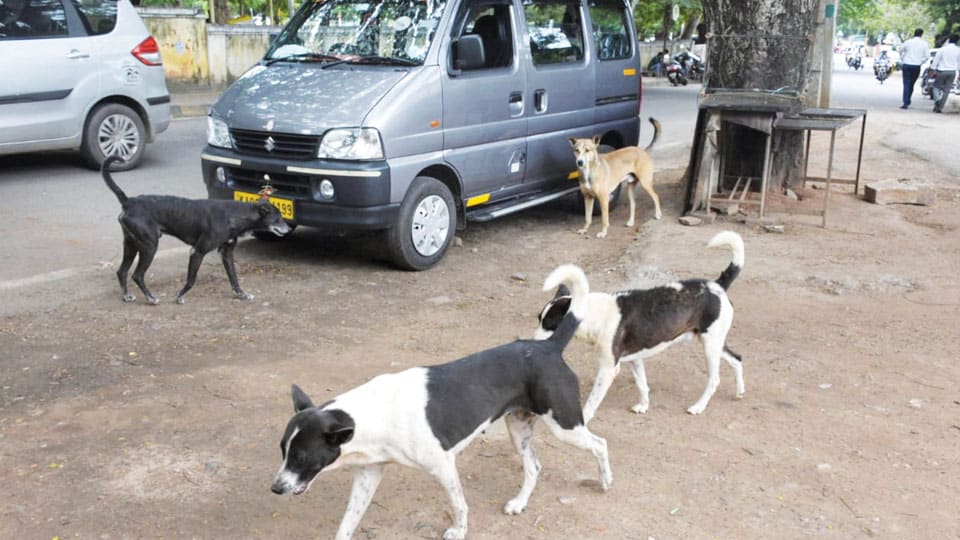
Health Department urges vigilance against rabies; the risk of infection from a dog bite is 97 percent
Mysuru: Rabies, a nearly always fatal viral disease, continues to pose a serious public health concern. In Mysuru district alone, 9,428 dog bite cases were reported between January and June 2025, prompting renewed efforts by the Health Department to raise awareness and encourage timely medical intervention.
According to official data, the victims included 1,763 children aged between 1 and 12 years, 840 adolescents aged 13 to 18 years, and 6,825 adults. While most of the affected received treatment at Government hospitals, 114 sought care at private facilities. Fortunately, all victims received timely medical attention and avoided life-threatening outcomes.
District Health Officer (DHO) Dr. P.C. Kumaraswamy told Star of Mysore that rabies is transmitted when the saliva of an infected animal comes into contact with broken skin, most commonly through bites, licks or scratches.
“The risk of infection from a rabid dog bite is as high as 97 percent,” he warned, adding that deep wounds and bites on the face or chest — where nerve density and blood supply are high — carry greater risk.
However, he stressed that immediate and appropriate medical care, including thorough washing of the wound and prompt administration of anti-rabies vaccine (ARV) can prevent infection. “Timely treatment can save lives,” he said.
Supply of anti-rabies vaccines
The Health Department has ensured an uninterrupted supply of anti-rabies vaccines, which are available free of cost at all Government hospitals. In case of local shortages, arrangements are made to procure and store adequate stocks.
In addition, the Department has launched a widespread awareness campaign, distributing handbills door-to-door and educating citizens on first-aid steps, risks and treatment protocols for dog bites.
Officials strongly advise treating every dog bite as a medical emergency. The wound should be washed under running water for at least 10 minutes using soap or detergent, followed by disinfection with antiseptics like spirit or iodine.
Anti-rabies vaccination should begin immediately at the nearest ARV clinic. A complete course is essential; a single dose offers no protection.
Tetanus injections and antibiotics may also be prescribed depending on the nature of the wound. Crucially, anti-rabies vaccines are safe for all, including pregnant women, infants and the elderly.
Local remedies do not work
Authorities have urged the public to refrain from traditional remedies and harmful practices such as applying turmeric, lime, oil and soil, or tying the wound with cloth. “Such measures delay treatment and can prove fatal,” the DHO said.
Two recent incidents have served as grim reminders of rabies’ fatal potential. In one case, Brijesh Solanki, a young kabaddi player from Uttar Pradesh, died after being bitten by a stray pup he tried to rescue. He had not received the vaccine.
In Mysuru, the sacred bull of the Mahalingeshwara Temple at Metagalli also succumbed to rabies after being bitten by a dog.
Both tragedies, officials say, could have been prevented with timely vaccination, highlighting the urgent need for public vigilance and rapid medical response in all dog bite cases.



Recent Comments