


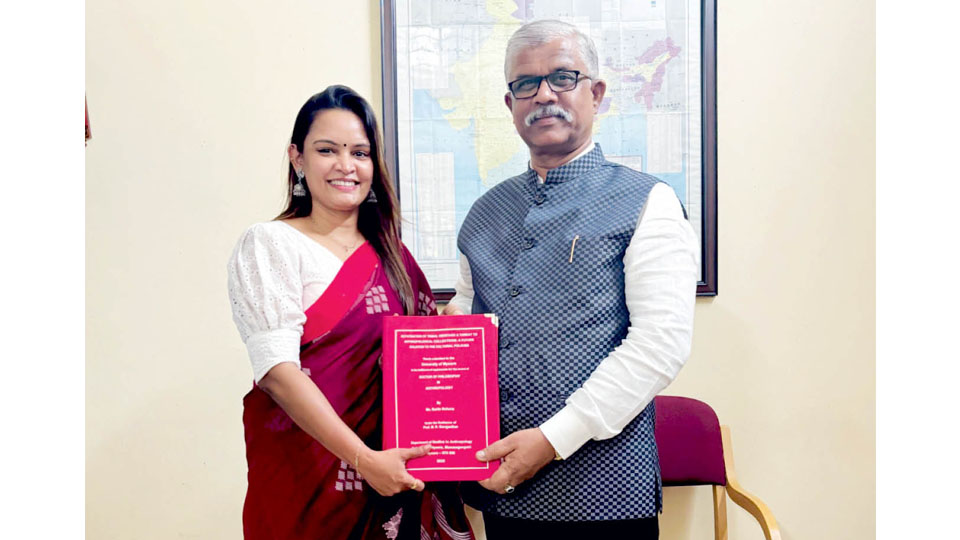
Mysore/Mysuru: The University of Mysore’s (UoM) Department of Studies in Anthropology has achieved a national first by introducing the repatriation of tribal heritage as a doctoral research focus — a milestone in Indian academia and cultural policy.
The path-breaking study, conducted by Dr. Banita Behera under the guidance of Prof. M.R. Gangadhar, Professor of Anthropology and current Vice-Chancellor of Chamarajanagar University, examines the sensitive issue of returning tribal cultural artefacts from museums to their source communities.
Titled ‘Repatriation of Tribal Heritage – A Threat to Anthropological Collections: A Future Solution to the Cultural Policies,’ the research addresses cultural, legal, ethical and policy challenges surrounding repatriation, a subject previously unexplored in depth in the Indian context.
“This is not just a thesis but a cultural manifesto for the future,” said Prof. Gangadhar. “It calls for reforming antiquity laws and reimagining the role of museums as both protectors and collaborators in cultural preservation.”
Bridging legal and cultural gaps
The study critiques existing frameworks such as the Antiquities and Art Treasures Act, 1972, which, it argues, inadequately address tribal rights and community ownership of artefacts in Indian museums.
It proposes inclusive cultural policies, museum-community partnerships and legal mechanisms to enable respectful and collaborative repatriation.
Globally, repatriation has become a pressing debate, with countries returning artefacts taken during colonial eras. In India, however, conversation has remained muted, despite the country’s extensive tribal heritage and rich museum collections.
Dr. Behera’s work places India on the map of this discourse, suggesting reforms that could influence national cultural policy, museum ethics and heritage protection strategies.
Co-custodians in heritage
The research recommends amending legal loopholes, recognising tribal communities as co-custodians in heritage decisions and introducing participatory museum models to involve communities in curatorial processes. This milestone positions the University of Mysore at the forefront of heritage policy innovation and anthropological research in South Asia, enhancing its legacy as one of India’s most culturally attuned institutions.
Faculty members believe the study will inspire policymakers and scholars to craft ethical frameworks that ensure tribal heritage is not only displayed but also respected and, where appropriate, returned to its rightful custodians.


Recent Comments