


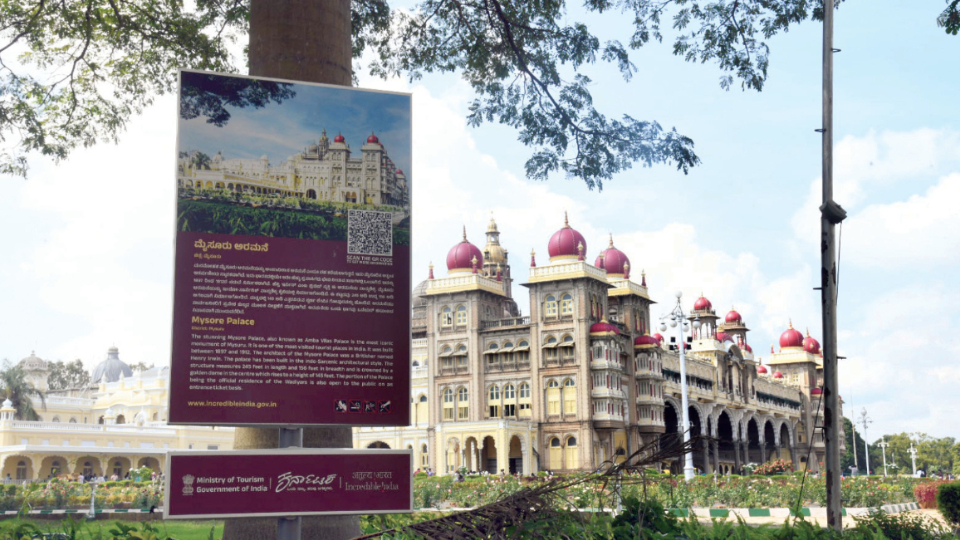
Mysuru, Oct. 20 (AG&BCT)- In a bid to promote digital tourism, the Union Ministry of Tourism and the Department of Tourism, Karnataka, have launched QR code-based information portals across 33 major tourist destinations in Mysuru.
Installed prominently at the entrances of these landmarks, the QR code boards enable visitors to instantly access detailed information about each site — including historical facts, cultural insights and photographs — in both Kannada and English.
The initiative, rolled out after Dasara 2025, marks a first-of-its-kind effort in Karnataka to integrate tourism and heritage awareness digitally.
Interactive, informative experience Visitors can simply scan the QR codes using their smartphones to explore text descriptions and visuals that highlight the significance of monuments and heritage locations. This feature offers an interactive and informative experience for both domestic and international tourists, transforming the way they engage with Mysuru’s heritage.

Among the 33 locations covered are Mysore Palace, Chamundi Hill, Mysuru Zoo, Devaraja Market, Rail Museum, R.K. Narayan Museum (Yadavagiri), Karanji Lake, Shukavana at Avadhoota Datta Peetham, Silver Jubilee Clock Tower, Folklore Museum, St. Philomena’s Church, Ranganathittu Bird Sanctuary, Lalitha Mahal Palace, Jayalakshmi Vilas Palace (University Museum), Kukkarahalli Lake, Oriental Research Centre (ORI) and Jaganmohan Palace.

The initiative also extends to religious and heritage sites such as the Srikanteshwara Temple in Nanjangud, Namdroling Monastery Golden Temple in Periyapatna, Sri Vaidhyanatheshwaraswamy and a group of temples in T. Narasipur, Sidilu Mallikarjunaswamy Temple in Periyapatna and temples in Talakadu, including the Somanathapur Temple, offering insights into their spiritual, cultural and architectural importance.
Tourism Department Assistant Director B.M. Prabhuswamy told Star of Mysore that the goal is to enrich the tourist experience and ensure easy access to authentic information about local landmarks.
“With just a scan, tourists can unlock verified data and historical insights, making their visit more meaningful and memorable. So far, we have installed boards at 33 locations and plan to promote them widely to attract global visitors.”
In addition to on-site access, tourists can save or share QR codes with friends and relatives, allowing them to revisit the pages later. This feature is part of the Department’s digital tourism promotion programme, which aims to expand the initiative to other key sites across Mysuru. Plans include introducing virtual and audio tours using digital media to enhance visitor experience further, he added.

Recent Comments