


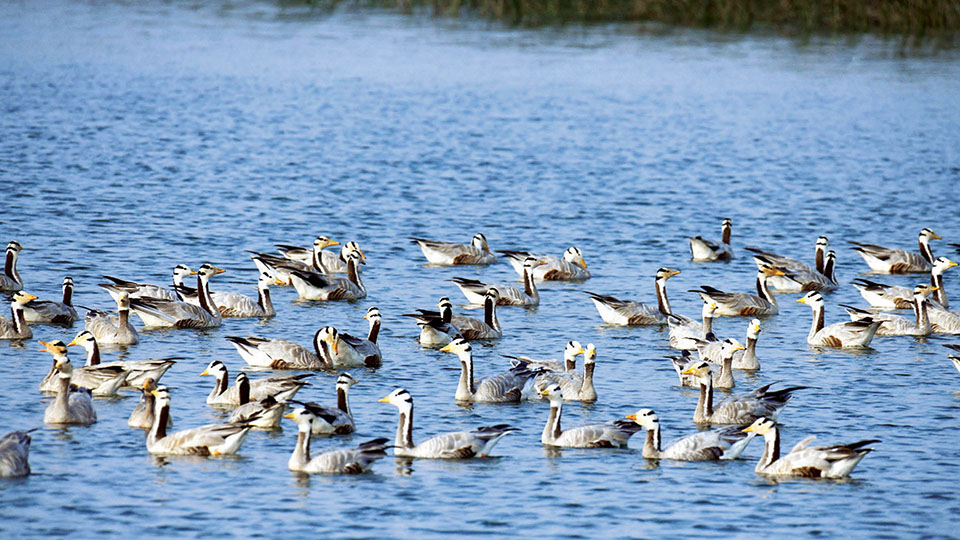
First batch of 253 bar-headed geese arrives to roost; T-34-tagged bird among them
As many as 253 bar-headed geese from Mongolia, having crossed the formidable Himalayan ranges, have arrived at Hadinaru Lake on the Mysuru-Nanjangud border, a favoured winter roosting site for the bird species.
Among the first batch is a T-34 tagged goose, whose photograph has been captured by a tourist, adding excitement among bird-watchers and researchers.
With the arrival of these migratory birds, the sprawling lake — located about 25 kms from Mysuru city, near the perennial Kabini River in Chikkayyana Chatra Hobli of Nanjangud taluk — has once again turned into a bird-watchers’ hotspot.
The birds are easily identified by the distinctive black bars on their heads and their characteristic goose-like honking calls.
As paddy harvesting draws to a close in the region, the geese migrate to Hadinaru Lake, attracted by the abundant food availability in and around the water body. By Jan. 15, when harvesting is fully completed, the lake is expected to be teeming with these birds.
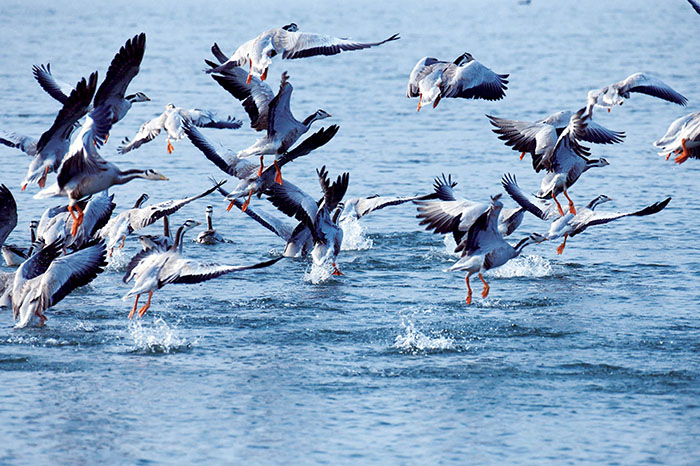
World’s highest-flying birds
Every year, bar-headed geese — among the world’s highest-flying birds — undertake an extraordinary journey of nearly 4,850 kms, crossing the
Himalayas from Mongolia, Kazakhstan and Russia to reach Hadinaru Lake.
During migration, they fly at altitudes higher than Mount Everest, enduring low oxygen levels and freezing temperatures to reach their wintering grounds in South Asia, including peninsular India.
Short winter days and longer nights in the Northern Hemisphere make it difficult for the birds to find sufficient food, prompting their migration south. While they prefer India’s warmer climate during winter, their bodies are remarkably adapted to survive extreme cold during their epic journeys.
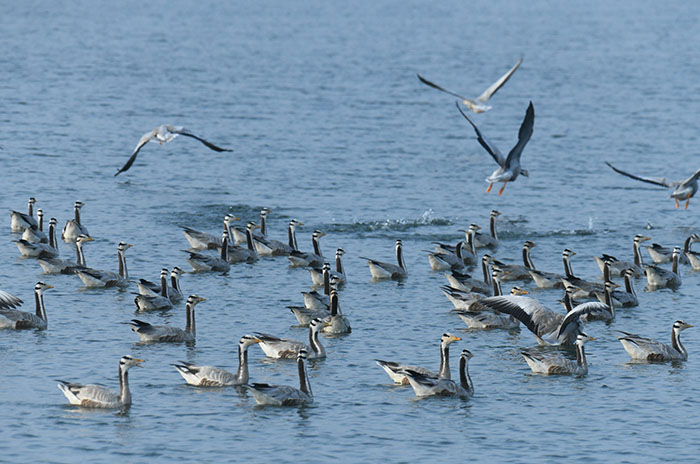
Four-month trip
The geese, which arrive in January or February, remain in the region for about four months before returning north. They feed primarily on paddy grains, resting in the lake during the day and foraging in nearby fields at night. Bird-watchers note that their droppings act as natural manure, making them “friends of farmers.”
Locally known as ‘Parvatakki’ —meaning mountain birds in Kannada — the bar-headed geese are crepuscular feeders, active during dusk and late evenings. They feed on harvested rice stubble near the lakes they visit and spend the daytime resting safely in the middle of vast water bodies, basking in the warm winter sun.
Meanwhile, bird-watchers, nature-lovers and wildlife conservationists have urged visitors to observe the birds in silence and avoid disturbing them by throwing stones or sounding vehicle horns in an attempt to get close photographs.
Recent Comments