


By Girija Madhavan
Over the years our lives have been controlled by the seasonal and monthly cycles of earth, sun and moon. What we eat at our festivals, harvest or monsoon, is dictated by tradition; some foods are chosen for their healthful properties, others for joy in their taste. Our “Paan” or Betel leaf has both attributes. Botanically named “Piper Betle” of the family “Piperaceae,” it is celebrated in ancient treatises like Sushruta Samhita or the Kamasutra and has been part of food culture for centuries in India and Southeast Asia. On my first diplomatic post to Myanmar [Burma] in 1959, I was homesick for Mysore. Among the unfamiliar smells and tastes, I was comforted by finding “Vilyedele” [Kannada for betel leaves] in Yangon.
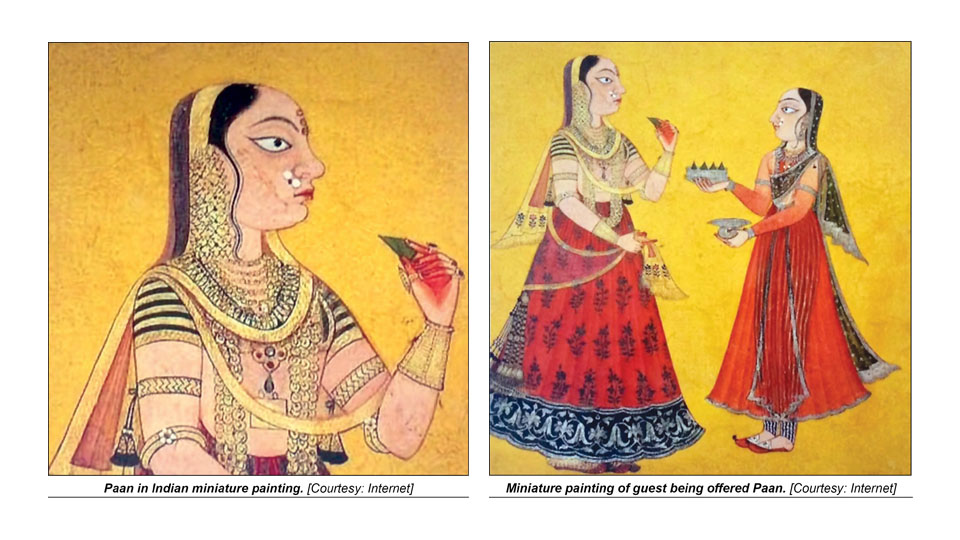
The highlight of festive meals at home was a “Beeda,” cone made of local “Ambadi Yele,” a tender, delicate variety. My mother would pinch the stem end of the leaf off, smear it lightly with slaked lime [Sunna] and place a scented arecanut powder on the leaf. Made by a company called Rashiklal, the powder had slivers of copra, glittery sugar crystals, a hint of “Pacche Karpura” [edible camphor], heady cardamom and more. Rolled into a triangle, transfixed by a whole clove, the Beeda would burst into an explosion of flavours in the mouth. “Paan” is documented in miniature paintings and famously celebrated by Amitabh Bachchan in Bollywood.
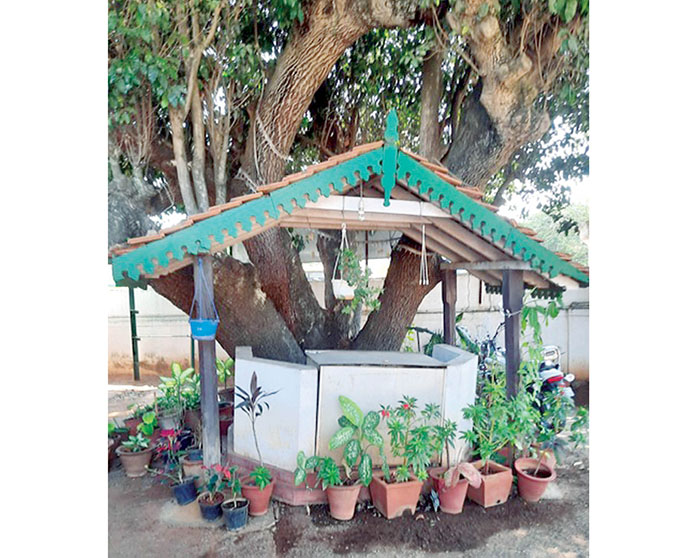
My favourite Paan shop in Mysore for many years has been in the garden of a hotel. Built in 1916, it was once the home of a princess of the Mysore Royal Family. The building changed hands over the years to its present eco-friendly and heritage status as a hotel. The Paan shop was a little pavilion with a tiled roof in the garden. The branches of a great rain tree held it in a protective embrace. Wooden pillars rose up to the rafters of the roof; a counter displayed trays of aromatic spices and flavourings; slaked lime, arecanuts, Kattha [catechu, a tree extract] to heighten the colour, Gulkhand [rose petals] to make a sweet Paan; a burnished brass bowl held water. The owner, Vikas Pande
[name changed] of Odisha, presided over this array, making customised Beedas for patrons, assuring them the leaves were washed with filtered water from the hotel. He was from an area in Odisha that specialised in betel leaf cultivation and came to Mysore to seek his fortune. I got to know him when I was invited to a special dinner in the restaurant. The after-dinner treat was a Beeda from Pande.
A cyclone devastated the areas of Odisha where Pande’s family lived. His son went missing in the storm. Pande rushed home to look for him. Despite desperate searches, he could not find the child. Heartbroken, he returned to Mysore.
Some years later when I returned to the restaurant, the strains of a flute wafted over the garden. I followed the music to find Pande seated by his shop, playing a bamboo flute or “Bansuri.” He had aged, looked careworn, but greeted me with warmth. He was learning Hindustani music from a musician of Gadag settled in Mysore. The notes of Raga Yaman Kalyan brought him solace as he composed Aalaap [innovative composition] on the flute.
“Music is a friend to those who grieve,” said Leah Shefsky, an American grief counsellor. She explained that grief is an ambiguous terrain without a tangible death to mourn. Pande had no closure, he wandered in landscape of sorrow without boundaries, with paths that led nowhere. So he turned to classical Ragas for mental peace. He chose to express himself with what has been found by archaeologists to be the oldest musical instrument used by man, the FLUTE.
In Hindustani music, Ragas have specific time slots for their exposition. They also embody nine emotions called the “Nava Rasa.” Some are imbued with Shringara Rasa [romance], Karuna or Shoka [melancholy] or Shanta [peace]. The Raga Yaman Kalyan that Pande was playing, is for the time of the lighting of lamps and the setting of the sun. Maybe he was invoking an image of an Odisha hamlet catching the last rays of the setting sun, twinkling with the flames of earthenware oil lamps for the Puja.
How sadness can find solace and comfort in music is tenderly brought out in a Hindi song of the 1950s from a film called “Sargam” [the seven notes of our musical scale]. It is a duet sung by Lata Mangeshkar and Saraswati Rane, the daughter of Ustad Abdul Kareem Khan. “When the heart is tormented by sadness, sing the notes of the Sargam. Ride aloft on the swings of the seven notes to forget your Dukha,” say the lyrics. Though referred to as one of the “Golden Oldies,” the composition, sung in those lyrical voices, even now has a depth which is profound enough to touch hearts.
Back at the restaurant a few years ago, I found the Paan shop again wearing a blank and desolate look. The staff were new and could not answer my queries. I wondered if Pande had gone back to his home, or worse, that he was unwell, dreading the truth.
When I went back recently, I stood, lost in thought, in front of the now crumbling pavilion. Some distance away was a parked auto. The driver, observing me, alighted and came up to talk. The auto belonged to the hotel he said, and he had been driving it for many years. He had known Vikas Pande well, remembered the tragic loss he had suffered. Pande had been ailing and had decided to go home for a spell. So saying goodbye, he boarded a train from Mysore Railway Station for his forward journey home. But he never reached his waiting family nor was there any news of him from anywhere… he just vanished; sadly, strains of music leave no tangible traces.


Recent Comments