


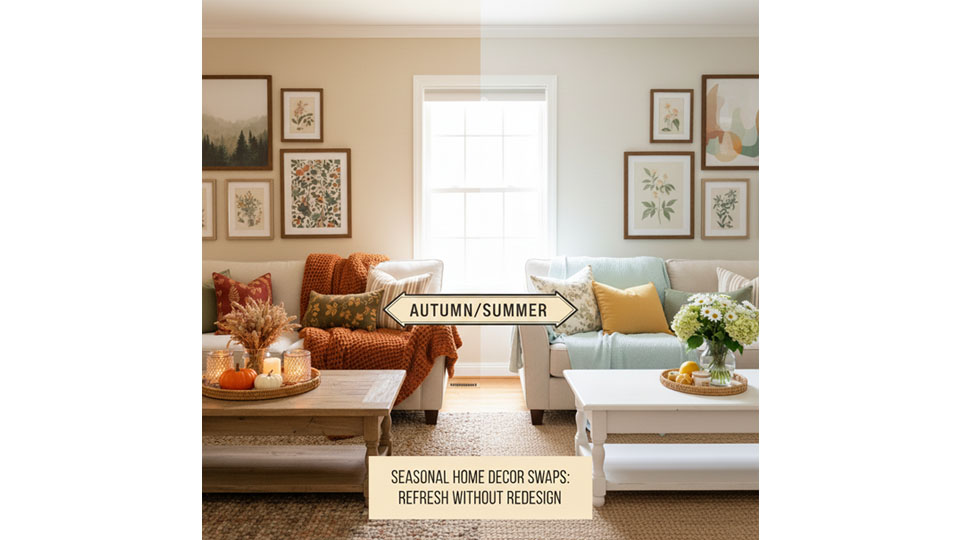
Most people feel the urge to change their home when the seasons shift. The light looks different. The air feels heavier or lighter. Suddenly, the space that felt right a few months ago starts to feel slightly off. That doesn’t mean the home needs a full makeover. It usually just means it needs small adjustments.
Seasonal decor changes are less about trends and more about comfort. They help a home feel in sync with what’s happening outside. And the best part is, these changes don’t require new furniture, paint, or big spending. They’re mostly about swapping, not buying more.
Changing Textiles to Match the Weather
Textiles are one of the easiest things to change, and they make an immediate difference. Cushions, throws, and rugs affect both how a space looks and how it feels when you actually use it.
In warmer months, heavy fabrics start to feel out of place. Thick throws stay folded, and dark cushions can make rooms feel warmer than they already are. Swapping to lighter materials like cotton or linen instantly makes the space feel more relaxed.
As the weather cools, the opposite happens. Softer, thicker fabrics bring comfort back into the room. Wool throws on beds, textured cushions, or even a deeper coloured rug can make evenings feel cozier without changing anything else
You don’t need a full set for every season. Even changing cushion covers or rotating one throw between rooms is enough to refresh the space. These small shifts create movement in the home, which keeps it from feeling stuck in one mood all year.
Textiles are also practical. They wear out faster than furniture, so refreshing them seasonally often feels natural rather than forced.
Adding Seasonal Color Without Touching the Walls
Repainting for every season isn’t realistic, and it’s not necessary. A neutral base works best because it allows small color changes to stand out more.
Seasonal colors work best when they show up in accessories. Cushions, vases, small decor items, or even books can bring in new tones without overwhelming the room.
Lighter shades tend to feel better during spring and summer. Muted blues, soft greens, warm creams, or pale pastels work well. As seasons change, deeper tones like rust, olive, or charcoal add warmth without making the space feel heavy.
The key is not to replace everything. One or two touches are enough. Too much seasonal color can make the space feel themed rather than lived in.
Keeping the main furniture and walls consistent year round helps the home feel stable. Seasonal changes should feel like gentle shifts, not complete personality changes.
Rotating Wall Decor Instead of Adding More
Walls often get ignored when it comes to seasonal updates, but small changes here can make a room feel completely different.
Instead of adding new decor, rotating what you already have works better. Switching artwork between rooms, changing photo frames, or even rearranging prints can refresh the space without buying anything new.
Some people keep a small collection of prints or photographs and bring them out at different times of the year. Lighter, simpler visuals feel right in warmer months, while richer or more personal pieces feel comforting when days get shorter.
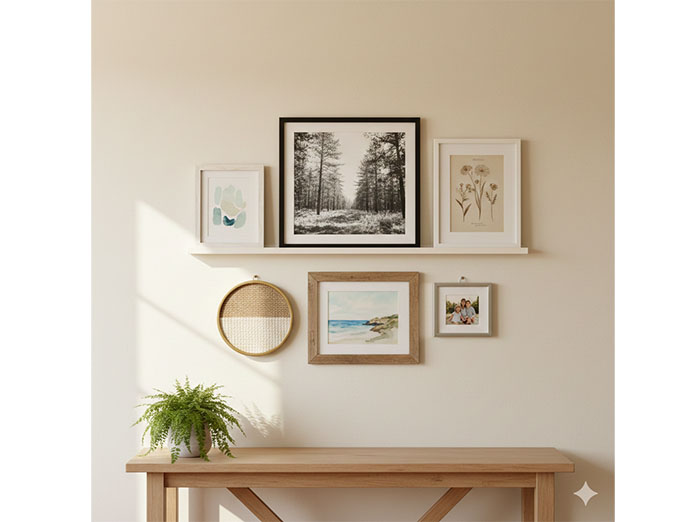
Removable hooks or picture ledges make this easier. They allow flexibility without damaging walls or committing to one layout forever.
Seasonal themes don’t need to be obvious. A simple nature print or a change in frame colour is often enough. Overcrowded walls quickly lose their effect, especially in smaller spaces.
Space around wall decor matters just as much as the decor itself. Giving items room to breathe keeps the look clean and calm.
Adjusting Lighting as Daylight Changes
Lighting affects mood more than most people realise. As daylight hours change, the same lighting setup can start to feel wrong.
During brighter months, spaces often don’t need as much artificial light. Lamps might stay off longer, and softer lighting feels more natural. Lighter lampshades or slightly cooler bulbs can help spaces feel fresh without feeling cold.
As evenings grow longer, lighting becomes more important. Warmer bulbs, table lamps on your dressing table, and floor lamps add comfort and help rooms feel inviting rather than dim
Small changes go a long way here. Swapping bulbs, changing a lampshade, or adding a small lamp in a darker corner can shift the entire mood of a room.
Candles and string lights also work well during colder months. They add warmth without being permanent or expensive. When the season passes, they can be packed away just as easily.
Lighting doesn’t need to be dramatic. It just needs to match how the space is being used at that time of year.
Styling Surfaces Without Letting Them Get Cluttered
Flat surfaces like coffee tables, shelves, and consoles tend to collect items over time. Seasonal updates are a good excuse to clear them and restyle with intention.
A simple approach works best. One tray, a couple of books, and one or two decorative items are usually enough. Swapping these items seasonally keeps things fresh without adding more.
Natural elements work well here. In warmer months, lighter materials like wood, glass, or ceramic feel right. In cooler months, heavier textures or darker finishes add warmth.
The key is rotation, not accumulation. Bringing out stored items while putting others away keeps the home feeling new without increasing clutter.
Leaving some surfaces empty is important too. Clear space makes the room feel calmer and more open, which is especially helpful when the home already feels busy.
Bringing Nature Indoors Through the Seasons
Natural elements connect the home to what’s happening outside. They don’t need to be elaborate or expensive to be effective.
Fresh flowers brighten spaces instantly, even in small amounts. A simple bunch in the kitchen or living room can shift the mood of the entire home.
When fresh flowers aren’t practical, dried stems or branches work just as well. They last longer and suit cooler months especially well.
Plants also play a role here. Rotating plants between rooms based on light and season keeps them healthy and changes how spaces feel. Even moving one plant can make a room feel new again.
Low maintenance options are often best. The goal is to add life, not stress. Simple greenery often looks more natural than carefully styled arrangements.
Nature brings softness into indoor spaces. It makes rooms feel grounded and lived in, which is something no store bought decor can fully replace.
Letting Seasonal Changes Stay Simple
Seasonal decor swaps work best when they don’t feel like a project. The goal isn’t to impress anyone. It’s to make the home feel comfortable and current for the people living in it.
Small changes are easier to maintain and easier to reverse. They allow the home to change naturally without constant effort.
When decor is rotated thoughtfully, each item feels new again when it comes back out. This makes the home feel refreshed without spending more.
A home that changes gently with the seasons tends to feel more personal and more settled. It reflects daily life rather than fixed ideas of style.
And in the end, that sense of ease is what makes a space feel good to come back to, no matter the season.




Recent Comments