


INTERNATIONAL Women’s Day Special…
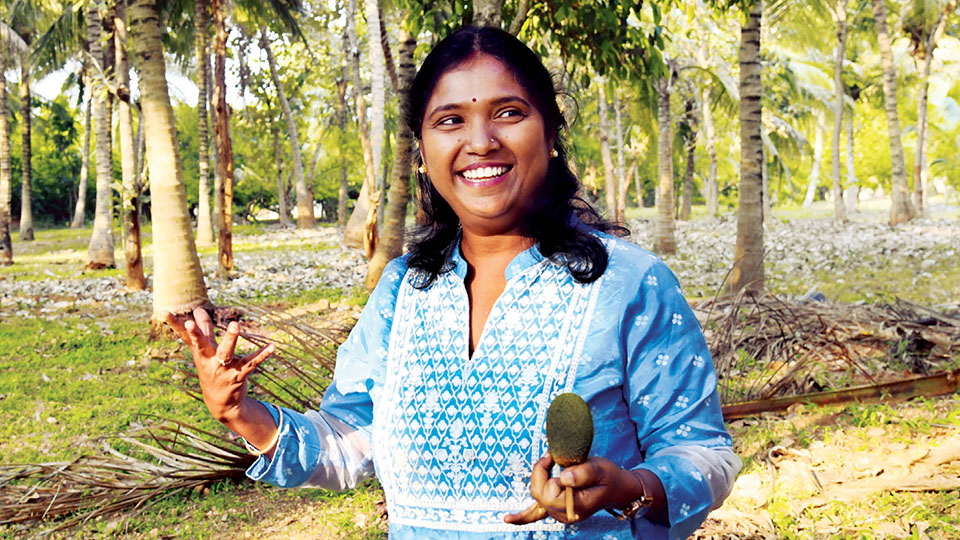
Writer and activist Kusuma Ayarahalli has steadily built a reputation with her writings rooted in rural life and social concerns.
Dialogue writer for television serials, former content head in the TV industry, journalist with Akashvani, writer, columnist and activist, Kusuma Ayarahalli wears many hats. She is among the emerging voices in Kannada literature, steadily making her mark.
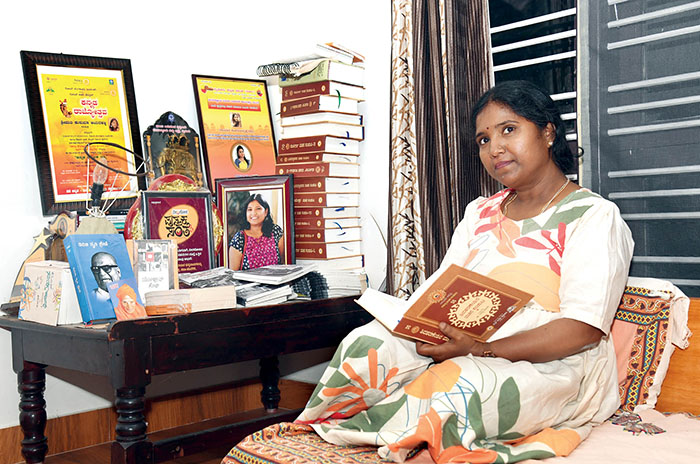
Hailing from a family of agriculturists in Ayarahalli village, about 14-km from Mysuru city, Kusuma has carved a niche for herself as a writer. Her literary contributions have earned her several honours, including the Ha.Ma. Nayak Award and the Kittur Rani Chennamma Award from the State Government, and the Lakshmidevamma Award from the Karnataka Lekhakiyara Sangha.
After spending a few years in Bengaluru working behind the scenes in the TV industry, she returned to her roots in Mysuru. Kusuma was also part of the recent ‘Save Chamundi Hill’ movement that opposed development works. She has been actively involved in environmental protests as well.
Kusuma spoke to Star of Mysore amid the tranquil surroundings of her family farmhouse in Ayarahalli, where she continues her literary journey with undiminished passion. Excerpts:
By B. Sreekantswamy
Star of Mysore (SOM): The practice of naming literary styles as Navya, Bandaaya and others. Could you explain this?
Kusuma Ayarahalli: Literary works are classified as Navya, Bandaaya or other styles only after a careful study of those writings. Scholars and critics with a deep understanding of literature identify the distinctive features in a work and determine the genre or literary movement it belongs to.
SOM: Why do we still categorise literary works as men’s, women’s or children’s literature?
Kusuma: In almost every field, we tend to categorise things, including men and women. Literature and even journalism are no exception to this tendency.
SOM: What led you to move from writing television serial dialogues to literature?
Kusuma: I worked tirelessly writing dialogues for daily serials of well-known names in the industry, such as T.N. Seetharam and Girish Kasaravalli. After a point, I felt exhausted.
Literature gave me a sense of relief and also the freedom to pursue my dream of becoming a novelist. Writing fiction is something I truly enjoy. Among my works are Yoltin Keli, a collection of articles; Daari, a novel; Kapile Kanda Kathegalu, a collection of short stories; and Yelkalak Ondooru, a collection of essays.
SOM: Institutions such as the Kannada Sahitya Parishat, Kannada Book Authority and Kannada Development Authority were set up by the Government to promote Kannada. Are they really serving the purpose?
Kusuma: I would rather not comment directly. But I believe Kannada should naturally be the most spoken language in the State. Ultimately, it is up to the people, including the younger generation, to keep the language alive.
When we ourselves do not make sufficient effort to protect and promote Kannada, starting from Government schools, it would not be fair to blame others for the present situation.
SOM: Today, many women are taking up agriculture and earning recognition…
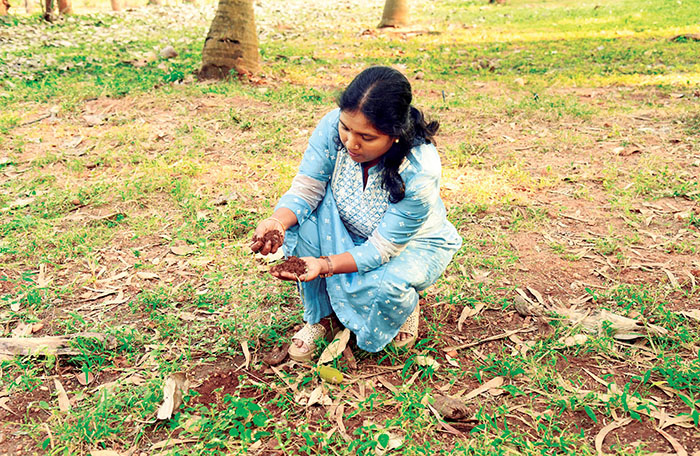
Kusuma: No farming household is complete without women’s role. In rural areas, for instance, livestock rearing is largely sustained by women. I often recall my childhood and teenage years when my parents were engaged in sericulture in our tiled house in the village. Part of the house was filled with bamboo chandrikes (round containers used to rear silkworms) placed on bamboo stands.
A section of the land where we now have a farmhouse was once used to grow mulberry plants to feed the silkworms. My mother is from Santhemarahalli, which was once a thriving market for auctioning reshmegoodu (silk cocoons).
No farming household is complete without the role of women. In rural areas, for instance, livestock rearing is largely sustained by women.
SOM: But what about agricultural land…
Kusuma: (The activist in her surfaces.) Today, we treat land as a commodity that can fetch a high market value. The Government has acquired vast tracts of land, many of them fertile, in the name of industrial development.
Take Himmavu, for instance. Land acquisition moved at great speed there, but the pace slowed when it came to actually establishing industries. Only a few industries are functioning, while large portions of land remain vacant, silent witnesses to what has happened. Land is not just soil; it also carries the sweat and lives of generations, many of whom are buried beneath it.
SOM: Coming back to literature, is controversy necessary to sell a book?
Kusuma: Such gimmicks may create temporary attention, but what truly sells a book is good literature.
SOM: Recently, there was a controversy over the lyrics of a song from Prem’s film KD: The Devil. Why the outrage now, when a Bollywood song from Khalnayak with a similar meaning was widely accepted earlier?
Kusuma: If not for social media, this song might have gone unnoticed. Today, people are more vocal and willing to question things because of social media. In those days, when the Bollywood song became popular, not many were ready to openly call out what they felt was wrong.
SOM: What is your next literary work?
Kusuma: I am currently working on a project on Hadinaru, a historically significant village believed to be the place of origin of the Wadiyars, the erstwhile rulers of Mysore.
SOM: It seems the novelist in you draws inspiration from the calm surroundings of this farmhouse…
Kusuma: Writing requires a certain meditative quality. The ability to remain detached from everyday distractions. Many great writers practised this. Renowned novelist Dr. S.L. Bhyrappa and Poet Laureate Kuvempu devoted themselves to writing, often giving little importance to social engagements.
SOM: Your childhood memories…
Kusuma: Growing up in a farming family was not easy. I wanted to continue my education, but like many parents in villages, my parents hoped I would stop studying and get married at the appropriate age. But I stood firm and made it clear that I wanted to pursue my education further.
Recent Comments