


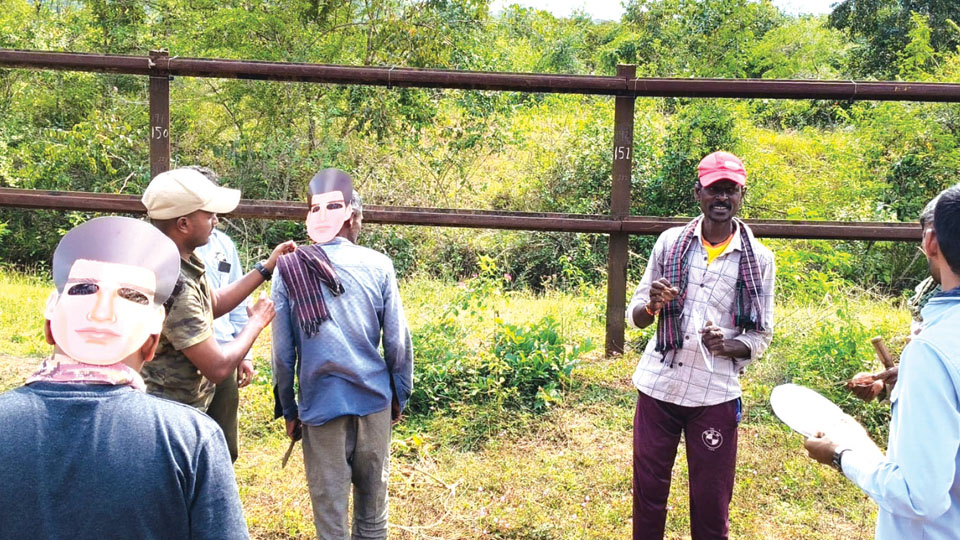
As tigers avoid direct eye contact, farmers create an illusion of constant watchfulness
Mysore/Mysuru: In a bold and imaginative step to protect farmers working in forest-fringe areas from tiger attacks, the Forest Department has rolled out an unusual yet time-tested awareness initiative in the villages of Saragur taluk, bordering the Bandipur Tiger Reserve.
Borrowing inspiration from a successful experiment in West Bengal’s Sundarbans, officials have begun distributing 10,000 human-face masks — but with a twist: They are meant to be worn on the back of the head.

These masks mimic a vigilant human gaze. The idea is simple but powerful — tigers prefer to attack from behind, often targeting the nape of the neck. If they believe the person is watching them, they are less likely to ambush. This visual deception, tried earlier in the Sundarbans, reportedly led to a noticeable drop in tiger attacks.
The Bandipur initiative gains significance in the wake of a series of alarming incidents in Saragur taluk, where three people were killed and another farmer severely injured in recent tiger encounters.
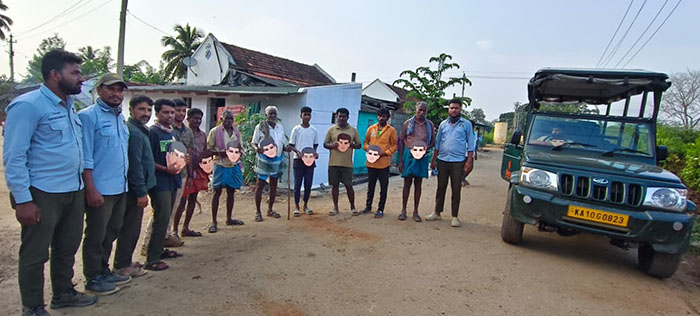
In response, forest officials, safari guides and ground staff are travelling village-to-village, distributing masks and demonstrating how to use them effectively.
The Sundarbans strategy hinges on one behavioural trait: Tigers avoid direct eye contact when stalking prey. By wearing a mask on the back of the head, farmers create the illusion of constant watchfulness, disrupting the tiger’s instinct to strike from behind.

Officials say this low-cost, practical intervention could play a crucial role in reducing human–wildlife conflict in high-risk zones — and may even save lives.




Recent Comments