


By Dr. R. Balasubramaniam
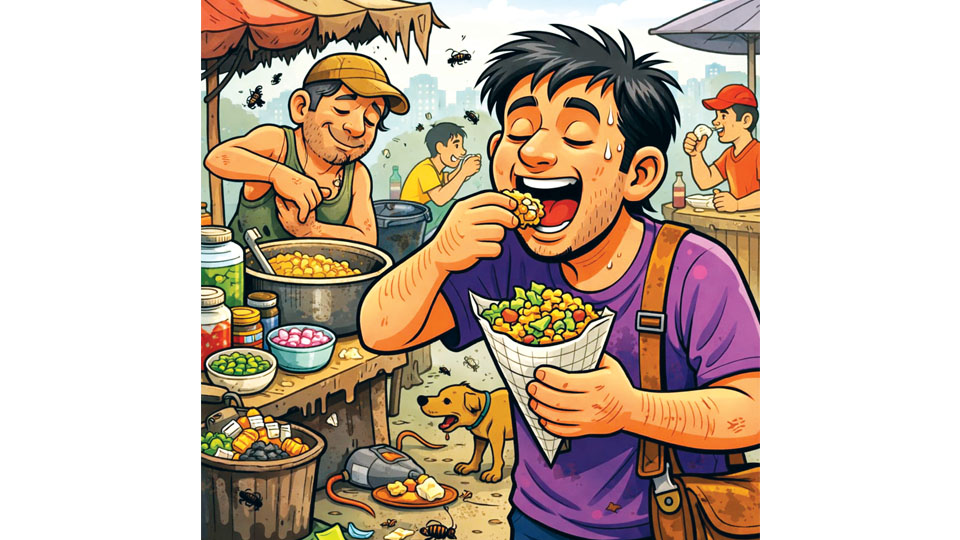
I first realised how little control I have over my better judgement while standing by the roadside with a plate of churumuri in my hand, watching traffic move past in uneven bursts as dust settled gently on everything except my attention. The vendor mixed puffed rice, onions, chilli and lemon with a speed that came from long practice rather than care and although I knew enough to pause and consider the setting, I also knew enough to continue. The first mouthful resolved the debate because familiar taste has a way of silencing all competing arguments without asking for permission.
That moment captures my relationship with street food, which is never accidental but chosen with awareness and accepted with consequences. Across India, this pattern repeats itself daily as people stop at roadside carts not because they lack alternatives but because something deeper is being satisfied. The food connects to memory, to student days, to travel and to evenings that required little planning, making what appears impulsive often deliberate.
From chaat stalls in Delhi to dosa carts in Mysuru, the logic remains consistent as people approach with caution that fades quickly once they watch the preparation, note the surroundings and still place an order. Reason remains present but temporarily suspended, creating space for taste to take over. Street food does not promise comfort or safety, but it offers familiarity, which in most cases is enough.
The environment reinforces this experience because these are not quiet spaces. Paper plates add colour, oil hisses, vendors call out orders and traffic provides a steady background noise that does not distract but reassures. For regulars, these sounds mark transitions in the day, signalling either closure or anticipation, making eating here part of life’s rhythm rather than a break from it.
Vendors play a central role in this ecosystem, often speaking continuously while cooking, commenting on prices, politics, weather or yesterday’s match, with customers responding or listening without obligation. Over time, recognition develops, orders are anticipated, preferences remembered and brief interactions accumulate into a sense of continuity in spaces where much else changes quickly.
Street food consumption follows a pattern most people recognise, beginning with restraint that lasts only until the food arrives and moving quickly into focused enjoyment as doubts retreat and rational explanations take their place. Heat is trusted, habit provides reassurance and when awareness returns through a noticed detail that was earlier ignored, it re-frames rather than interrupts the experience, which is accepted as a whole.
Concerns about hygiene are acknowledged but rarely decisive, as people operate more on belief than inspection, taking the absence of visible illness in others nearby as sufficient evidence. Risk is accepted without being foregrounded and attention stays firmly on the present moment while future discomfort is postponed until it demands attention.
When discomfort does arrive, it is met with humour rather than outrage, regret expressed briefly and resolutions made without much expectation of compliance. Memory preserves taste more clearly than consequence, ensuring repetition when the next familiar aroma restores confidence and the cycle continues with little variation.
Beyond individual behaviour, street food functions as a social space where people from different backgrounds stand together, wait their turn and exchange comments or recommendations, allowing distinctions to fade without declaration. This equality is not announced but practiced quietly through shared participation.
Street food also reflects the character of its location, with ingredients and methods changing while the structure remains stable through small set-ups, direct preparation and immediate consumption. These stalls adapt quickly to local tastes and economic conditions, responding to demand without ceremony.
What emerges is not only a story about food but about choice, showing how people balance caution and pleasure and how shared habits create connection without instruction. Standing by the roadside with my plate of churumuri, I am aware of all this and eat knowing exactly what I am doing, because the value lies not only in taste but in participation. There is meaning in choosing the ordinary, in accepting uncertainty and in sharing space without negotiation, which is why street food endures and reminds us that life does not always need refinement to feel complete.
So, the next time you are at a Bengaluru gobi manchurian cart or a Mumbai vada-paav stand, embrace it. Forget the noise, ignore the flies, trust your gut (literally) and dive in. Because some of life’s best moments come wrapped in a paper plate and garnished with a little risk.
Just remember to bring hand sanitiser. And antacids. And anti-diarrheals. Just in case…

Recent Comments