


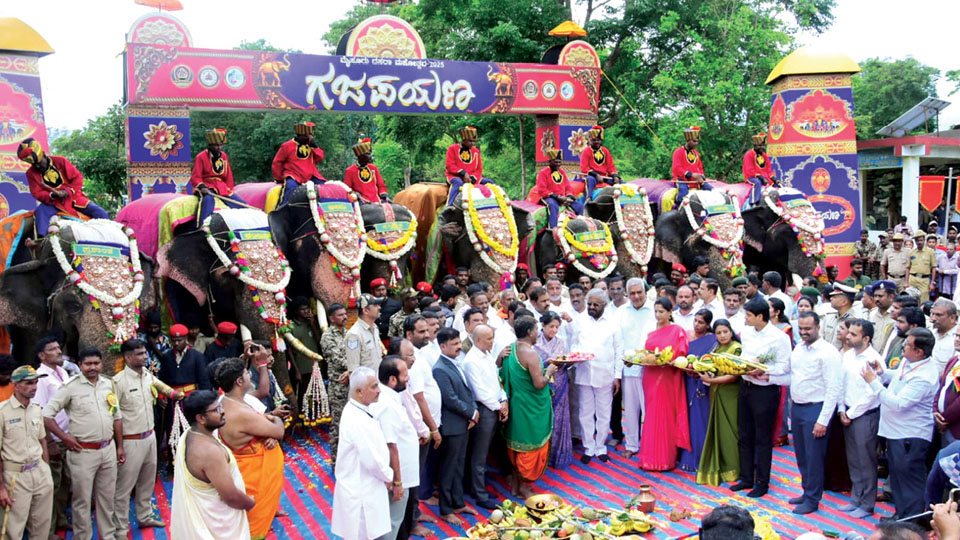
First batch of elephants
Abhimanyu (59): Lead elephant, Mathigodu Elephant Camp; Bhima (25): Mathigodu; Kanjan (24): Dubare; Dhananjaya (44) : Dubare; Prashantha (53) : Dubare; Mahendra (42) : Balle; Ekalavya (40): Doddaharave; Kaveri (45) : Female, Dubare; Lakshmi (53) : Female, Balle (Doddaharave).
Mysore/Mysuru: The grand Mysuru Dasara-2025 festivities, scheduled from Sept. 22 to Oct. 2, began this morning with the ceremonial ‘Gajapayana’ — the traditional march of caparisoned elephants — at Veeranahosahalli on the fringes of Nagarahole Tiger Reserve in Hunsur taluk.
The first batch of nine elephants, led by the iconic Golden Howdah-carrier Abhimanyu, was ceremonially flagged off during the auspicious Tula Lagna (Abhijin Muhurta) between 12.39 pm and 12.59 pm. Following the rituals, the elephants were loaded onto trucks for their journey to Mysuru.
A total of 14 elephants have been selected for this year’s celebrations. As per tradition, the first batch comprises elephants assigned key roles — carrying the Golden Howdah, serving as reserve carriers and assisting as kumki elephants.
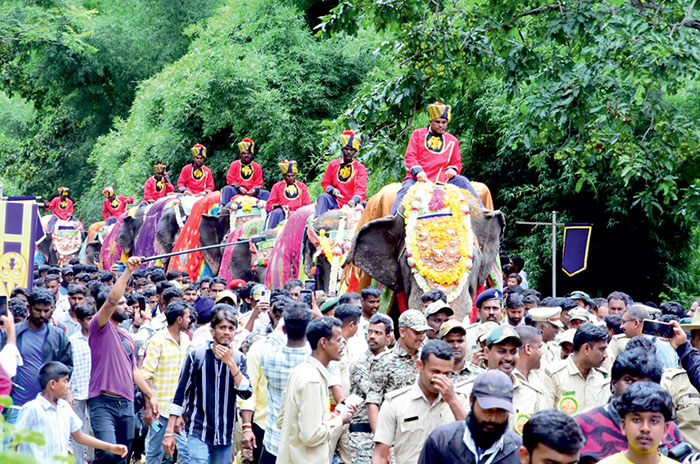
Ceremonial rituals
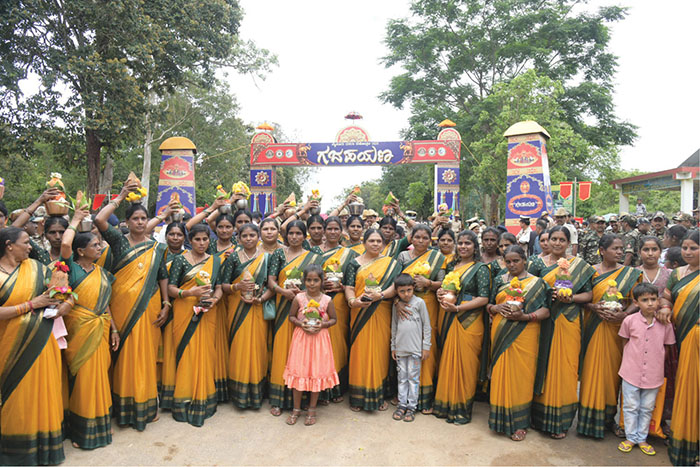
Rituals began at noon after all nine elephants were lined up in front of the decorated Veeranahosahalli Gate with priest S.V. Prahlad Rao performing traditional Dwara Puja (gate worship), washing the elephants’ feet, applying turmeric, vermilion and sandalwood paste, adorning their foreheads with sacred markings and offering prayers to Goddess Chamundeshwari and Lord Ganesha.
In the absence of Mysuru District In-Charge Minister Dr. H.C. Mahadevappa, Minister of Forest, Ecology and Environment Eshwar B. Khandre performed the ceremonial puja and offered floral tributes. The elephants were then treated to a festive spread of sugarcane, jaggery and seasonal fruits, followed by a symbolic drishti ritual to ward off evil.
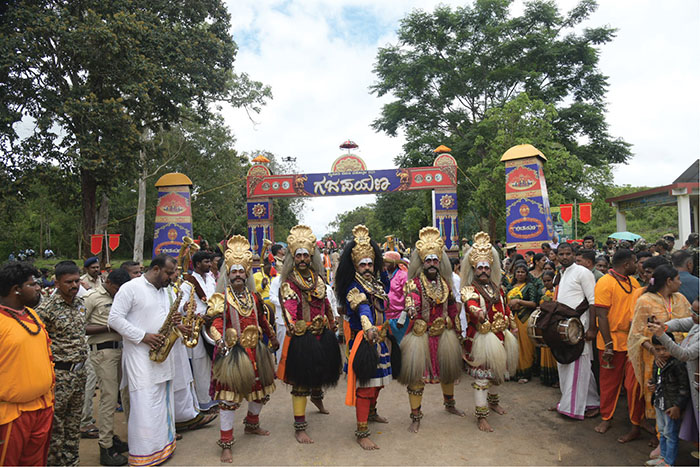
Large crowd, cultural show
Thousands of people thronged the venue to witness the momentous occasion, with tourists from cities like Bengaluru arriving in large numbers. However, as the crowd was barred from entering the Veeranahosahalli Gate, local villagers and forest-dwelling tribals expressed anger at being denied the chance to witness the once-a-year spectacle.
The procession, accompanied by vibrant folk troupes, covered a 1.5-km stretch from Veeranahosahalli Gate to the designated venue near Nagapura Haadi. Then the elephants were transported by trucks to Mysuru and housed at Aranya Bhavan.
On Thursday, Aug. 7, the elephant team will be accorded a traditional welcome by the Mysuru District Administration at Jayamarthanda Gate of Mysore Palace between 12:06 pm and 12.30 pm in the auspicious Tula Lagna. The elephants and their caretakers will be housed in the Palace premises.
As part of the Gajapayana, a special stage programme was held near Nagapura Haadi where Minister Khandre released the list of elephants participating in Dasara and unveiled a commemorative booklet.
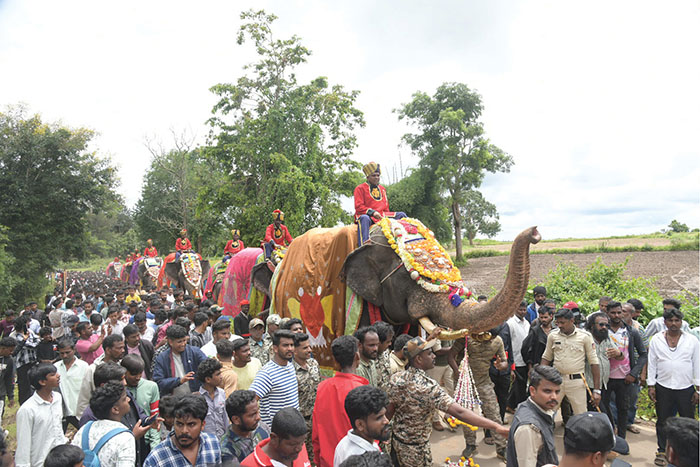
The Forest Department has arranged meals for 5,000 people. The road from Veeranahosahalli Gate to the event venue was beautifully decorated with green arches and traditional festoons, adding to the festive atmosphere.
The stage programme featured vibrant cultural presentations, including tribal children’s performances, Tibetan dance and other folk and traditional art forms, showcasing the rich cultural diversity of the region
Minister for Animal Husbandry K. Venkatesh, MLAs G.D. Harish Gowda, D. Ravishankar, Deputy Commissioner G. Lakshmikanth Reddy, ZP CEO Yukesh Kumar, Principal Chief Conservator of Forests (Head of Forest Force) Meenakshi Negi, Southern Range IGP Dr. M.B. Boralingaiah, Superintendent of Police N. Vishnuvardhana and others were present.
From the pages of history…
Gajapayana, once an elaborate and regal affair, has today become a symbolic event. In earlier times, elephants, along with mahouts, kavadis and their families, would undertake an arduous 80 to 100-kilometre journey on foot from the forest camps to Mysuru.
Now, the tradition is observed by a brief ceremonial march, after which the elephants are transported by trucks.
The origins of Gajapayana trace back to the reign of Sri Jayachamaraja Wadiyar. During this era, members of the Mysore Royal Family, including the King and his courtiers, would perform pujas to the tuskers at Maasthi Gudi, also known as Maasthamma Temple, near Antharasanthe in H.D. Kote taluk.
The journey was festive and vibrant — traditional band sets and tribal instruments announced the commencement of Dasara festivities, while people along the route offered jaggery, fruits and sweets to the marching elephants.
This grand tradition faded after the abolition of the Privy Purse, when the Royal Family lost its administrative authority and became titular heads.
The ceremony was revived in 2001 under the Chief Ministership of S.M. Krishna, with Mysurean A.H. Vishwanath serving as Mysuru District Minister. From Veeranahosahalli Gate, the Gajapayana has since been observed every year, continuing to link modern festivities with Mysuru’s royal past.
Recent Comments