


Pressure mounts to fast-track another wildlife rehabilitation facility at Yelwal
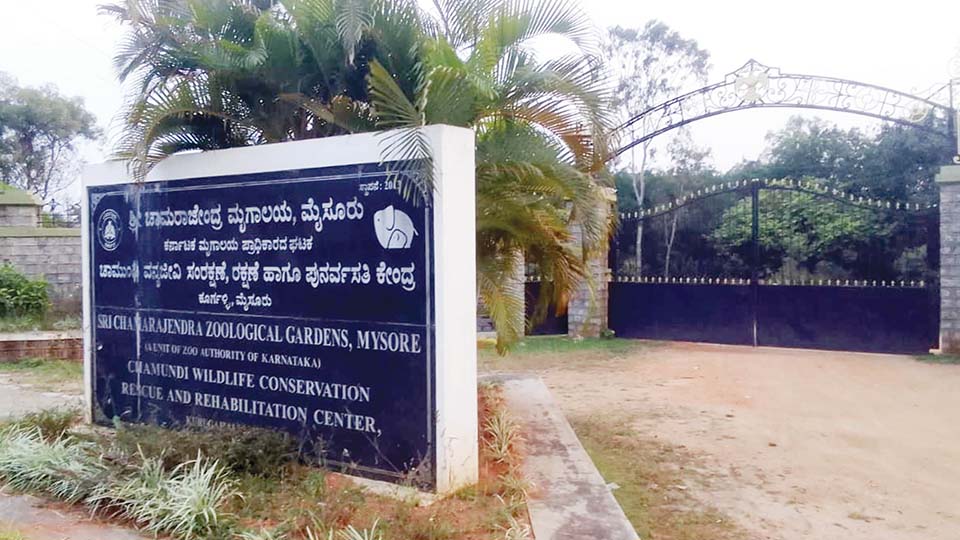
Mysuru: With human-wildlife conflict rising in villages bordering Bandipur and Nagarahole forests, pressure is mounting to expedite the establishment of an earlier proposed wildlife rehabilitation centre at Yelwal, Mysuru, to care for captured tigers and leopards.
Due to intensified capture operations involving conflict-prone tigers and leopards in Mysuru and Chamarajanagar districts, the existing Chamundi Wildlife Rescue, Conservation and Rehabilitation Centre at Koorgalli — part of Mysuru Zoo — is facing an acute shortage of space to house newly captured carnivores. In this context, the Forest Department’s long-pending proposal to construct a new rehabilitation facility has gained renewed momentum.
The Chamundi Wildlife Rescue, Conservation and Rehabilitation Centre at Koorgalli, under the jurisdiction of the Zoo Authority of Karnataka (ZAK), spans 132 acres and provides a natural environment suitable for the care and upkeep of rescued animals.
Until recently, tigers and leopards captured in Mysuru, Chamarajanagar, Kodagu and Mandya regions were sent to the Koorgalli Centre. However, due to space constraints, surplus tigers are now being transferred to the Bannerghatta Rehabilitation Centre in Bengaluru.
Space shortage at Koorgalli
The Koorgalli Centre can accommodate only 10 tigers and 10 leopards. While the enclosures built a decade ago were adequate then, the number of captures in the Mysuru-Chamarajanagar-Kodagu belt has surged in recent years, leading to overcrowding and a shortage of enclosures for carnivores.
The Centre currently houses 12 tigers (7 female, 5 male), 10 leopards and 4 rescued elephants. Of the 11 tigers recently captured — 10 from Saragur and 1 cub from Hunsur — five have been accommodated at Koorgalli, while two newborn cubs were shifted to Bannerghatta.
Additionally, a tigress captured with three cubs in the Gundlupet buffer zone has been relocated elsewhere for monitoring. Due to lack of space, future captures are also likely to be sent to Bannerghatta.
Recovery cases
Of the 12 tigers at Koorgalli, only two arrived in a debilitated condition. Three months ago, in the Kundakere range of Bandipur, two tigers fought fiercely, leaving one collapsed in a farmer’s field with serious injuries. It was captured and moved to Koorgalli for treatment.
On Nov. 8, a 12-13-year-old male tiger was caught near Hale Heggudilu village in Saragur with a snare wound around its neck and broken teeth due to age. Unable to hunt, it had attacked a farmer. Despite their critical condition, both tigers have now recovered and are feeding normally. A 1.5-year-old male cub rescued from a biogas pit in Saragur has also recovered after care at the center.
Reuniting cubs with their mother
On Oct. 18, a 1.5-year-old female cub was captured near Badagalapura in Saragur. On Oct. 28, a 6-year-old tigress was caught near Anjanapura–Eregowdanahundi, and on Nov. 5, another 1.5-year-old female cub was captured in Hediyala range. The three were identified as a mother and her offspring and forest staff, along with veterinarians, successfully reunited them.
The tigress has three cubs — two have been captured, while the third continues to evade capture. Efforts are on to capture and reunite with its mother.
Expansion plans
Construction of new enclosures is underway at Koorgalli. However, due to current space constraints, newly captured animals were sent to Bannerghatta. But as the construction of the new enclosures is under speedy progress, animals captured henceforth will be treated there.
— P. Anusha, Executive Director, Mysuru Zoo
Recent Comments