


By Maneka Sanjay Gandhi
There is a tale that too many of us have forgotten, a sombre reminder that cities are not machines, but are living, breathing ecosystems where every species, every action, every choice has a ripple effect. That tale is of what happened in Surat in 1994 — the plague scare, a moment when human hubris and ecological ignorance collided with devastating consequences.
When we speak of public health, we instinctively focus on medicine, vaccines, sanitation and hospitals. What we rarely confront with equal urgency is the ecological balance that underpins the health of our cities.
People like to imagine cities as structures of concrete alone. They are not. They are built on relationships between water and waste, humans and animals, predators and prey. When these relationships are disrupted in the name of “order,” the city does not become safer. It becomes vulnerable.
The plague scare of 1994 remains one of India’s starkest warnings of what happens when this balance is disturbed. In the weeks preceding the outbreak, Surat undertook aggressive measures to “clean” its streets.
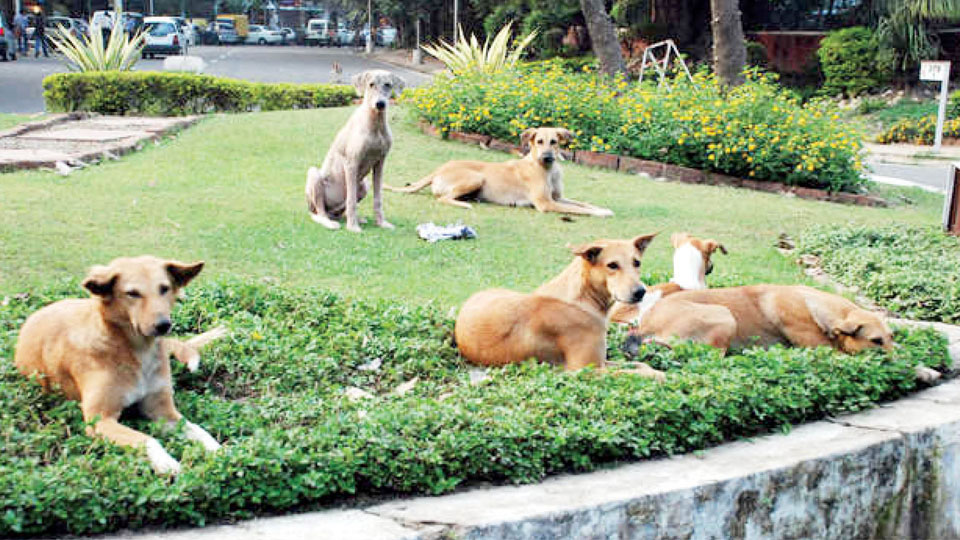
Street dogs were rounded up, poisoned, chased away and killed. The city declared itself sanitised. The streets were proclaimed free of dogs. Officials congratulated themselves on decisive action. And then… the rats came.
With their natural predators removed, rats multiplied with astonishing speed. They poured out of drains, godowns, textile warehouses and garbage heaps. Fleas followed. Panic followed. Within weeks, Surat was paralysed by what the world came to know as a plague outbreak. An entire city was brought to its knees, not by dogs, but by what replaced them.
The interpretation was simple: when one species is forcibly removed from an ecosystem, another fills the vacuum.
Ecologists have long recognised that the sudden removal of a species can allow another population to expand unchecked. In urban environments, community dogs and feral cats often perform a functional role by suppressing rodent populations through presence and predation.
Surat’s experience became a cautionary parable. Simply because it illustrated how disturbing ecological relationships while leaving underlying civic failures untouched can amplify risk rather than reduce it.
The events of 1994 should have ended this illusion permanently. They did not. Three decades later, we once again hear calls, now dressed in legal and administrative language, for large-scale removal and confinement of street dogs in the name of public safety.
This approach repeats the same fundamental error: treating a complex ecological system as a problem that can be solved by erasure.
Rabies control, waste management, rodent populations and sanitation are interlinked systems. Remove one element violently and the others unravel. Sterilisation and vaccination stabilise populations. Killing and forced removal destabilise them.
This is why the World Health Organisation and the World Organisation for Animal Health have repeatedly cautioned against mass dog removal, not on emotional grounds, but on epidemiological ones.
We persist in blaming dogs because it allows Municipal Corporations to avoid scrutiny for failed implementation. It is easier to remove or confine animals than to consistently execute Animal Birth Control, vaccination and waste management programmes already in place. This is governance by shortcut.
A city without dogs does not become clean. It becomes undefended.
When dogs disappear, rats multiply. They adapt. They inherit the streets we have mismanaged. And once rats establish themselves, they are far harder to control than dogs ever were.
So, when you hear calls to “remove all street dogs,” understand what is truly being proposed: Handing the city to the rats.
Public health cannot be built on fear. Urban planning cannot be built on cruelty. Cleanliness cannot be achieved by erasing life. Cities survive not through domination, but through balance.
Remove dogs and you do not create order. You create a vacuum. And vacuums are always filled, often by something far harder to control.
So before applauding the next announcement of “dog-free streets,” ask a single question: Who will replace them?
History has given the answer again and again…
Remove the dogs and you hand a city to the rats.



Recent Comments