


Mysore/Mysuru: A few years ago, Mysore Silk sarees were battling dwindling demand, pushing the Karnataka Silk Industries Corporation (KSIC) into financial distress.
Officials struggled to revive sales, even travelling to countries like Dubai to promote the sarees. The efforts, however, yielded little success, and mounting travel and logistics expenses became an additional burden. Allegations of corruption also emerged, including a suspicious fire in the records room believed to have been deliberately set.
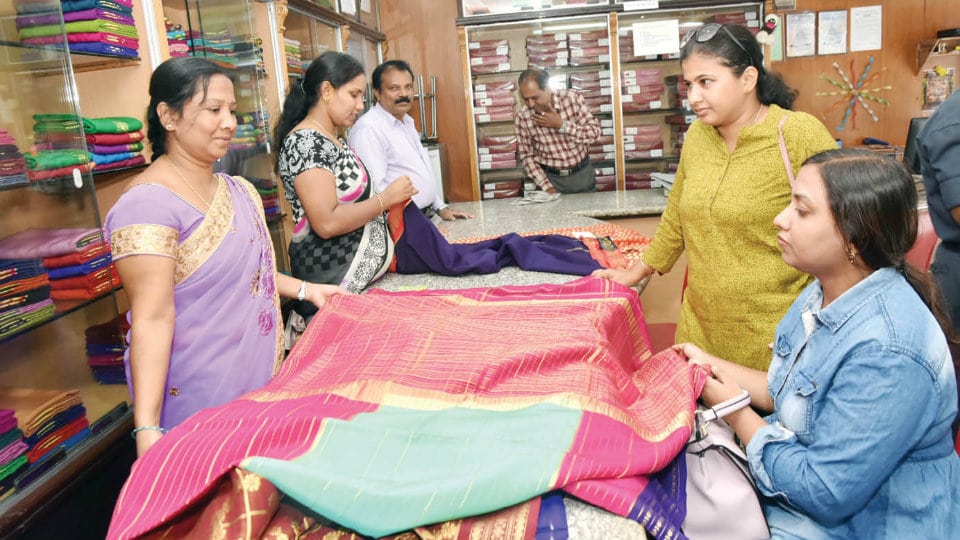
Today, the fortunes of Mysore Silk sarees have completely transformed. Demand has surged so sharply that supply can no longer keep up. Customers wait in long queues for hours, yet many still return empty-handed.
The cultural and aesthetic significance of Mysore Silk is now gaining wide recognition, with tourists — both domestic and international — showing even greater enthusiasm than locals to purchase the sarees.
The saree’s distinct qualities drive the renewed craze. Mysore Silk is renowned for its pure gold and silver zari, which sets it apart from other varieties. Despite its premium price, demand remains exceptionally strong.
Compared to silk sarees from other Indian States, Mysore Silk stands out for its softness, lustrous finish, intricate zari craftsmanship and regal designs. The zari used contains approximately 65 percent pure silver and 0.65 percent gold.
Established in 1912 by Nalwadi Krishnaraja Wadiyar, the then Maharaja of Mysore, KSIC pioneered the production of Mysore Silk sarees. Today, these sarees remain among the most prestigious — and most expensive — textiles in India.


Recent Comments