


Five Tiger Reserves, 36 Sanctuaries in State to be covered in 2026 Tiger Census
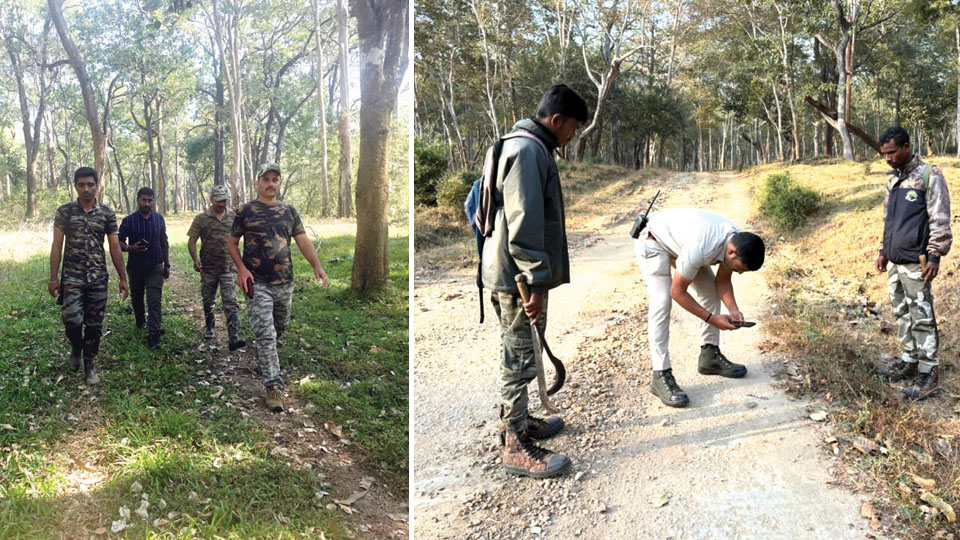
Mysore/Mysuru: The 2026 National Tiger Census has begun across Karnataka’s five Tiger Reserves, 36 Wildlife Sanctuaries and 12 Forest Divisions where tiger movement has been recorded.
Conducted once every four years across India’s 53 Tiger Reserves, the nationwide exercise aims to arrive at an accurate estimate of the country’s tiger population through a scientific and standardised methodology.
In Karnataka, the census covers Nagarahole, Bandipur, Biligiri Ranganathaswamy Temple (BRT), Bhadra and Kali Tiger Reserves, besides Male Mahadeshwara and Cauvery Wildlife Sanctuaries.
Preparations have also been completed in Forest Divisions such as Mysuru, Hunsur and Gundlupet.
This year, the State Forest Department has deployed 13,024 camera traps across 6,512 locations in 3,212 beats, ensuring comprehensive coverage and data accuracy.
Census at Bandipur
Bandipur Tiger Reserve, Karnataka’s first designated tiger reserve, spreads over 1,036 square kilometres, with a dense core area of 872.24 square kilometres.
Tourism is restricted to around ten percent of the reserve area. The forest has been divided into three Sub-Divisions and 13 Ranges, with 612 grids, 1,224 camera traps, 114 beats and 112 line transects identified for the census.
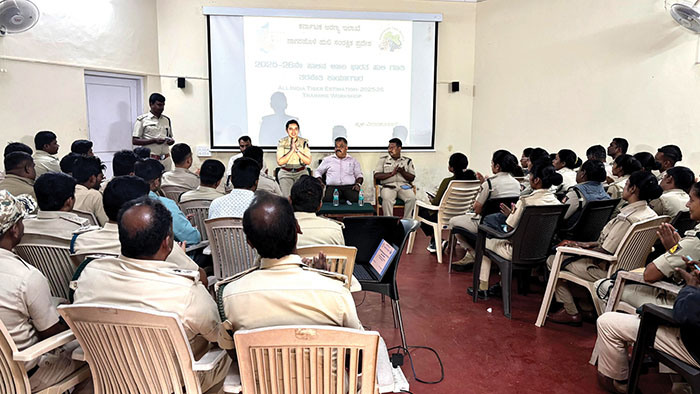
More than 480 staff members, trained by the National Tiger Authority at Tamil Nadu’s Mudhumalai Tiger Reserve, are engaged in the exercise.
At Nagarahole
Nagarahole Tiger Reserve, one of the State’s most prominent tiger habitats, extends over 843 square kilometres across Mysuru and Kodagu districts.
It has been divided into three Sub-Divisions and eight Wildlife Ranges. Census operations here involve 91 beats, 496 grids, 992 camera traps and 106 line transects, with around 370 trained personnel deployed.
At BRT Reserve
At BRT Tiger Reserve, census preparations have been completed with beats and grids identified, and staff across multiple ranges trained and assigned duties.
Meanwhile, Male Mahadeshwara Wildlife Sanctuary — soon to be declared Karnataka’s sixth tiger reserve — covers 949.28 square kilometres with seven ranges. Census arrangements here include 56 beats, 454 grids, 908 camera traps and the deployment of 225 staff members.
Three-phase task
The census is being conducted in three phases. The first phase, from Jan. 5 to Jan. 7, involves teams of three to four members walking five-kilometre transects each morning to record sightings of tigers, other wildlife, plants and trees.
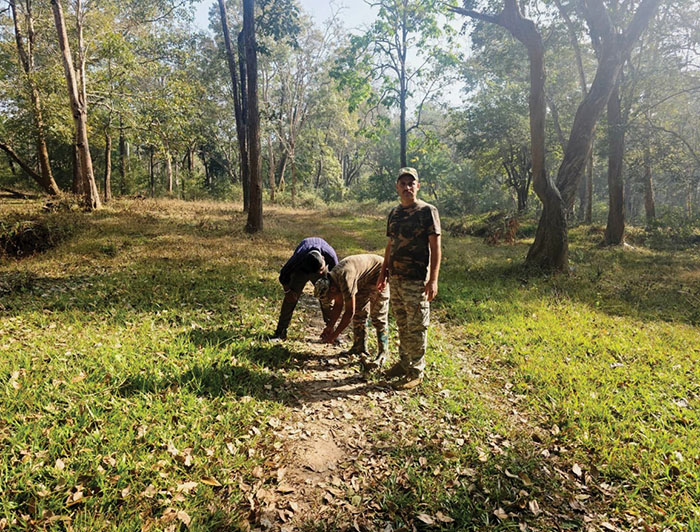
In the second phase, staff will walk two-kilometre transects twice a day over three days, documenting pugmarks, droppings and vegetation within a 400-metre range of the transect line.
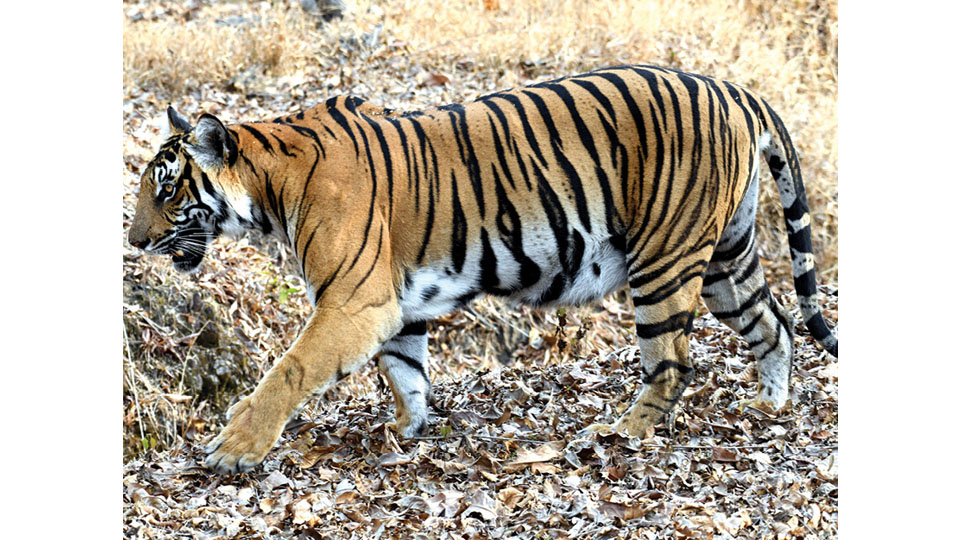
The third phase will focus on analysing camera trap images to identify and record individual animals.
The National Tiger Census remains a flagship conservation exercise, generating vital data for wildlife management and policy formulation. Karnataka, home to some of India’s most renowned tiger habitats, plays a pivotal role in this nationwide effort.
All set to track stripes, collect precise data
The All-India Tiger Census will continue in multiple phases until March 26. For the first time, Divisions where tiger presence has been recorded will also be included. Staff have been instructed and trained to record precise data using the M-Stripes mobile application.
Dr. P. Ramesh Kumar, Director of Project Tiger and Nodal Officer for the census, said: “This year’s census is designed to ensure accurate data collection, with technology and training strengthening the process.”
Preparations are complete at Bandipur Tiger Reserve, which has 13 Ranges. Director S. Prabhakaran confirmed: “Staff have already been trained. In 114 beats, 612 grids have been identified and 1,224 camera traps are being used step by step to carry out the census.”
At Nagarahole Tiger Reserve, which spans eight ranges, staff have also been trained and equipped. Director P.A. Seema explained: “Teams have been prepared to collect precise information with safety. The reserve has 91 beats and 496 grids, where 992 camera traps and 106 transect lines are being used. In the previous census, Nagarahole recorded a tiger density of 11.15 per square kilometre.”




Recent Comments