


Minister claims Tipu was known for religious tolerance; he ended devadasi practice
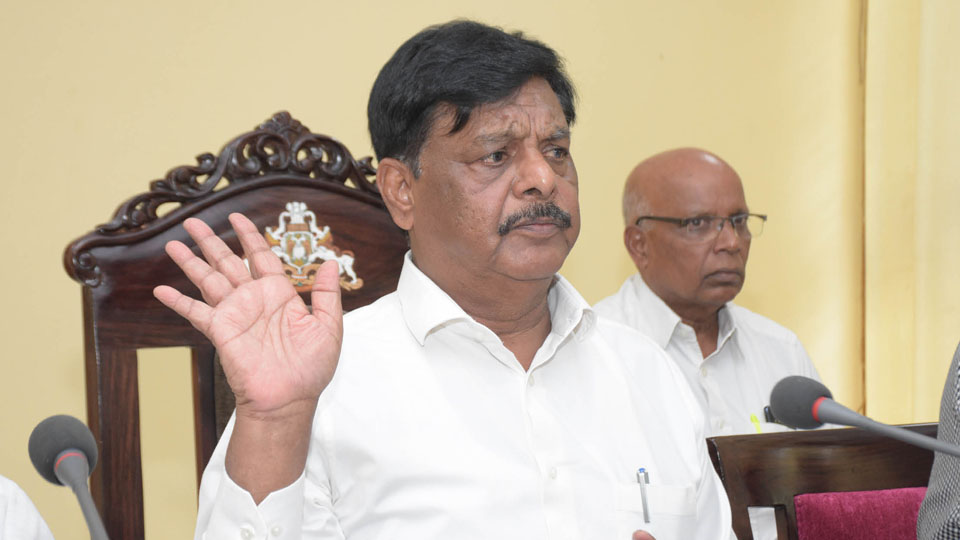
Srirangapatna: Minister for Social Welfare Dr. H.C. Mahadevappa has sparked a fresh controversy with remarks lauding Tipu Sultan during a public event in Srirangapatna.
Speaking at the foundation-laying ceremony of the new Dr. B.R. Ambedkar Bhavan, the Minister claimed that Tipu Sultan was the first to lay the foundation stone for the Krishna Raja Sagar (KRS) Dam.
“Tipu Sultan laid the foundation for constructing the Kannambadi Katte. Historical records show that his foundation stone can still be seen at the main entrance of KRS Dam. Yet today, no one dares to speak of it,” Dr. Mahadevappa said.
His comments came on the death anniversary of Rajarshi Nalwadi Krishnaraja Wadiyar — a day traditionally dedicated to honouring the former Mysore ruler’s legacy — drawing sharp criticism for appearing to diminish Nalwadi’s contributions while praising Tipu.
Highlighting Tipu’s religious tolerance, the Minister added, “There is a Temple right next to the Mosque built by Tipu. On one side, you hear the prayers from the Mosque and on the other, the ringing of Temple bells. Tipu listened to both with equanimity. That’s why daily rituals and worship continued uninterrupted at the Temple beside the Mosque.”
Dr. Mahadevappa also credited Tipu Sultan with abolishing the devadasi system, calling it a revolutionary step for its time.
“Tipu Sultan ended the devadasi practice, which exploited marginalised women and forced them into servitude. The credit for abolishing it in that era belongs to Tipu,” Dr. H.C. Mahadevappa asserted, adding, “Those who are unaware of history cannot shape it.”
Calling Tipu one of India’s greatest freedom fighters, Dr. Mahadevappa said, “He fought fiercely against the British and never ceded even an inch of land to the enemy. Yet, many who fail to understand this legacy continue to criticise the freedom struggle.”
The Minister further highlighted Tipu’s contributions to India’s economy and culture, noting, “Tipu introduced sericulture to India, laying the foundation for silk production here. The Royal Palace of Mysore was also originally located in Srirangapatna.”

Recent Comments