


Nutritious meals, oil massages keep the star attractions in peak form
Mysuru: Caring for the Dasara elephant team is a demanding task for the Forest Department, which has made providing a high-quality, nutritious diet its top priority.
Large quantities of food supplies have been stockpiled to keep elephants healthy, strong and well-prepared for their role in the festivities. This year’s Dasara celebrations will begin on Sept. 22, with the grand Jumboo Savari scheduled for Oct. 2 and the elephants have already started receiving their special diet.
To support their stay, the Department has made elaborate arrangements, stocking several tonnes of fodder and grains. This year’s team comprises 10 male and 4 female elephants, whose daily nutritional needs have been calculated by veterinary experts based on weight, size and other physical parameters.
Tenders were floated for the supply of food items and K.S. Babu of Attahalli village near Bannur has been entrusted with providing groceries, dry fodder and fresh grass.
Daily nutritional needs
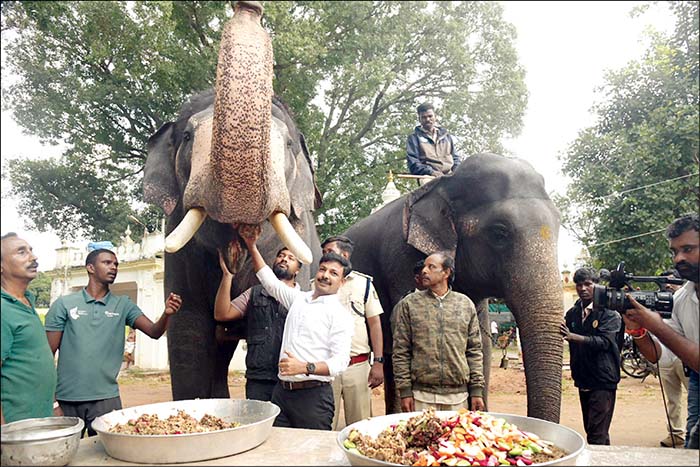
According to Dr. I.B. Prabhugowda, Deputy Conservator of Forests (DCF), Mysuru Wildlife Division, each elephant is provided with 450 to 500 kg of banyan leaves daily along with 175 to 200 kg of fresh grass.
In addition, they receive 20 kg of kusubalakki, a red rice variety, along with rice straw amounting to about 35 to 40 kg. On top of this, 10 to 12 kg of specially prepared feed is given every day. Male elephants consume approximately 750 kg of food per day, while female elephants consume around 600 kg, with males receiving slightly more to meet their higher energy needs.
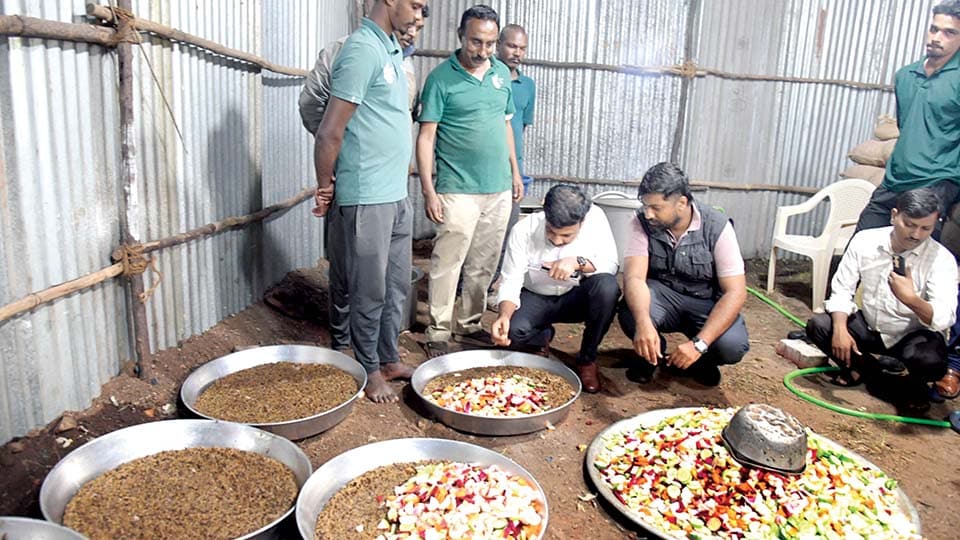
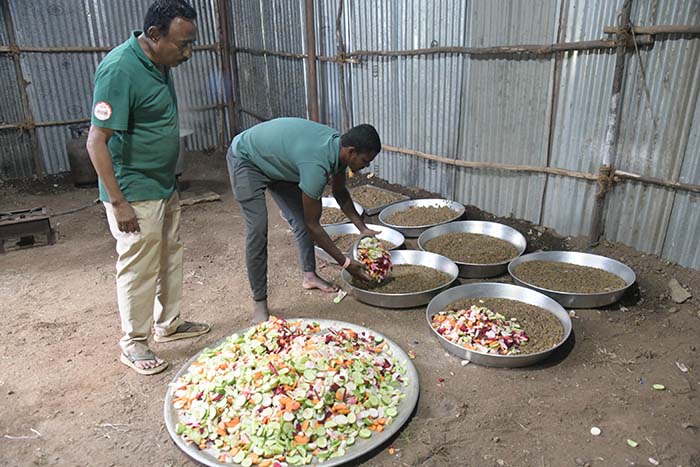
The special feed consists of horse gram, green gram, black gram, rice, salt and a variety of vegetables, cooked for six to seven hours to aid digestion.
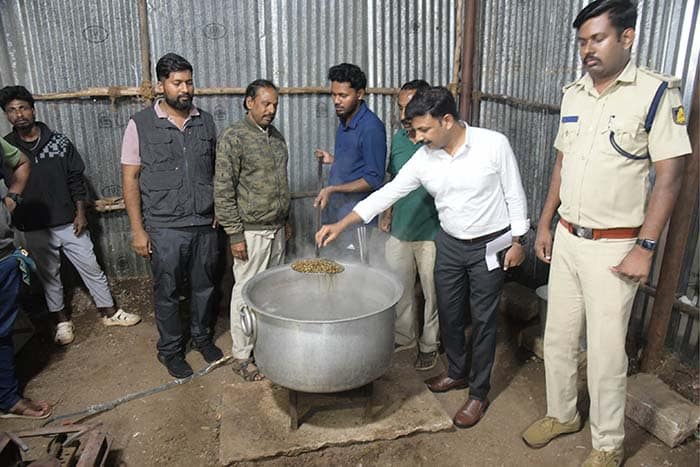
Each elephant consumes 10 to 12 kg
of this mixture daily, with the intake strictly limited to avoid obesity that could hinder movement. Sugarcane and coconut also form the part of their diet. The aim is to provide adequate nutrition while enhancing stamina, supported by daily walking exercises of 10 to 12 kilometres, the DCF noted.
No butter or wheat this year
This year, butter and wheat have been excluded from the diet. Butter, which was earlier given to a few elephants, was found to be of little nutritional value for herbivores, while wheat proved indigestible for some elephants.
In their place, horse gram (Huruli Kalu) and finger millet (Ragi) have been added to aid digestion. Special feed is served twice daily, once in the morning and once in the evening after training sessions and this plan will continue until the elephants return from the Dasara camp.
Oil massage
To ensure the elephants remain comfortable during their training marches from the Palace to Bannimantap Torchlight Parade Grounds, oil massages form an important part of their regimen.
Around 200 litres each of castor oil, pongamia (honge) oil and neem oil are used, with castor and pongamia applied to the head, legs and areas where ropes are tied to prevent abrasions, while neem oil is applied to the feet and joints for cooling and protection. These treatments prevent injuries and keep the animals in peak condition.
The Forest Department has stressed that only high-quality ingredients are used in preparing the meals, with strict quality checks enforced.
Tenders were issued on a per-kilogram basis to ensure consistency and transparency. Special meals are gradually introduced to allow the elephants to adapt to the environment, with quantities increased in phases based on close monitoring of each animal’s health.


Recent Comments